
TL;DR
A House Beautiful report outlines seven paint approaches designers recommend for changing how small rooms look, including painting the ceiling, using one color across walls and trim, and testing paint undertones in the room. These are design strategies based on visual perception, not guarantees that a room will physically appear larger.
House Beautiful has reported seven paint techniques that interior designers say can make small rooms feel more spacious, including color-drenching walls and ceilings, choosing paint by its undertones, and using natural light to guide color selection. The advice concerns visual perception rather than increasing a room’s actual dimensions, and the designers describe different approaches for different spaces and preferences.

Get home appliances delivered free with Prime
- Fast, free delivery on millions of items
- Prime Video, Amazon Music and more included
- Member-only deals all year
The report cites designer Joe Waroquier, founder and principal designer of Joe Waroquier Home, who says paint can change how people perceive a room. Interior designer Amber Guyton, founder of Blessed Little Bungalow, likewise describes paint as a way to give the eye the impression of a space without clear visual boundaries. The article presents their recommendations alongside advice from designer Jewel Marlowe.
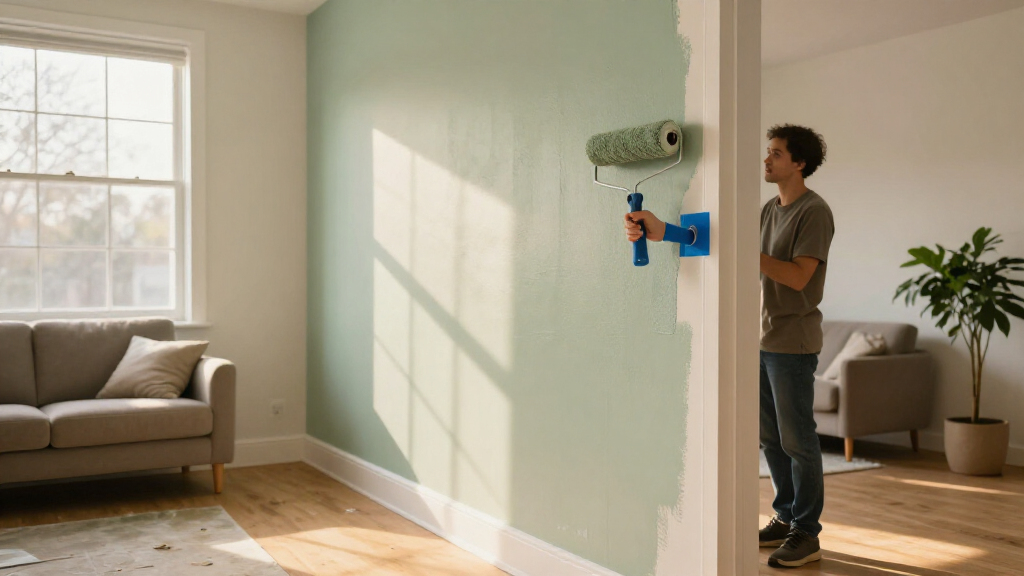
The seven approaches are to paint an accent wall; apply one color across the walls, trim, doors and ceiling; examine a paint’s undertones; paint the ceiling; stop wall paint partway up; consider deep, saturated hues; and select colors in response to the room’s natural light. The suggestions are not one-size-fits-all: an accent wall offers a limited use of color, while color-drenching makes a stronger commitment across several surfaces.
Marlowe says using a single color on walls, trim, doors and ceiling can blur the points where surfaces meet. For added contrast, she suggests pairing a wipeable matte finish on walls with high-gloss trim or cabinetry. Waroquier advises testing several large swatches in the room and checking them at different times of day, because lighting and undertones can affect how a shade reads.
How Paint Changes Room Perception
Paint is a relatively direct way to alter the visual character of a room without changing its layout. Color continuity can make boundaries less prominent, while a considered ceiling color can soften the division between walls and the overhead surface. For renters or homeowners reluctant to repaint every surface, an accent wall or paint applied only to the lower portion of a wall offers a more limited project.
The advice also challenges the simple rule that pale paint always makes a room look larger. The designers quoted in the report say deep colors can soften visible corners and add a sense of depth, while some light shades may look flat or gray in rooms with little natural light. The practical takeaway is that color, finish and available light all affect the result; choosing a shade solely because it is light may not match the room’s conditions or the desired effect.
Products Worth Considering

Philips Hue Smart Light Starter Kit with Bridge and 4 White and Color A19 Bulbs

Dyson Cyclone V10 Origin Cordless Vacuum

Sonos Roam (Gen 1) Portable Smart Speaker, White
As an affiliate, we earn on qualifying purchases.
Seven Techniques in the Report
The recommendations range from small changes to more extensive paint plans. For an accent wall, Guyton says a single colored surface can add visual interest and may make a room seem longer. Her “split it in half” approach limits paint to roughly four to six feet up the wall, around chair-rail height, with wainscoting as another way to define the division. Guyton says she used the method in a living room with high ceilings because she did not want to cover the full height in color.
For a more enveloping effect, Marlowe’s color-drenching method carries one shade across the walls, trim, doors and ceiling. Other recommendations focus on the room’s existing features: painting the ceiling can soften the transition from wall to ceiling, and selecting a shade with the right undertone can help avoid a result that looks unexpectedly dull. Waroquier also advises against assuming that stark white is best for a room with little daylight, suggesting a softer neutral or a more saturated color instead.
The article places these techniques alongside familiar approaches such as mirrors, reduced clutter and carefully selected decor. It does not present comparative testing or measurements showing that one paint method performs better than another. Its recommendations are attributed to the designers quoted and should be read as professional design guidance, not experimentally established results.
“Paint is a great way to make a small room feel larger because it changes the visual perception of the space.”
— Joe Waroquier, founder and principal designer of Joe Waroquier Home
Results Depend on the Room
The report does not provide test data, room measurements or comparative results showing how much larger any technique makes a space appear, or whether one method works better across different room types. The cited effects are designers’ professional judgments, and the source does not specify paint brands, exact shades or a standard lighting setup.
How a chosen color will look in a particular room remains dependent on its natural light, existing finishes, proportions and the person viewing it. The article offers no guarantee that a technique will suit every small room, and it does not quantify the cost, time or effort involved in repainting multiple surfaces.
Test Colors Before Painting
The practical next step in the designers’ advice is to try large paint swatches in the room and observe them under its changing light before choosing a final color. Readers considering color-drenching can decide whether to extend the shade to the trim, doors and ceiling or start with a smaller application, such as an accent wall or a lower-wall treatment.
The source material does not announce a product launch, follow-up study or further reporting milestone. Any judgment about the effect will come from how a selected color and finish look in the individual room.
Key Questions
What are the seven paint techniques in the report?
The report recommends an accent wall, color-drenching the room, checking undertones, painting the ceiling, stopping wall paint partway up, considering dark hues and choosing paint with the room’s natural light in mind.
Does dark paint always make a small room feel smaller?
No. The designers quoted say deep, saturated colors can soften the appearance of corners and add visual depth. The report does not claim this outcome is guaranteed in every room.
What does color-drenching mean?
In Marlowe’s recommendation, it means using one color across the walls, trim, doors and ceiling. She says the approach can blur the boundaries between architectural surfaces.
How should I test a paint color before committing?
Waroquier recommends testing several large swatches in the room and checking them at different times of day. This helps show how the paint’s undertones interact with changing natural light.
Does the report prove these techniques make rooms larger?
No. The article reports designers’ advice about perceived space; it does not provide measurements or comparative testing. Paint can affect visual impressions, but it does not change a room’s physical dimensions.
Source: housebeautiful.com