Choosing between dual-flush and single-flush toilets depends on your priorities. Dual-flush models help save water with two flushing options, which can lower your bills and reduce environmental impact. Single-flush toilets are simpler, usually less expensive upfront, and easier to install. If water conservation matters most, dual-flush might be better; for simplicity and initial cost savings, a single-flush works well. To make the best choice, consider your household needs, and explore further insights below.
Key Takeaways
- Dual-flush toilets save water with two flushing options, ideal for eco-conscious households and reducing water bills.
- Single-flush toilets are simpler, more affordable initially, and easier to install, suitable for basic needs.
- Consider long-term savings: dual-flush models may cost more upfront but lower water expenses over time.
- Maintenance and setup can be more complex for dual-flush models, requiring precise installation.
- Choose based on priorities: water conservation and environmental impact or simplicity and initial cost.
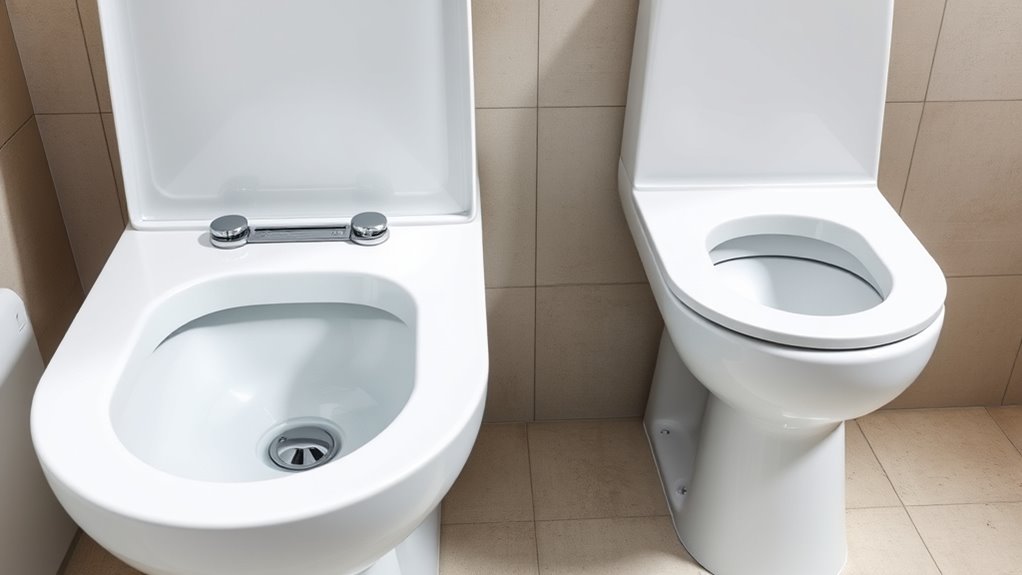
When choosing a toilet, understanding the differences between dual-flush and single-flush models can help you make an informed decision. One of the key factors to consider is water conservation. Dual-flush toilets are designed to offer two flushing options: a full flush for solid waste and a reduced flush for liquids. This feature allows you to use considerably less water each time, which can lower your overall water bills and reduce your household’s environmental impact. If you’re aiming to make eco-friendly choices, dual-flush models are usually the better option because they help conserve water without sacrificing performance.
On the other hand, single-flush toilets are simpler and typically use a standard amount of water with every flush. They’ve been the traditional choice for decades and are often more straightforward to operate and maintain. However, because they don’t have the dual-flush feature, they tend to use more water per flush—usually around 1.6 gallons or more—compared to dual-flush models that can use as little as 0.8 gallons for a liquid flush. If water conservation is a priority for you, the savings from a dual-flush toilet can be substantial over time.
Another important aspect to weigh is installation costs. Generally, dual-flush toilets can be slightly more expensive upfront than single-flush models. The additional mechanisms and design features needed for the dual-flush system often mean higher purchase prices. Plus, installation costs might be a bit higher if your current plumbing setup requires adjustments to accommodate the dual-flush mechanism. However, these costs can be offset over time by the savings on water bills, especially if your household uses a lot of water daily.
Additionally, considering the materials and durability of the toilet can impact long-term satisfaction, as higher-quality models tend to be more reliable and easier to maintain.
In terms of installation, both types are fairly straightforward if your plumbing is compatible, but dual-flush toilets might require a more precise setup due to their dual mechanisms. If you’re comfortable with DIY projects, you might be able to install a dual-flush model yourself, but many people prefer to hire a professional to ensure everything functions correctly. Remember, even though the initial costs may be higher for dual-flush toilets, their efficiency and water-saving features can make them a more economical choice in the long run.
Ultimately, your decision hinges on your priorities. If you want to minimize water usage and are willing to invest a bit more upfront, dual-flush toilets serve those needs well. If simplicity and lower initial costs matter more, a single-flush toilet might be the way to go. Both options have their merits, but understanding how they align with your household’s needs will help you choose the right fit.
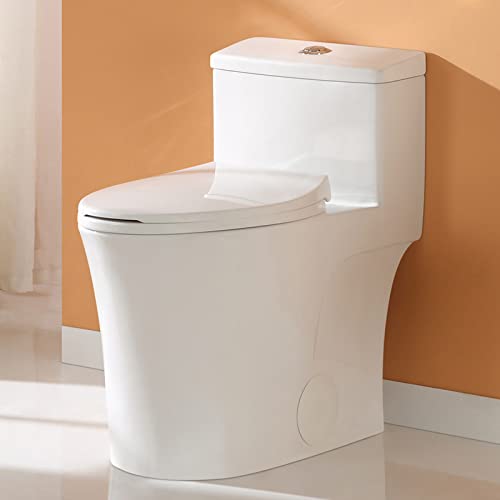
HOROW T0338W Compact One Piece Toilet, ADA Chair Height 17.3", Elongated Bowl, Dual Flush 1.1/1.6 GPF, White, 12 Inch Rough-In
- Compact One Piece Design: Fits small bathrooms with seamless look
- ADA Chair Height: 17.3-inch seat height for comfort
- Dual Flush System: 1.1/1.6 GPF water-saving flush
As an affiliate, we earn on qualifying purchases.
As an affiliate, we earn on qualifying purchases.
Frequently Asked Questions
How Long Do Dual-Flush Toilets Typically Last?
You might wonder about a dual-flush toilet’s lifespan, which usually ranges from 10 to 15 years. Durability factors like build quality, usage frequency, and maintenance can influence this. If you choose a well-made model and keep it clean, it can last longer. Proper care helps maximize your toilet’s durability, ensuring you get the most out of your investment over its expected lifespan.
Are Dual-Flush Toilets Compatible With Existing Plumbing?
Imagine upgrading your bathroom without hassle—that’s possible with dual-flush toilets. They’re generally compatible with existing plumbing, making installation straightforward. You might face some retrofit options, but most models are designed for easy adaptation. Before purchasing, check your current setup and consult a plumber if needed. This way, you get eco-friendly efficiency without the stress of complex plumbing changes, ensuring your upgrade is smooth and satisfying.
Do Single-Flush Toilets Use More Water Over Time?
Single-flush toilets generally use more water per flush compared to dual-flush models, which offer two options to reduce water consumption. Over time, this increased water usage can lead to higher water bills, reducing your long-term savings. By choosing a dual-flush toilet, you can considerably cut water consumption, saving money in the long run. So, if you’re looking to minimize water use and save costs, dual-flush models are typically the better choice.
Which Type Is Easier to Repair and Maintain?
Imagine facing a sudden toilet issue—would you prefer a simple fix or a complicated repair? When it comes to maintenance complexity and repair frequency, single-flush toilets often win. They’re generally easier to repair and require less frequent fixes, thanks to their straightforward design. Dual-flush models, while eco-friendly, can be trickier and more costly to maintain. So, if ease and reliability matter most, a single-flush toilet might be your best bet.
Are There Any Government Rebates for Installing Dual-Flush Toilets?
You might be pleased to know that some government recycling programs offer rebates for installing dual-flush toilets. These rebates aim to encourage water conservation and improve rebate eligibility, making eco-friendly choices more affordable. To find out if you qualify, check local or state energy and water departments’ websites. Taking advantage of these rebates can save you money while supporting sustainability efforts, aligning your home upgrades with environmental initiatives.
Conclusion
Ultimately, choosing between dual-flush and single-flush toilets depends on your priorities—water efficiency or simplicity. Like a well-placed brushstroke in a masterpiece, your decision shapes your bathroom’s sustainability and convenience. Will you embrace the versatility of dual-flush or the straightforward nature of single-flush? Remember, your choice isn’t just about flushing; it’s about making a statement for the environment and your lifestyle. So, make it wisely—your future self will thank you.