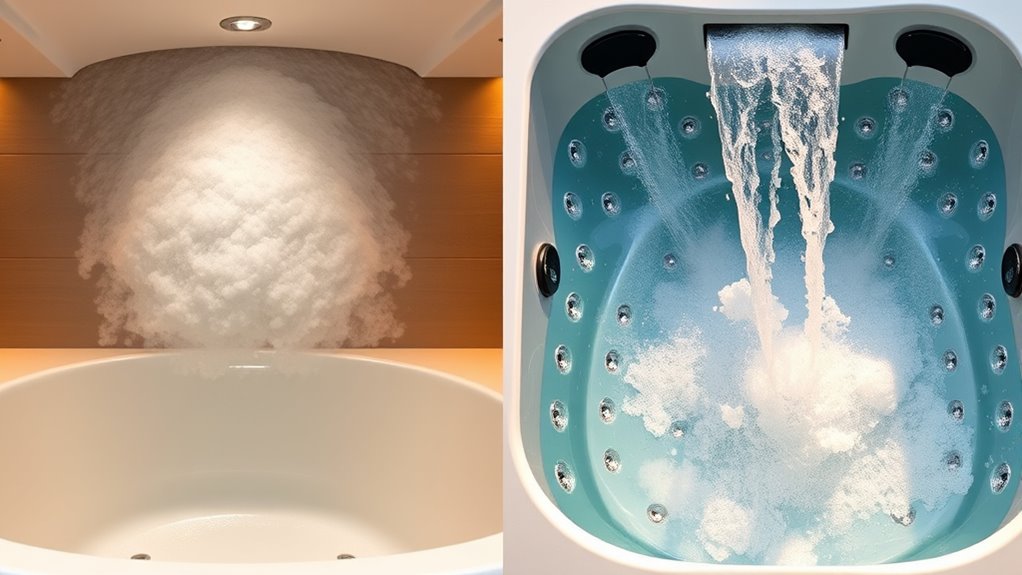
Air jet tubs produce gentle, bubbly streams that create a calming, sensory experience perfect for relaxation and aromatherapy. In contrast, water jet tubs deliver powerful jets that provide targeted massage and deep tissue therapy, ideal for muscle relief. Air jets tend to be quieter and more energy-efficient, while water jets focus on hydrotherapy benefits. To discover which option best suits your needs and preferences, explore more about their features and benefits.
Key Takeaways
- Air jet tubs provide gentle, bubbly massages ideal for relaxation, while water jet tubs deliver powerful, targeted hydrotherapy for muscle relief.
- Air jets are quieter, more energy-efficient, and often include diffusers for aromatherapy, unlike the more forceful and energy-demanding water jets.
- Water jet tubs focus on deep tissue massage and circulation benefits, whereas air jets promote calming, sensory-rich experiences.
- Energy consumption is typically lower for air jet systems due to less powerful pumps, making them more eco-friendly and cost-effective over time.
- The choice depends on whether you prioritize soothing sensory therapy or intense muscle therapy and hydrotherapy benefits.

Are you trying to decide between an air jet and a water jet tub for your relaxation needs? Both options offer unique experiences, but understanding their differences can help you choose the perfect fit. Air jet tubs use small, adjustable nozzles to produce a gentle, massaging stream of air that creates a soft, bubbly sensation across your skin. Water jet tubs, on the other hand, feature powerful jets that shoot streams of water with force, delivering deep tissue massage and targeted relief. If you’re seeking a soothing, calming atmosphere, air jets tend to be quieter and more subtle, making them ideal for unwinding after a long day. Water jets, with their more vigorous action, are better suited for those looking for more intense therapy or muscle relaxation.
Aromatherapy benefits play a significant role in choosing between these tubs. Air jet systems often incorporate small diffusers that release essential oils into the bubbles, creating a fragrant, aromatic experience. This can enhance your relaxation, promote better sleep, and reduce stress, making air jets a popular choice for those who enjoy sensory therapy. Water jet tubs, while sometimes compatible with aromatherapy, generally focus more on the hydrotherapy aspect. Their jets deliver powerful streams that penetrate muscles, helping to alleviate soreness and improve circulation. If aromatherapy is a priority for you, check whether the tub offers built-in diffusers or space for adding oils to maximize these benefits.
Energy efficiency is another vital factor. Air jet systems tend to consume less electricity because they operate with smaller, less powerful pumps. This means lower energy bills and a more eco-friendly option over time. Water jet tubs often require more robust pumps to generate the force needed for their jets, which can lead to higher energy consumption. If you’re environmentally conscious or want to save on utility costs, an air jet tub might be the smarter choice. However, keep in mind that energy efficiency also depends on the size of the tub, the quality of the equipment, and your usage habits. Many modern models incorporate energy-saving features, so look for those to get the most out of your investment.
air jet bathtub with aromatherapy diffuser
As an affiliate, we earn on qualifying purchases.
As an affiliate, we earn on qualifying purchases.
Frequently Asked Questions
Are Air Jets or Water Jets More Energy-Efficient?
You’ll find that air jets are generally more energy-efficient than water jets, thanks to their lower energy consumption. They use less electricity, which reduces your environmental impact. Water jets tend to require more power to operate, leading to higher energy costs and a bigger ecological footprint. If you’re concerned about saving energy and minimizing environmental impact, opting for a tub with air jets is a smart choice.
Which Type Requires More Maintenance Over Time?
Have you considered which tub type demands more upkeep? Generally, water jet tubs require more maintenance over time because their components, like pumps and seals, are more prone to wear and need regular cleaning. Air jet tubs tend to be simpler, with fewer moving parts, making them more durable and easier to maintain. So, if you prefer less frequent cleaning and longer-lasting components, air jets might be the better choice.
Can I Switch Between Air and Water Jets Easily?
You can switch between air and water jets, but it may not be completely easy. Most tubs don’t have a built-in jet switch for quick changes, so you might need to adjust or turn off one system before using the other. This limits user flexibility slightly, requiring some effort and patience. Consider a tub designed for easy jet switching if you want maximum flexibility, but be prepared for some manual adjustments.
Do Air Jet Tubs Offer Better Hygiene Than Water Jet Tubs?
You might think air jet tubs are more hygienic because they produce fewer bubbles, but hygiene concerns depend on cleaning procedures. Air jets tend to trap less bacteria because they don’t hold as much water, making them easier to clean thoroughly. Regular cleaning is essential for both types, but air jets generally require less maintenance to keep bacteria at bay, giving you a cleaner, safer soaking experience.
Are There Health Benefits Specific to One Jet Type?
Yes, each jet type offers unique health benefits. Air jets improve respiratory health by providing gentle, soothing bubbles that promote deep breathing. Water jets stimulate circulation through targeted massage, enhancing blood flow and reducing muscle tension. You may find that air jets are better for respiratory benefits, while water jets support circulatory stimulation. Depending on your needs, choosing the right jet type can boost your overall wellness and relaxation.
water jet whirlpool tub for muscle therapy
As an affiliate, we earn on qualifying purchases.
As an affiliate, we earn on qualifying purchases.
Conclusion
Think of air jet tubs as gentle breezes that whisper across your skin, offering a soft, soothing touch. Water jet tubs, on the other hand, are like powerful rivers that carve through tension, providing deep muscle relief. Choosing between them is like selecting between a calming wind or a rushing current—each offers a unique way to refresh and rejuvenate. Whichever you pick, you’re inviting a personalized escape into relaxation’s natural flow.
energy-efficient air jet bathtub
As an affiliate, we earn on qualifying purchases.
As an affiliate, we earn on qualifying purchases.
hydrotherapy water jet tub
As an affiliate, we earn on qualifying purchases.
As an affiliate, we earn on qualifying purchases.