TL;DR

Get home appliances delivered free with Prime
- Fast, free delivery on millions of items
- Prime Video, Amazon Music and more included
- Member-only deals all year
An Hunker report describes renewed interest in Art Deco-inspired bathroom tile, with jewel tones, geometric patterns and arch or fan motifs appearing in contemporary designs. Google Trends data cited by the report shows searches for “art deco bathroom accessories” are up 100% since the beginning of the year, though it does not provide the search volume or a longer-term comparison.
Art Deco-inspired bathroom tile is attracting fresh interest among homeowners considering renovations, according to a Hunker report that points to jewel-toned colors, geometric patterns and arch motifs as alternatives to plain white tile. The report cites Google Trends data showing searches for “art deco bathroom accessories” are up 100% since the beginning of the year, although it does not give the search volume or specify a year for that comparison.
The style draws on bathroom designs associated with the 1920s and 1930s, including strong geometry, decorative mosaics and saturated color. A more restrained contemporary version, often called Neo Deco or New Deco, adapts those features for modern rooms rather than reproducing a period interior wholesale. The Hunker report describes color as a central feature of the current interpretation.
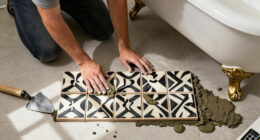
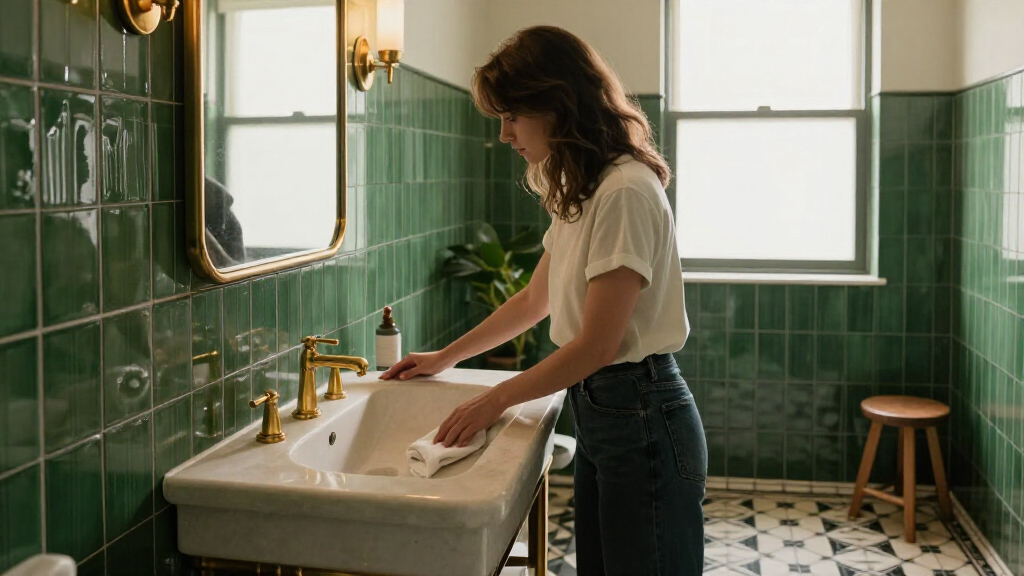
Tile options range from emerald green surfaces with fan-like motifs to pastel square tiles and smaller mosaics. Mosaic patterns can bring geometric detail to floors or compact spaces, while scalloped shapes and three-dimensional effects offer more pronounced decorative choices. These examples are design options cited by the report, not evidence that any one format is more popular than another.
The report also points to products at different price and commitment levels, including a black porcelain tile sold through Home Depot and peel-and-stick composite wall tiles. Their availability may make it easier for shoppers to try the look, but the article does not compare durability, installation requirements or costs across products. Those details depend on the specific tile and bathroom conditions.
A More Decorative Bathroom Palette
The interest matters to homeowners because bathroom tile is a visible, relatively long-lived part of a renovation. Moving away from white, builder-grade finishes can make a room feel more individual, but choosing a bold pattern or saturated color may also make future updates more involved than changing paint or accessories. The report presents Art Deco as one way to add character while keeping the overall design contemporary.
The range of choices allows different levels of commitment: a geometric floor or accent wall can introduce the style without covering every surface, while peel-and-stick products may offer a less permanent route. Before buying, readers should check product specifications, suitability for the intended bathroom location, and installation guidance. The article does not establish how well any featured product performs over time.
The reported search increase is a signal of online interest, not proof that most homeowners are renovating in this style or that sales have risen by the same amount. Still, the combination of search activity and products marketed around Deco motifs suggests that consumers have more ways to explore the look than a single custom-tile option.
As an affiliate, we earn on qualifying purchases.
From Classic Deco to Neo Deco
Art Deco developed as a decorative style associated with the early 20th century, and its bathroom applications often use repeating geometry, mosaics and distinctive shapes. Hunker’s report frames the current revival as a modern interpretation rather than a direct return to period interiors. It describes Neo Deco as retaining recognizable Deco features while using a more restrained approach.
Designer Charu Gandhi, quoted by LivingEtc. in wording reproduced in the report, characterizes New Deco as translating the style into a contemporary design language. That distinction helps explain why present-day examples can combine decorative tile with modern finishes rather than relying on an entirely maximalist scheme.
The report says tile manufacturers are responding to renewed interest and names both mainstream and specialty options. It also cites a Google Trends comparison for searches related to bathroom accessories. The article does not supply a data table, exact dates, or a comparison with other bathroom trends, so the figure should be read as a limited indicator rather than a full measure of the market.
“New Deco is about distilling the essence of Art Deco into a contemporary language. It’s not about maximalism for the sake of it, but about striking a balance between richness and restraint.”
— Designer Charu Gandhi, quoted by LivingEtc. and reproduced in the Hunker report
Search Data Leaves Gaps
The report does not specify which year “the beginning of the year” refers to, the dates covered, the underlying number of searches or the baseline used for the 100% comparison. Google Trends search interest also does not directly measure purchases, renovation plans or the share of bathrooms being redesigned with Deco tile.
It is also unclear how widespread the trend is across regions and price ranges. The report cites product examples and says manufacturers are responding, but provides no sales figures, consumer survey or comparison of product availability. Its description of Neo Deco as a leading 2026 trend is a design assessment, not a quantified ranking in the material provided.
Individual product performance remains unaddressed. Buyers would need to check whether a tile is suitable for floors, walls or wet areas, along with installation instructions, maintenance needs and total project costs. No independent durability testing is included in the cited report.
Check Products Before Renovating
Readers considering the style can compare samples and decide where a pattern or color would have the most effect, such as a floor, feature wall or limited accent. Before committing, they should verify the tile’s intended use, dimensions, finish, cleaning guidance and compatibility with the existing surface. For peel-and-stick options, the manufacturer’s directions and the condition of the wall are particularly relevant.
Further evidence would help show whether the reported interest translates into broader purchasing: clearer Google Trends dates and baseline information, retailer sales data, or additional consumer research. Until then, the available reporting supports a narrower conclusion: Art Deco-inspired bathroom design is receiving attention, and a range of products makes the look accessible to shoppers, but its scale and staying power are not established.
Key Questions
What does Art Deco-inspired bathroom tile look like?
Examples include geometric mosaics, fan motifs, scalloped shapes, pastel squares and jewel-toned tiles. Contemporary versions may use these details alongside simpler modern finishes.
What is Neo Deco?
In the report, Neo Deco or New Deco refers to a contemporary interpretation of Art Deco. Designer Charu Gandhi describes it as retaining the style’s essence while balancing richness with restraint.
Does the 100% search increase mean sales doubled?
No. The report cites an increase in searches for “art deco bathroom accessories,” not sales. It does not provide the search volume, exact dates or comparison baseline, and search activity does not establish how many people bought tile.
Can the style work without covering the whole bathroom?
Yes. The examples in the report include mosaics and decorative shapes that can be used in specific areas, as well as less permanent peel-and-stick wall options. Check each product’s intended use and installation guidance before choosing it.
Source: rss
Columbus Day / Indigenous Peoples' Day Picks
long weekend sales
As an affiliate, we earn on qualifying purchases.