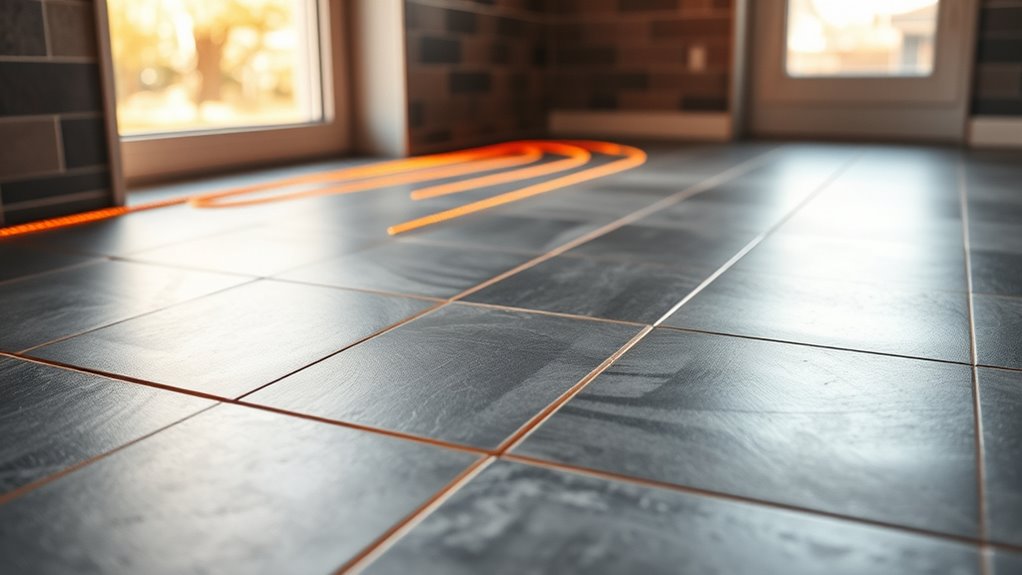

Underfloor heating provides even, radiant warmth that makes your home more comfortable and cozy. It’s energy-efficient, operating at lower temperatures and reducing drafts and cold spots. You can choose electric or hydronic systems based on your space, with professional installation ensuring proper setup. Flooring materials like tile or stone work best for heat transfer. Once installed, it offers silent, space-saving heating that enhances your environment. Continue exploring to discover how to install and maximize these benefits.
Key Takeaways
- Underfloor heating provides even, radiant warmth, enhancing comfort and eliminating cold spots in your space.
- It is energy-efficient, operating at lower temperatures and reducing heating costs over time.
- Suitable flooring options like tile or stone optimize heat transfer and system performance.
- Installation involves preparing the subfloor, laying heating elements, and connecting to a thermostat for control.
- Benefits include space-saving aesthetics, silent operation, and long-lasting comfort improvements.

Have you ever considered how underfloor heating can transform your living space? This innovative heating system delivers warmth in a way that’s both comfortable and efficient. Unlike traditional radiators, which rely on convection to heat the air, underfloor heating provides radiant heat, meaning it warms your floors directly and evenly. When you step onto your warm, inviting floor, you’ll feel a gentle, consistent heat that fills the entire room. This method of heating isn’t just about comfort; it also offers remarkable energy efficiency. Because radiant heat warms objects and people directly, it operates at lower temperatures than conventional radiators, reducing energy consumption and lowering your utility bills. Plus, the even distribution of heat minimizes cold spots and drafts, creating a cozy environment that feels more natural and inviting.
Underfloor heating offers efficient, even warmth directly through your floors, enhancing comfort and reducing energy costs.
Installing underfloor heating is straightforward, but it requires some planning. You’ll want to start by evaluating your space, considering the type of flooring you have or plan to install. Not all flooring materials are suitable for underfloor heating, so it’s important to choose options like tile, stone, or certain types of laminate that conduct heat well. Once you’ve selected your flooring, you’ll need to decide between electric or hydronic systems. Electric systems are often simpler to install and ideal for small areas or renovations, while hydronic systems use water heated by a boiler and are better suited for larger spaces due to their efficiency and ability to handle extensive coverage.
The installation process typically involves preparing the subfloor, laying insulation to prevent heat loss downward, and then installing the heating elements—either electric mats or pipes for hydronic systems—before covering them with your chosen flooring. It’s essential to guarantee proper spacing and secure placement to prevent damage and maximize efficiency. Connecting the system to a thermostat allows easy control over temperature, ensuring you can maintain a comfortable environment without wasting energy. Additionally, proper insulation can significantly improve the system’s efficiency by reducing heat loss through the floor. While some DIY enthusiasts may handle simple electric mats, professional installation is recommended for hydronic systems or complex setups to ensure safety and ideal performance.
Once installed, underfloor heating provides a silent, efficient, and aesthetically pleasing solution for your home. It eliminates bulky radiators, freeing up space and giving your rooms a cleaner look. Its radiant heat system ensures that warmth is evenly distributed, creating a cozy atmosphere that’s both energy-efficient and cost-effective. With proper installation and maintenance, underfloor heating can be a long-lasting upgrade that enhances your comfort and reduces your energy bills, making it a wise choice for modern living.
electric underfloor heating mats
As an affiliate, we earn on qualifying purchases.
As an affiliate, we earn on qualifying purchases.
Frequently Asked Questions
How Does Underfloor Heating Impact Home Resale Value?
You’ll likely see a positive impact on your home’s resale value with underfloor heating, as it boosts property appeal to modern buyers seeking comfort and energy efficiency. This upgrade makes your home stand out, especially in colder climates, attracting more interest and potentially commanding higher offers. By investing in underfloor heating, you enhance your property’s overall appeal, making it a smart move for increasing home value and attracting potential buyers.
Can Underfloor Heating Be Installed in Existing Floors Easily?
You can install underfloor heating in existing floors, but there are retrofit challenges to take into account. You’ll need to evaluate flooring compatibility, as some materials like tile or concrete work best, while others may need removal or replacement. The process can be complex, requiring careful planning and possibly professional help to ensure proper insulation and wiring. Overall, with the right approach, adding underfloor heating to your current setup is achievable.
What Are the Energy Savings Compared to Traditional Radiators?
Imagine your home basking in gentle warmth, like a cozy campfire. With underfloor heating, you can expect significant energy efficiency improvements, often reducing your heating costs by up to 20-30% compared to traditional radiators. The cost comparison favors underfloor systems in the long run, as they use less energy and distribute heat evenly, leading to lower bills and a more comfortable, eco-friendly home.
Is Underfloor Heating Suitable for All Types of Flooring?
You’ll find that underfloor heating isn’t suitable for all flooring types due to flooring compatibility and installation challenges. For example, tile and stone work well because they conduct heat efficiently, while laminate or carpet may require special considerations or might not be suitable at all. Before installation, check your flooring’s compatibility and consider potential installation challenges to guarantee the best performance and avoid future issues.
How Long Does It Take for Underfloor Heating to Warm a Room?
Imagine a cozy, sunlit room awakening from a gentle slumber—your underfloor heating works its magic quickly, usually warming the space within 30 minutes to an hour. The installation timeline and precise temperature regulation influence this speed, with newer systems responding faster. You’ll notice the warmth spreading evenly, creating comfort that feels almost effortless, turning your home into a haven of warmth and relaxation in no time.
hydronic underfloor heating system
As an affiliate, we earn on qualifying purchases.
As an affiliate, we earn on qualifying purchases.
Conclusion
In choosing underfloor heating, you enjoy comfort, efficiency, and a sleek aesthetic. You experience even warmth, reduced energy bills, and unobstructed space. You embrace simplicity in installation, ease in maintenance, and long-term durability. Ultimately, you gain a smarter heating solution that enhances your home, elevates your comfort, and simplifies your life. With underfloor heating, you don’t just heat your space—you transform it into a cozy, efficient, and beautifully functional environment.
underfloor heating thermostat
As an affiliate, we earn on qualifying purchases.
As an affiliate, we earn on qualifying purchases.
tile stone underfloor heating
As an affiliate, we earn on qualifying purchases.
As an affiliate, we earn on qualifying purchases.