Whole-house water filters help guarantee your home has clean water by removing contaminants like chlorine, heavy metals, and bacteria. They improve taste and reduce health risks, making your drinking, cooking, and bathing water safer. However, they might not effectively eliminate all contaminants, such as specific pesticides or pharmaceuticals. Choosing the right filter is essential, and maintaining it properly will optimize performance. Curious about what types are available and how to choose the best one for your needs?

Get home appliances delivered free with Prime
- Fast, free delivery on millions of items
- Prime Video, Amazon Music and more included
- Member-only deals all year
Key Takeaways
- Whole-house water filters remove contaminants like chlorine, heavy metals, sediment, and microbial pathogens, ensuring cleaner water for the entire home.
- Activated carbon filters improve taste but may not effectively remove certain heavy metals and pesticides.
- Regular water testing is essential to identify specific contaminants and guide filter selection for optimal performance.
- Maintenance, including filter replacement every 6-12 months, is crucial for ensuring continued effectiveness and preventing bacterial growth.
- Whole-house filters may reduce long-term costs by minimizing bottled water use and plumbing repairs while enhancing overall water quality.
As an affiliate, we earn on qualifying purchases.
What Is a Whole-House Water Filter?
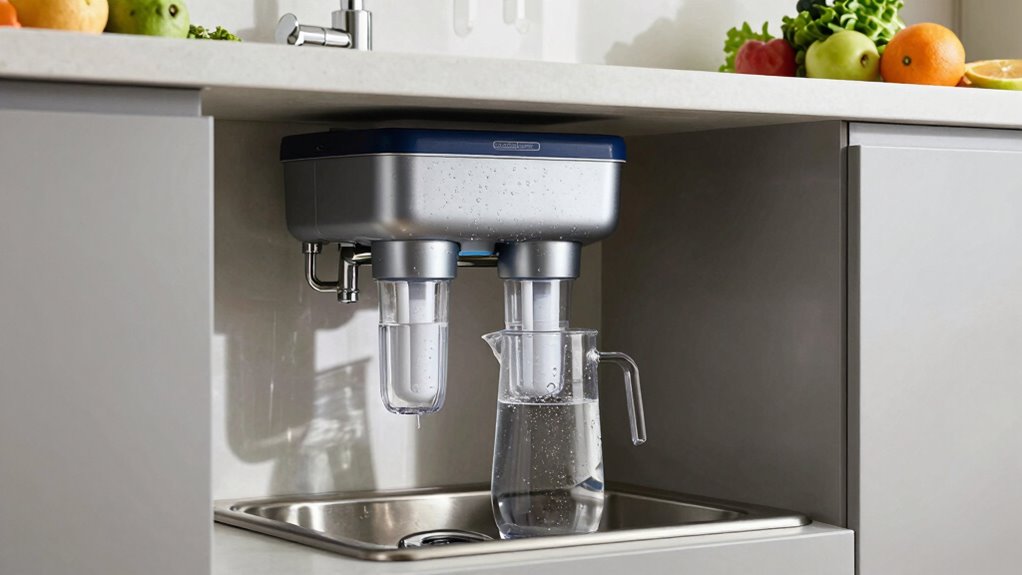
A whole-house water filter is a thorough system designed to purify water at the point it enters your home. It guarantees that every tap, shower, and appliance gets clean water, enhancing your quality of life. There are various filter types, including sediment filters, activated carbon filters, and reverse osmosis systems, each targeting different contaminants. When considering the installation process, you’ll typically need a professional to confirm everything’s set up correctly and efficiently. This process involves evaluating your water quality, choosing the right system, and connecting it to your main water line. With the right whole-house water filter, you’ll enjoy cleaner, safer water throughout your home, giving you peace of mind about what you and your family consume.
Do You Really Need a Whole-House Water Filter?
When considering a whole-house water filter, you should weigh the health benefits against your current water quality. Evaluating whether your water needs improvement can help you determine if the investment is worthwhile. Let’s break down the cost versus value to see if it’s the right choice for you.
Health Benefits Considerations
Considering the potential contaminants in your tap water, you might wonder if investing in a whole-house water filter is worth it. These systems can greatly reduce health risks associated with harmful substances like chlorine, heavy metals, and bacteria. Contaminated water can lead to serious health issues, including waterborne diseases, which can affect your family’s well-being. By filtering out these impurities at the source, you’re not just enhancing the taste and smell of your water; you’re also promoting a healthier lifestyle. While no system removes every potential contaminant, a whole-house filter can provide peace of mind, ensuring that the water you use for drinking, cooking, and bathing is as clean and safe as possible. Additionally, microplastics in dust can be a concern, as they may find their way into your water supply, further emphasizing the need for effective filtration. Implementing smart home technology can also enhance your water filtration system, allowing for real-time monitoring of water quality and usage. Moreover, maintaining indoor air quality is essential, as poor air can exacerbate health problems related to contaminated water. Furthermore, a garage security system can help protect your water supply from potential contamination by preventing unauthorized access to your home. In addition to these benefits, installing a filtration system can also reduce chemical exposure from various contaminants that could compromise your family’s health.
Water Quality Assessment
Evaluating your water quality is essential before deciding whether a whole-house water filter is right for you. Start with water testing to identify contaminants like chlorine, lead, or bacteria that may affect your health. Knowing what’s in your water will guide you toward the most suitable filtration methods. For instance, if you discover high levels of sediment, a sediment filter might be necessary. Alternatively, if you find harmful chemicals, activated carbon filters could be your best bet. Understanding your specific water quality needs helps guarantee you invest in a system that effectively addresses your concerns. Furthermore, being aware of filtration/suction basics can enhance your understanding of how different systems work. Don’t skip this critical step; it’ll save you time and money in the long run.
Cost Vs. Value Analysis
While it might seem like a significant investment upfront, weighing the cost against the long-term benefits of a whole-house water filter can reveal its true value. You’re not just paying for clean water; you’re also investing in your family’s health and comfort. The initial investment can be intimidating, but consider the long-term savings on bottled water, plumbing repairs, and health-related expenses. By filtering out harmful contaminants, you reduce the risk of waterborne illnesses, potentially saving you money on medical bills. Additionally, a whole-house water filter can help maintain indoor air quality, as improved water quality can prevent issues related to humidity and mold. Moreover, using filtered water can reduce the likelihood of scale buildup in your HVAC system, which can enhance its efficiency. Furthermore, having access to clean water can encourage better hydration habits, promoting overall health for your family. Investing in fitness and wellness practices can further enhance your family’s quality of life. Plus, appliances may last longer without the buildup of sediment and scale. In the end, a whole-house water filter can be a smart choice, offering both immediate benefits and future savings that outweigh the initial cost. Additionally, investing in a whole-house water filter can enhance your home’s overall wellness technology, contributing to a healthier living environment.
Contaminants Whole-House Water Filters Can Remove

Whole-house water filters can effectively remove a variety of contaminants, guaranteeing your water is both safe and clean for everyday use. These systems excel in chlorine removal, improving taste and odor while protecting your plumbing. They also tackle heavy metals like lead and mercury, safeguarding your family’s health. Sediment removal is another key feature, filtering out particles that can clog pipes and appliances. Additionally, these filters help reduce chemical contaminants and volatile organic compounds (VOCs), which can leach into your water supply. By addressing microbial pathogens, they further assure that harmful bacteria and viruses are diminished. With these capabilities, a whole-house water filter can greatly enhance the quality of your home’s water, giving you peace of mind. Furthermore, optimizing filter sizing and flow can significantly improve the overall performance of your water system. For added assurance, understanding tick-borne disease prevention can help you make informed choices about your family’s health in relation to water safety. Moreover, it’s essential to ensure adequate maintenance of your filtration system to prevent premature breakdown and maintain efficiency. To ensure comprehensive protection, many homeowners also consider motorized curtain rods to address additional home comfort and security. Moreover, understanding the transfer-switch fundamentals can help integrate backup power solutions during emergencies, ensuring your water supply remains unaffected.
What Whole-House Water Filters Don’t Remove
Even with their impressive capabilities, whole-house water filters have limitations. They often can’t tackle specific contaminants like heavy metals, pharmaceuticals, and certain pesticides. If you’re relying solely on these systems, you might still expose yourself to harmful elements. Additionally, some filters struggle with volatile organic compounds (VOCs) and bacteria, which can slip through the filtration process. It’s essential to understand these filtration limitations to make informed decisions about your water quality. Regular testing can help identify any persistent issues that your filter might not address. Therefore, supplementing your whole-house system with point-of-use filters or other purification methods could be necessary for thorough protection against specific contaminants in your water supply.
Comparing Whole-House Water Filter Types

When you’re exploring whole-house water filter types, it’s essential to understand the differences in their mechanisms and effectiveness. You’ll often come across carbon filters, which excel at removing chlorine and improve taste. However, their filter performance can dip when faced with heavy metals. Reverse osmosis systems offer thorough filtration but may require more upkeep and space. Then there are UV filters, which effectively kill bacteria but don’t remove chemicals. Each type has unique installation requirements; some need professional setup, while others you can tackle yourself. Understanding these distinctions helps you assess what fits your home’s needs best, ensuring you choose a system that delivers excellent filter performance and suits your installation capabilities. Additionally, considering ergonomics and wellness in your home environment can enhance your overall comfort and health while using these water systems.
How to Choose the Right Whole-House Filter
How do you decide which whole-house filter is best for your home? Start by understanding your water quality and specific needs. Consider the filtering technologies available, such as activated carbon, reverse osmosis, or UV purification. Each has its strengths and weaknesses.
Next, evaluate the installation requirements. Some systems may need professional installation, while others are DIY-friendly. Here’s a quick comparison:
| Filtering Technology | Pros | Cons |
|---|---|---|
| Activated Carbon | Removes chlorine, odors | Doesn’t remove heavy metals |
| Reverse Osmosis | Highly effective | Wastes some water |
| UV Purification | Kills bacteria | No chemical contaminants |
Whole-House Water Filter Maintenance Tips
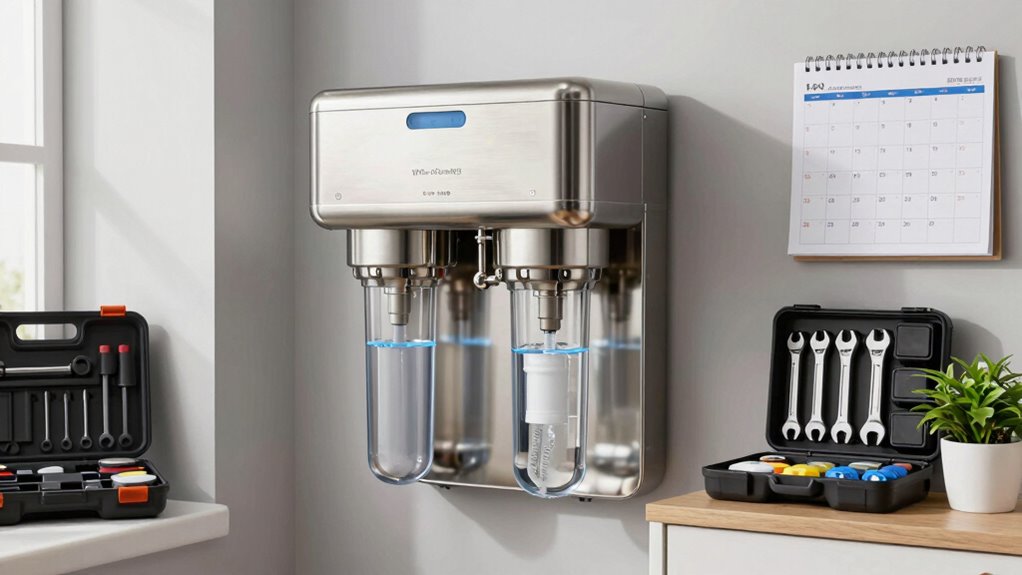
To keep your whole-house water filter running smoothly, you’ll want to establish a regular filter replacement schedule. Don’t forget to clean and sanitize your units periodically, and keep an eye on water pressure levels to catch any issues early. These simple maintenance tips can help guarantee your system remains efficient and effective.
Regular Filter Replacement Schedule
Regularly replacing your whole-house water filter is essential for maintaining clean and safe water throughout your home. Understanding the filter lifespan is vital; most filters need replacement every 6 to 12 months, but this can vary based on your water quality and usage. Pay attention to replacement indicators, such as decreased water pressure or changes in taste and odor. If you notice any of these signs, it’s time to change your filter, even if you haven’t reached the typical replacement timeframe. Keeping a schedule can help you avoid unexpected issues, ensuring your water remains free from contaminants. Regular maintenance not only prolongs the life of your filter but also protects your plumbing and appliances from damage.
Cleaning and Sanitizing Units
Cleaning and sanitizing your whole-house water filter is essential for peak performance and water quality. Regular maintenance helps remove contaminants and prevents bacterial growth. Here are some tips to keep your unit in top shape:
- Use effective sanitizing techniques like vinegar or hydrogen peroxide.
- Clean your filter according to the recommended cleaning frequency—typically every 6 to 12 months. Regular maintenance also ensures that your system can handle a variety of contaminants effectively. Additionally, maintaining proper airflow around the unit contributes to overall efficiency.
- Check for any signs of buildup or discoloration during routine inspections.
- Replace filter cartridges as needed to guarantee maximum filtration.
- Consider incorporating HEPA filters into your home for additional air quality improvement.
Monitor Water Pressure Levels
Monitoring water pressure levels is crucial for the efficiency of your whole-house water filter. If the pressure’s too high, it can strain the system, reducing its lifespan and effectiveness. On the other hand, low pressure can hinder proper water flow, leading to inadequate filtration. Regularly check your pressure gauge and adjust it as needed to maintain ideal pressure regulation. Ideally, you want to keep the pressure within the manufacturer’s recommended range. If you notice significant fluctuations, it might signal a problem with your plumbing or the filter itself. By staying on top of your water pressure, you guarantee your filter operates smoothly, providing clean, safe water for your home. Regular monitoring can save you time and money in the long run.
Is a Whole-House Water Filter the Right Choice for You?
Sure! Here’s the revised content with the requested addition:
—
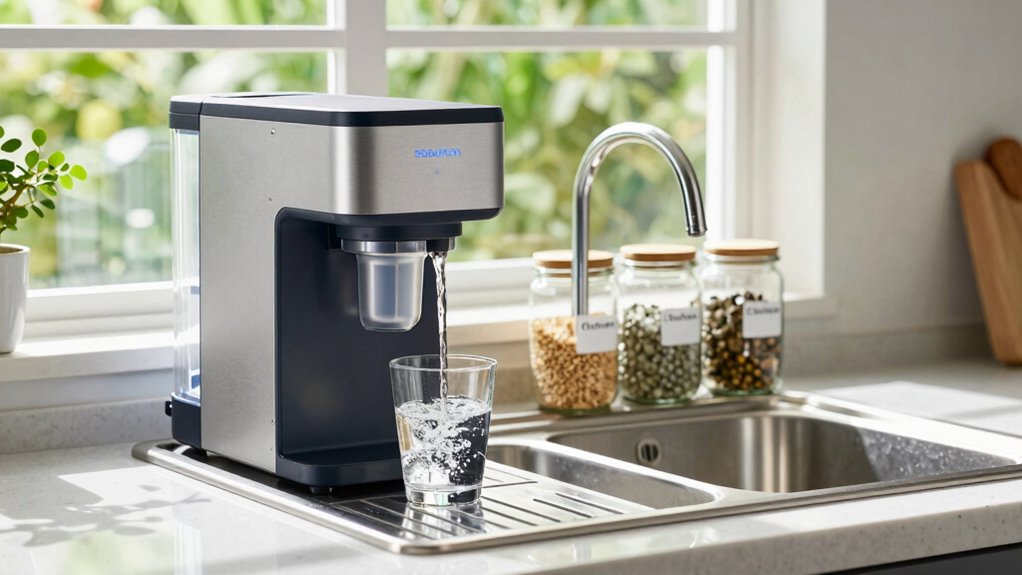
Are you tired of wondering about the quality of your tap water? A whole-house water filter might be just what you need. It can enhance your water’s taste and safety, but consider your specific circumstances first. Here are some factors to weigh:
- Filter efficiency: Verify the system effectively removes contaminants relevant to your area. Additionally, consider the standards for filtration systems that ensure optimal performance. Many systems can help reduce harmful contaminants commonly found in urban water supplies.
- Homeowner preferences: Think about what’s important to you—taste, health, or plumbing protection. Understanding household needs can guide your decision. Additionally, consider how effective the filter is at removing common contaminants like chlorine and lead.
- Budget: Evaluate both installation and maintenance costs.
- Water usage: Match the filter capacity with your household’s water demands.
If you prioritize clean, safe water throughout your home and are willing to invest, a whole-house filter could be the right choice for you. Additionally, understanding your household’s specific water needs can help you select the most suitable filtration system.
—
Let me know if you need further adjustments!
Frequently Asked Questions
How Much Does a Whole-House Water Filter Cost?
A whole-house water filter typically costs between $1,000 and $4,000, depending on the system and installation considerations. You’ll also want to budget for filter maintenance tips, as regular upkeep can add to your overall expenses. Installation might require professional help, which could increase costs further. Remember to factor in the quality of the filtration system to guarantee you’re getting the best value for your investment and clean water for your home.
How Long Do Whole-House Filters Last?
Think of your whole-house filter like a guardian of your water supply. Typically, its lifespan ranges from 5 to 15 years, depending on usage and maintenance. To guarantee it serves you well, follow some basic maintenance tips: check filters regularly, replace them as needed, and monitor water quality. Keeping an eye on these factors can extend your filter’s lifespan, assuring you always have clean, safe water flowing through your home.
Can I Install a Whole-House Filter Myself?
Yes, you can install a whole-house filter yourself if you’re comfortable with DIY installation. Make certain to follow the manufacturer’s instructions carefully, and gather all necessary tools beforehand. It’s crucial to take into account system maintenance as well—regularly check and replace filters as needed to guarantee peak performance. If you encounter any issues during installation, don’t hesitate to consult a professional for guidance. Enjoy the peace of mind that comes with cleaner water!
What Is the Best Brand of Whole-House Water Filters?
When it comes to whole-house water filters, you can’t go wrong with brands like Aquasana, APEC, or Home Master. Each offers impressive filter performance, but it’s smart to explore brand comparisons to find your perfect match. Think of it like choosing a trusty old car; you want reliability and efficiency. So, weigh features, read reviews, and pick the brand that’ll keep your water clean and fresh for years to come.
Are Whole-House Filters Environmentally Friendly?
Yes, whole-house filters can be environmentally friendly. They often use eco-friendly materials and can reduce plastic waste by minimizing bottled water usage. By improving water quality at the source, these systems promote sustainability benefits, such as conserving resources and protecting local ecosystems. You’ll find that investing in a good filter not only enhances your water but also contributes positively to the environment, making it a smart choice for eco-conscious homeowners.
Conclusion
In the grand tapestry of home safety, a whole-house water filter can be a crucial thread. While it’s adept at clearing out many contaminants, it’s important to know its limitations. By understanding what these systems can and can’t remove, you’re better equipped to make an informed choice. So, if you’re looking to enhance your water quality, weigh your options carefully—your health deserves nothing less than crystal-clear clarity.
Halloween Picks
halloween
As an affiliate, we earn on qualifying purchases.