Choosing between low-flow and standard toilets means weighing water savings against reliable performance. Low-flow models use less water per flush, saving you money and helping the environment, but some may clog or underperform if not selected carefully. Modern low-flow toilets have improved, offering strong flushes comparable to traditional models. To get the best balance, it’s essential to pick the right model and consider installation factors—more tips are just ahead.
Key Takeaways
- Low-flow toilets significantly reduce water use, leading to lower utility bills and environmental benefits.
- Modern low-flow models deliver performance comparable to traditional toilets when properly selected.
- Installation of low-flow toilets may require plumbing adjustments, especially in older bathrooms.
- High-quality low-flow toilets minimize clogging and incomplete flush issues common in earlier models.
- Balancing water savings with reliable performance involves choosing the right model and professional installation.
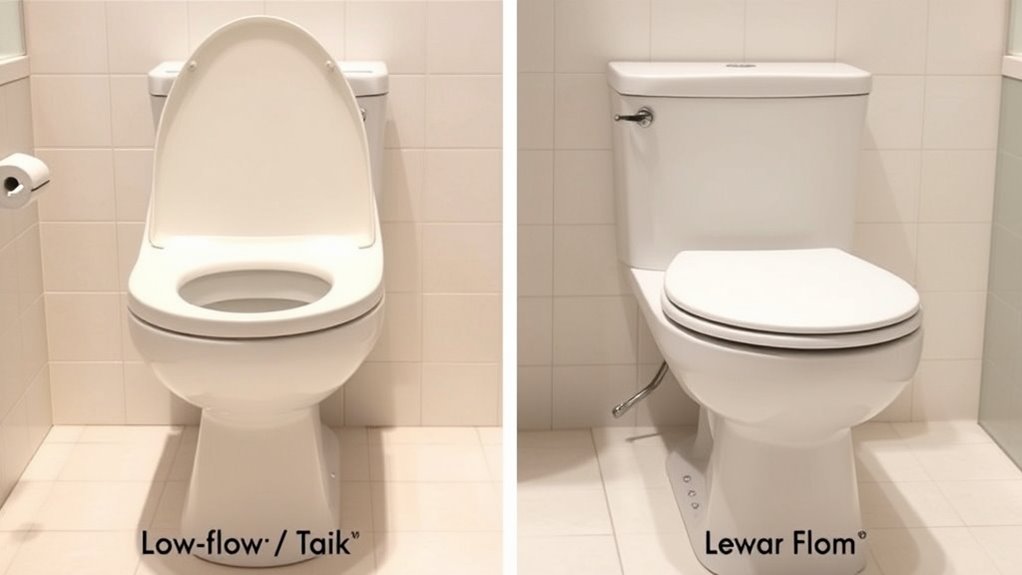
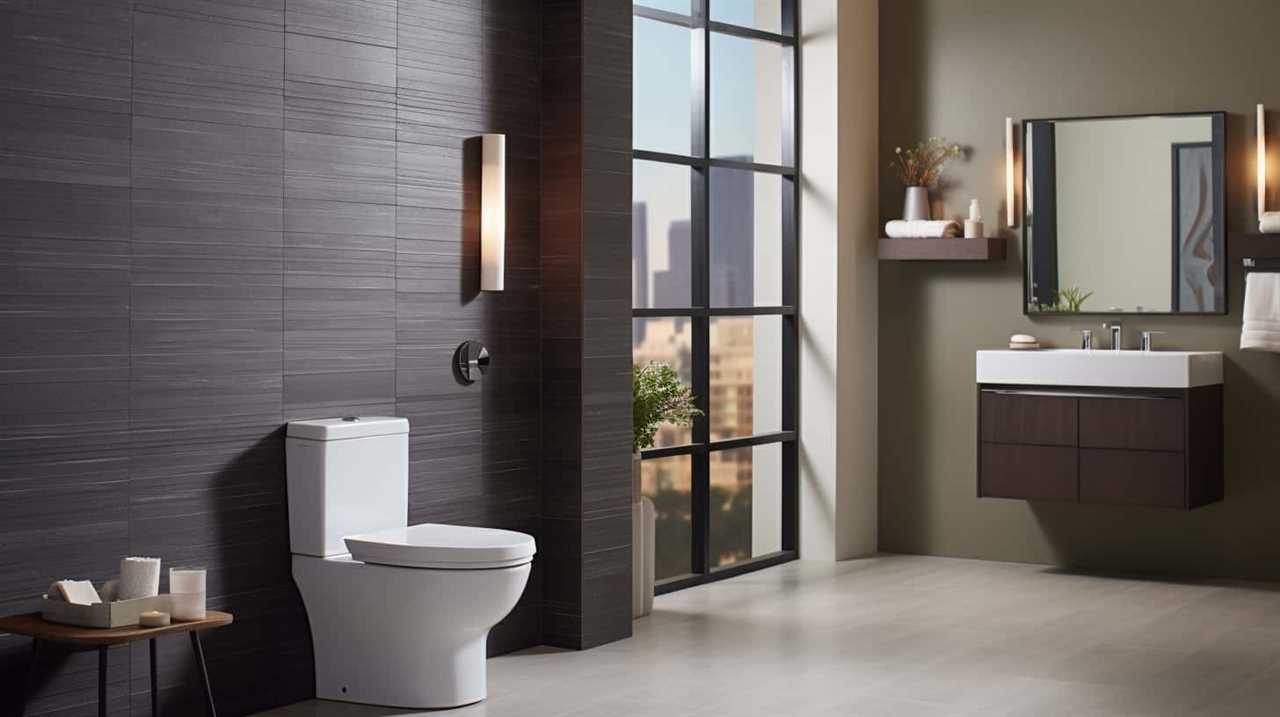
Are low-flow toilets worth the switch compared to standard models? If you’re considering making an eco-friendly upgrade, this is a common question. Low-flow toilets are designed to use markedly less water per flush—usually around 1.28 gallons or less—compared to traditional toilets that often use 3.5 to 5 gallons. The main appeal is obvious: saving water helps reduce your utility bills and lessens your environmental impact. But the decision isn’t just about water savings; it also involves evaluating performance, installation logistics, and long-term durability. When exploring eco-friendly fixtures, you’ll find that modern low-flow toilets have come a long way, offering reliable performance that rivals traditional models. However, they can sometimes be prone to clogs or incomplete flushes, especially if not chosen carefully. This means that while you may save water, you also want a model that performs well and avoids inconvenience.
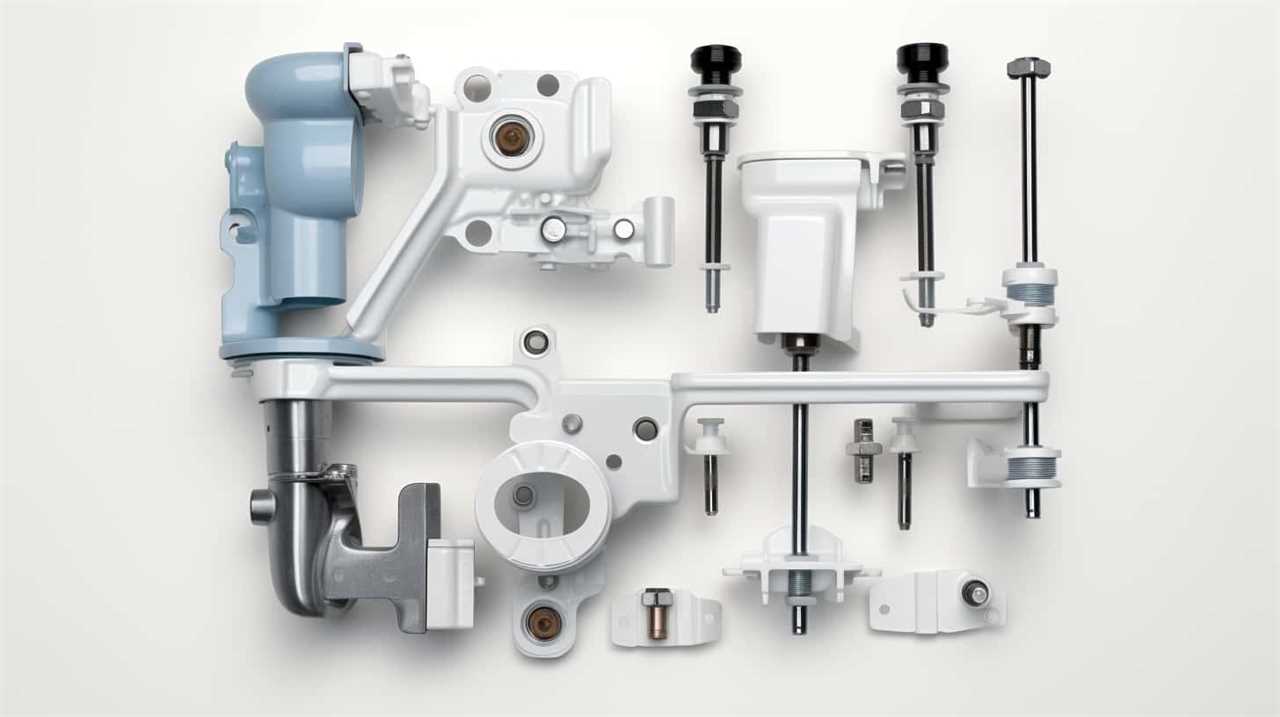
Installation challenges are another factor to weigh. Unlike standard toilets, some low-flow models have different tank and bowl configurations, requiring adjustments to your existing plumbing. If your bathroom setup is older, you might face complications like incompatible mountings or the need for additional parts. This can increase installation costs or require professional help, which adds to your overall expense. While many newer low-flow toilets are designed with easier installation in mind, it’s crucial to check whether your current plumbing supports these fixtures comfortably. If not, you could be looking at costly modifications or extensive renovations. Additionally, some eco-friendly fixtures may have specific requirements for water pressure or venting, making installation more challenging.
Despite these hurdles, the benefits often outweigh the drawbacks for eco-conscious homeowners. Investing in a high-quality low-flow toilet can lead to substantial water savings over time, and many models are now designed to deliver powerful flushes with less water. If you’re worried about installation challenges, consulting a professional beforehand can save you headaches later. They can assess your current plumbing and recommend models that fit seamlessly, minimizing additional work. Plus, the long-term benefits—lower water bills, reduced environmental footprint, and modern design—make the initial effort worthwhile. Ultimately, whether low-flow toilets are worth it depends on your priorities. If you’re enthusiastic to embrace sustainability without sacrificing performance, and you’re prepared for some potential installation challenges, switching to low-flow fixtures can be a smart move. The key is choosing the right model that balances eco-friendliness with reliable operation, and ensuring proper installation to enjoy the full benefits.

HOROW Compact Wall Hung Toilet Combo Set, Concealed In-Wall Toilet Tank Carrier System, Adjustable Wall Mounted Toilet Bowl with Soft-Close Seat, 1.1GPF/1.6 GPF Dual Flush Push Buttons Included, White
Package Included: The In-Wall Toilet Combo Set includes an HR-TG03W toilet bowl, a soft-close toilet seat, a concealed...
As an affiliate, we earn on qualifying purchases.
Frequently Asked Questions
Are Low-Flow Toilets Suitable for High-Traffic Commercial Buildings?
If you’re considering low-flow toilets for high-traffic commercial buildings, they’re generally suitable if you prioritize water savings. However, focus on commercial durability and high traffic efficiency. confirm the toilet model you choose is designed for frequent use, with strong flushing power and reliable performance. Properly selected low-flow toilets can handle high traffic while conserving water, but always verify their durability to avoid costly replacements or repairs.
How Do Low-Flow Toilets Perform in Households With Large Families?
Imagine your household as a bustling city, with every family member contributing to the daily flow. Low-flow toilets, like diligent traffic controllers, keep waste moving efficiently without clogging, even with large family usage. They promote household efficiency by conserving water while still handling high traffic. With proper maintenance, they perform reliably, making your busy household feel smooth and sustainable, balancing water savings with the demands of a lively family.
Can Low-Flow Toilets Be Retrofitted Into Existing Older Plumbing Systems?
Retrofitting low-flow toilets into your existing older plumbing can be tricky due to compatibility issues. You might face challenges like fitting new fixtures with outdated plumbing or leaks from improper sealing. Before proceeding, check your plumbing’s compatibility and consider consulting a professional. Addressing these retrofitting challenges guarantees your new low-flow toilet functions properly, saving water without sacrificing performance. Proper assessment helps avoid future plumbing problems and costly repairs.
What Maintenance Challenges Are Associated With Low-Flow Toilets?
When maintaining low-flow toilets, you might face challenges like blockage prevention and seal integrity issues. Regularly check for clogs, as low-flow models can be prone to blockages if not used properly. Confirm the seal remains intact to avoid leaks, since poor seal integrity can cause water wastage or damage. Cleaning the components and inspecting the flushing mechanism help keep your toilet functioning smoothly and efficiently.
Do Low-Flow Toilets Meet All Environmental Regulations Globally?
You might think low-flow toilets automatically meet all environmental regulations, but that’s not always true. While they often comply with local standards, global standards vary, and some regions have stricter requirements. Environmental compliance depends on design, water efficiency, and testing. So, before assuming your low-flow toilet ticks all boxes worldwide, check if it meets specific global standards—because water savings don’t always mean full compliance.
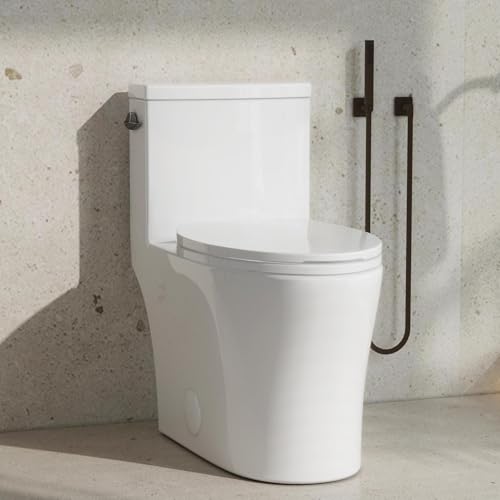
KE KING One Piece Toilet with Powerful Flush, Compact Toilet Elongated Side Lever Flush 1.28 GPF, Sleek Design White Toilet Bowl, MAP Score 1000g, 12'' Rough-in, Certified Quality
Fully Glazed and Skirted Trapway: The skirted trapway offers hidden plumbing creating an elevated and luxurious design with...
As an affiliate, we earn on qualifying purchases.
Conclusion
Ultimately, choosing between low-flow and standard toilets depends on your priorities. If water conservation matters most, low-flow models can save you money and help the environment. However, if performance is your top concern, a standard toilet might serve you better. Remember, “You get what you pay for,” so weigh your options carefully. Making an informed choice guarantees you find the perfect balance between efficiency and function for your home.

VEVOR Macerating Toilet System with Powerful 700W Macerator Pump, Rear Discharge and Upflush Toilet For Basement, Dual Flush Water Disposal, Macerating Toilet System Kit with 3-Inlet, Space Saving
Powerful Transportation Power: Designed specifically for homes without pre-set drainage pipes, this macerating toilet system features a durable...
As an affiliate, we earn on qualifying purchases.
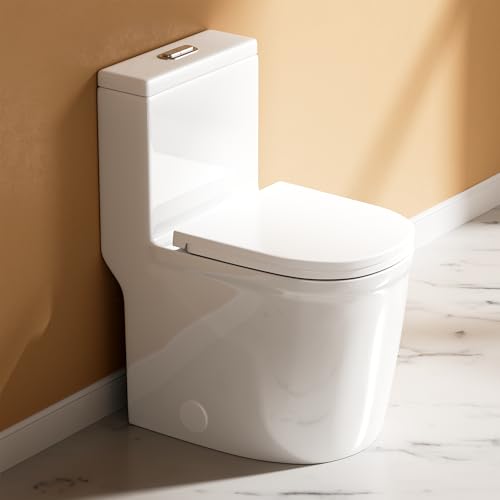
WinZo Compact One Piece Toilet 22.8" Depth Modern Short Design Dual Flush for Small Tiny Mini Bathroom 12" Rough-in,White (WZ5079)
♦ VERY SHORT DESIGN: Compact space saving design protrudes just 22.8 inches from the wall. Perfect for small...
As an affiliate, we earn on qualifying purchases.