When choosing a toilet, consider installation requirements like rough-in size and ease of setup, and guarantee it fits your space. Focus on water efficiency by selecting models with EPA WaterSense labels to save on bills and help the environment. Think about design options, such as one-piece or two-piece models, and look for modern features like automatic flush or bidets for added convenience. Keep these key factors in mind to make a smart, long-lasting choice.
Key Takeaways
- Determine your toilet’s rough-in measurement (commonly 12 inches) to ensure proper fit.
- Choose between one-piece and two-piece models based on installation ease and aesthetic preference.
- Consider water efficiency by selecting EPA WaterSense labeled toilets that use 1.28 gallons per flush or less.
- Check for installation requirements and whether special tools or parts are needed beforehand.
- Review modern features like bidets or smart functions to match your hygiene and convenience needs.

Choosing the right toilet can seem overwhelming, but understanding the key factors makes the process easier. One of the most important considerations is installation tips. You want a toilet that fits well in your bathroom space and is straightforward to install. Before buying, measure your existing rough-in distance—usually 12 inches from the wall to the center of the drain—and make sure the new toilet matches this measurement. If you’re installing it yourself, look for models labeled as easy to install or that come with clear instructions. Some toilets require special tools or additional parts, so check if you’ll need to buy anything extra. Proper installation ensures the toilet functions correctly and prevents leaks or other issues down the line. Keep in mind that some models are designed for one-piece installation, which can be simpler, while others are two-piece, offering a different aesthetic and possibly different installation needs. Additionally, modern toilets may include smart features such as automatic flushing or bidet systems, enhancing convenience and hygiene.
Water efficiency is another critical factor to contemplate. Modern toilets are designed to use less water, helping you save money on your utility bills and conserve resources. Look for toilets with the WaterSense label, which indicates they meet EPA standards for water efficiency. These models typically use 1.28 gallons per flush or less, compared to older models that might use 3.5 to 7 gallons. Choosing a water-efficient toilet doesn’t mean sacrificing performance; many of these models are engineered to flush effectively with less water. If you’re replacing an older toilet, upgrading to a more water-efficient model is an eco-friendly choice that also benefits your wallet over time.
easy install toilet with clear instructions
As an affiliate, we earn on qualifying purchases.
As an affiliate, we earn on qualifying purchases.
Frequently Asked Questions
How Do I Estimate the Water Efficiency of a Toilet?
To estimate a toilet’s water efficiency, start by checking its water usage per flush, usually listed in gallons or liters. Look for models with low flush efficiency, ideally under 1.6 gallons. You can also find the WaterSense label, which indicates high flush efficiency and water-saving features. This helps you choose a toilet that uses less water while still providing effective flushing, saving water and reducing your utility bills.
What Are the Best Toilet Shapes for Small Bathrooms?
Ever wondered which toilet shapes suit small bathrooms best? You should opt for compact design and space-saving shapes that maximize your limited space. Oval or elongated toilets can be great choices because they fit comfortably without crowding the room. For tight spots, consider round bowls—they’re smaller and easier to maneuver. Isn’t it better to choose a shape that makes your bathroom feel more open? Focus on space efficiency to improve your bathroom experience.
How Do I Choose Between a One-Piece and Two-Piece Toilet?
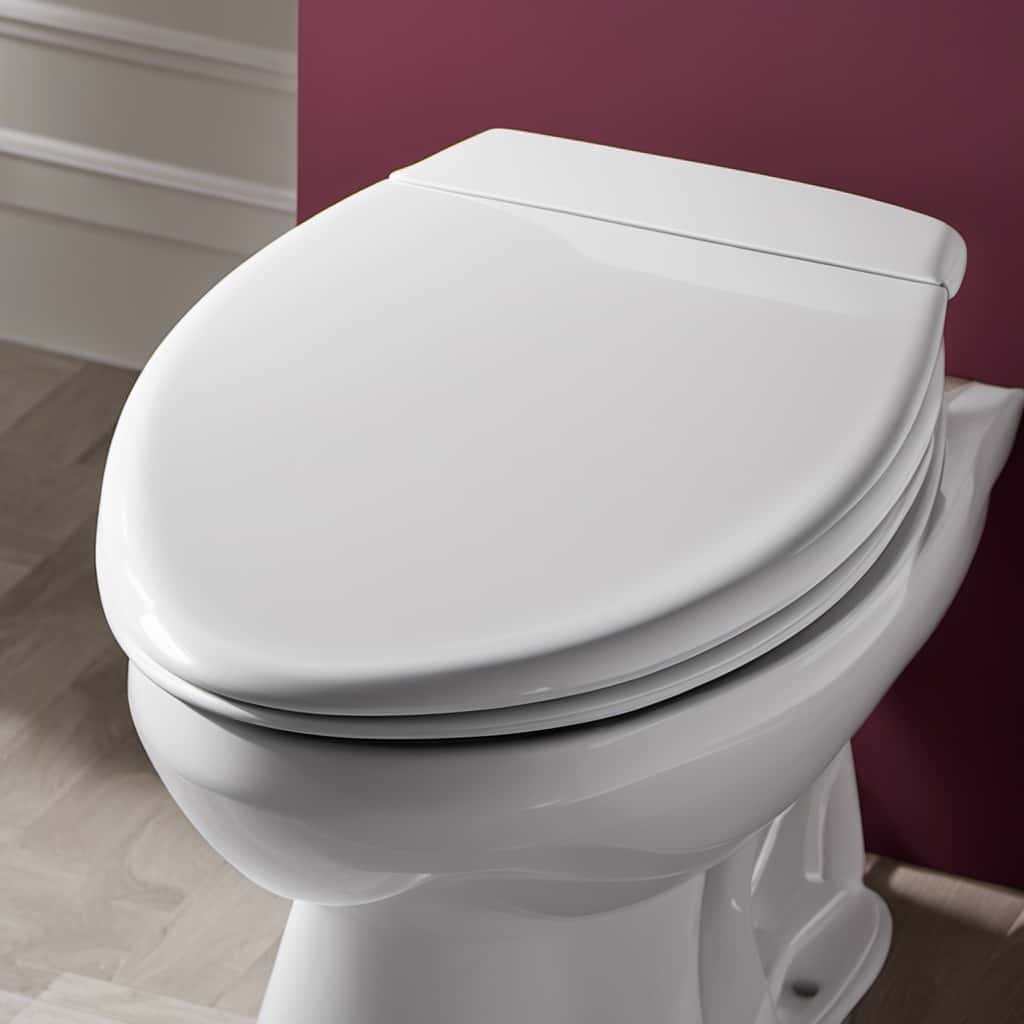
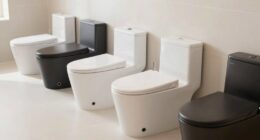
When choosing between a one-piece and two-piece toilet, consider installation and price. One-piece toilets are easier to install since they’re all in one unit, but they tend to be pricier. Two-piece models are more affordable and simpler to repair, but installation can be slightly more complex. Think about your budget, space, and comfort with maintenance to decide which fits your needs best.
Are There Eco-Friendly Toilet Options Available?
Like the wise owl seeking sustainable wisdom, you’ll find eco-friendly toilets exist today. These options use eco-friendly materials and emphasize sustainable manufacturing, reducing environmental impact. Look for models with water-saving features, dual-flush systems, or certifications like WaterSense. Choosing an eco-conscious toilet helps conserve resources and supports green living. You can enjoy comfort while making a positive difference for the planet, aligning practicality with environmental responsibility.
What Maintenance Tips Prolong Toilet Lifespan?
To extend your toilet’s lifespan, focus on proper maintenance and cleaning routines. Regularly check for leaks and replace worn parts promptly. Use gentle, non-abrasive cleaners to prevent damage, and avoid harsh chemicals that can corrode components. Keep the flushing mechanism clean to ensure smooth operation. By maintaining your toilet properly, you can prevent costly repairs and enjoy a longer-lasting fixture that performs well over time.
WaterSense labeled toilet 1.28 GPF
As an affiliate, we earn on qualifying purchases.
As an affiliate, we earn on qualifying purchases.
Conclusion
Remember, choosing the right toilet is like finding your own Excalibur—it’s about comfort, efficiency, and lasting value. By considering your needs and these key factors, you’ll make a decision that stands the test of time, much like a legendary quest. So, take your time, do your research, and trust your instincts. After all, a well-chosen toilet isn’t just a bathroom fixture—it’s your throne for years to come.
one-piece vs two-piece toilet
As an affiliate, we earn on qualifying purchases.
As an affiliate, we earn on qualifying purchases.
smart toilet with bidet and automatic flush
As an affiliate, we earn on qualifying purchases.
As an affiliate, we earn on qualifying purchases.