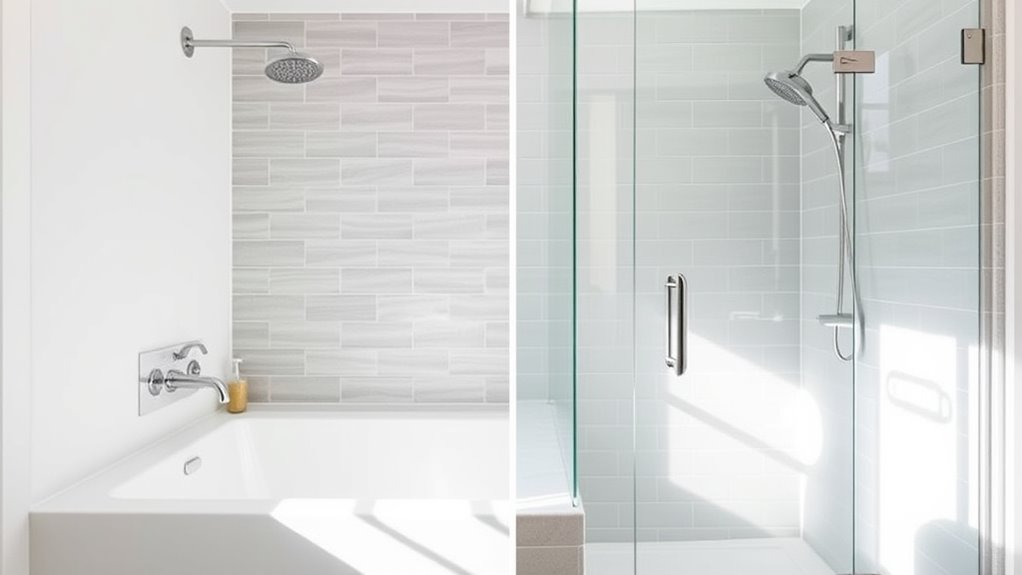

To convert your bathtub into a walk-in shower, start by carefully removing the tub and evaluating your plumbing for upgrades. Next, install a new shower base, choose waterproof materials, and add features like glass doors or built-in shelves. Waterproof and seal everything properly. Expect costs between $3,000 and $7,000, depending on materials and labor. Want to know detailed steps and tips? Keep going to find out more.
Key Takeaways
- Remove the existing bathtub carefully and evaluate plumbing needs for modifications.
- Install a new shower base, selecting accessible, durable materials like acrylic or stone.
- Upgrade plumbing, including drain and water lines, possibly hiring a licensed plumber.
- Add waterproofing, tiles, and a glass enclosure to create a modern, water-tight shower space.
- Budget between $3,000 and $7,000 for materials, labor, and upgrades to ensure quality and longevity.
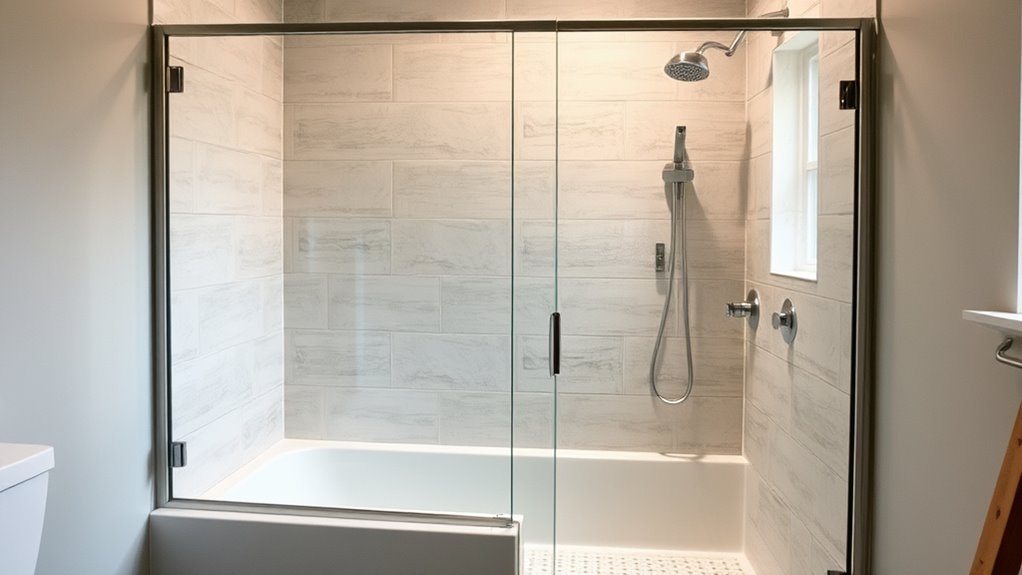
Converting a bathtub into a walk-in shower can be a practical upgrade that enhances accessibility and modernizes your bathroom. This transformation not only improves functionality but also boosts your bathroom’s aesthetics, giving it a sleek, contemporary look. When planning this change, you’ll need to contemplate necessary plumbing upgrades to ensure the new shower functions properly and complies with local codes. The goal is to create a space that feels open and inviting, so pay attention to design details like tile choices, shower doors, and fixtures to achieve a cohesive, stylish appearance.
Transform your bathroom with a stylish, accessible walk-in shower that boosts both function and aesthetics.
The first step involves removing the existing bathtub carefully, taking care not to damage surrounding walls or flooring. Once the tub is out, you’ll need to evaluate your plumbing system. Converting to a walk-in shower typically requires relocating the drain, rerouting water supply lines, and installing a new shower valve. These plumbing upgrades can be straightforward if you have basic DIY skills, but more complex setups might demand hiring a licensed plumber to ensure everything is safe, efficient, and up to code. Plumbing upgrades are essential to ensure the shower functions correctly and meets safety standards.
Next, focus on the shower base and enclosure. You can opt for a pre-made shower pan or have one custom-made to fit your space. Consider a low-threshold or zero-entry design for better accessibility, especially if you or someone in your household has mobility issues. When selecting materials, prioritize durability and ease of cleaning—porcelain tiles, acrylic, or stone are popular choices. Installing glass shower doors or a waterproof enclosure will help keep water contained and enhance the bathroom’s aesthetic appeal, making the space appear larger and more modern.
Once the structural components are in place, you’ll want to address finishing touches. Proper waterproofing is essential to prevent water damage over time. Apply high-quality grout and sealant around tiles and fixtures for longevity. For an added touch of style, incorporate features like built-in shelves, niche storage, or mood lighting to enhance usability and visual appeal. These upgrades not only improve bathroom aesthetics but also make cleaning easier and your shower more enjoyable to use.
Finally, contemplate the overall costs involved. Expenses include removing the old tub, plumbing upgrades, new materials, fixtures, and labor if you hire professionals. On average, converting a bathtub into a walk-in shower costs between $3,000 and $7,000, but this can vary based on the scope of work and quality of materials. Budget accordingly, and remember that investing in quality plumbing upgrades and attractive finishes will pay off in the long run, making your bathroom more functional and stylish for years to come.
Frequently Asked Questions
Can I Keep the Existing Plumbing When Converting?
Yes, you can often keep the existing plumbing when converting, but it depends on plumbing compatibility and fixture adjustments. You’ll need to check if the current drain and water supply lines align with your new shower layout. Sometimes, minor modifications are necessary to guarantee proper drainage and water flow. Consulting a professional helps confirm whether your existing plumbing can be reused or if upgrades are needed for a safe, efficient conversion.
How Long Does the Conversion Process Typically Take?
Ever wonder how long a bathroom upgrade takes? Typically, the installation timeline for converting your bathtub into a walk-in shower spans about 2 to 5 days, depending on complexity. The project duration can extend if plumbing or tiling needs extra work. You should plan for this timeframe to guarantee smooth scheduling. Are you prepared to streamline your bathroom transformation and enjoy your new shower sooner?
Will My Home Insurance Be Affected by This Remodel?
Your home insurance might be affected by this remodel, especially regarding insurance implications and renovation coverage. It’s crucial to inform your insurer before starting, as they may update your policy or require additional coverage. Some changes could impact your premium or claims process. To avoid surprises, check with your insurance provider about how converting a bathtub into a walk-in shower might influence your policy and guarantee your renovation is fully covered.
Are There Specific Permits Required for This Renovation?
Imagine your bathroom transforming into a sleek, accessible space. Yes, you’ll need specific permits for this renovation. The permit process involves checking building codes to ensure safety and compliance. Visit your local building department to understand the requirements, submit your application, and get approval before starting. This step guarantees your project meets all regulations, avoiding future issues and ensuring your new walk-in shower is both legal and safe.
What Are the Best Materials for Durability and Safety?
You should choose non-slip flooring materials like textured porcelain tiles, vinyl with slip-resistant surfaces, or textured stone to guarantee safety and durability. These materials provide excellent slip resistance, reducing fall risks. Opt for surfaces that are easy to clean and withstand moisture, such as glazed ceramic or epoxy-based coatings. Incorporating slip-resistant surfaces into your shower design helps create a safer environment while maintaining durability, making your walk-in shower both functional and secure.
Conclusion
Converting your bathtub into a walk-in shower is like giving your bathroom a fresh coat of paint—transformative and exciting. With the right planning, tools, and a clear budget, you can turn this project into a manageable DIY or professional upgrade. Remember, patience and attention to detail are key to a smooth conversion. Soon, your bathroom will feel as open and inviting as a sunny day, making every shower feel like a luxurious retreat.