Chromotherapy and aromatherapy showers differ mainly in how they engage your senses. Chromotherapy uses colored LED lights to influence your mood and energy levels visually, promoting calmness or invigoration through color. Aromatherapy, on the other hand, infuses scents into your shower, activating your sense of smell to relax or energize you. Both enhance your shower experience uniquely, and exploring their differences further can help you choose the best for your relaxation and well-being.
Key Takeaways
- Chromotherapy uses colored LED lights to influence mood visually, while aromatherapy infuses scents to affect emotions through smell.
- Chromotherapy creates visual, mood-based effects; aromatherapy provides scent-based emotional and physical benefits.
- Chromotherapy promotes relaxation or energy through color therapy; aromatherapy relies on essential oils to induce calm or alertness.
- Chromotherapy relies on LED technology for customizable lighting; aromatherapy uses aromatic oils or extracts for scent infusion.
- Both methods enhance wellbeing via different sensory channels—visual for chromotherapy, olfactory for aromatherapy.
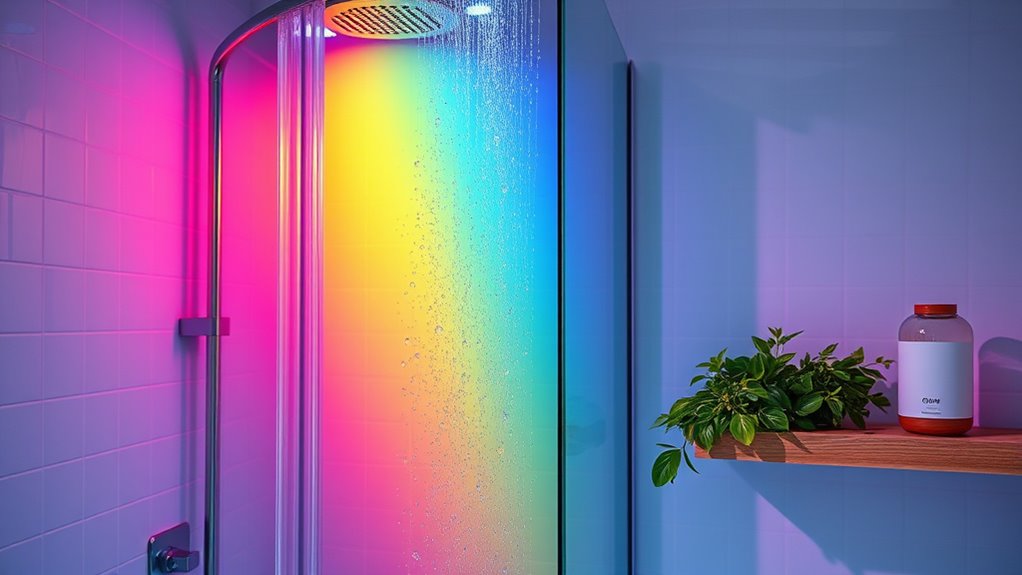
Chromotherapy, or color therapy, uses different colored lights to influence your mood and energy levels. When you step into a chromotherapy shower, LED lights change colors, bathing you in hues associated with specific effects. For example, blue light promotes calmness and relaxation, helping you unwind after a stressful day. Red, on the other hand, energizes and invigorates, making it ideal for mornings or when you need a boost. The idea is that each color interacts with your body’s energy centers, or chakras, to restore balance and promote emotional well-being. It’s a visual experience designed to stimulate your senses and create a calming or revitalizing atmosphere. Notably, the integration of LED technology makes chromotherapy showers versatile and customizable for individual preferences.
Chromotherapy uses colored lights to influence mood and energy, creating a calming or revitalizing visual experience.
Aromatherapy showers, by contrast, focus on scent relaxation. They infuse your shower with essential oils or aromatic extracts, creating a fragrant environment that influences your mood and physical state. When you breathe in these scents, they activate your olfactory system, which is directly linked to your brain’s limbic system—the center of emotion and memory. This connection allows scents like lavender to promote deep relaxation, eucalyptus to clear your mind, or peppermint to energize you. Aromatherapy showers are especially effective if you want to unwind, reduce stress, or boost mental clarity. The focus is on scent and its therapeutic properties, providing a sensory experience that calms your mind and relaxes your body.
While both types of showers aim to improve your mental and physical health, they do so through different sensory channels. Color therapy appeals visually, using changing lights to influence your emotional state. It’s a more visual, mood-based approach that can be customized to your preferences. Aromatherapy, on the other hand, engages your sense of smell, creating a calming or invigorating atmosphere through scent. Some modern shower systems even combine both methods, offering a multi-sensory experience that uses visual cues and fragrant aromas simultaneously for maximum relaxation. Incorporating advanced shower technology enhances these experiences, allowing for seamless integration of both therapies.
In the end, your choice depends on what you seek. If you want a visual cue to help you relax or energize, chromotherapy is a great option. If scent relaxation appeals more to you, aromatherapy offers a fragrant escape that calms or invigorates your mind. Both elevate your shower from a routine task into a personal sanctuary, helping you start or end your day with intention and serenity.
chromotherapy shower system
As an affiliate, we earn on qualifying purchases.
As an affiliate, we earn on qualifying purchases.
Frequently Asked Questions
Can Chromotherapy and Aromatherapy Showers Be Combined?
Yes, you can combine chromotherapy and aromatherapy showers. You activate color therapy with different light settings and add scent infusion to introduce calming or invigorating scents. This blend enhances your relaxation and mood, creating a multisensory experience. By customizing both the colors and scents, you personalize your shower for stress relief, energy boost, or meditation, making your daily routine more soothing and therapeutic.
Are There Any Health Risks Associated With Chromotherapy Showers?
You should be aware that chromotherapy showers pose minimal health risks, but potential allergic reactions can occur if you’re sensitive to certain colors or light frequencies. Overexposure risks are rare but possible if you spend too long under intense or vibrant lights, which might cause discomfort or headaches. To stay safe, start with short sessions, monitor your reactions, and consult a healthcare professional if you experience any adverse effects.
How Long Should I Use Each Therapy During a Shower?
For ideal exposure, you should typically use chromotherapy or aromatherapy showers for about 15 to 20 minutes. Follow the duration guidelines for each therapy to avoid overstimulation or irritation. If you’re new to these treatments, start with shorter sessions, around 10 minutes, and gradually increase as your body adjusts. Always listen to your body’s cues to ensure you’re enjoying the benefits safely and comfortably.
Do These Showers Require Professional Installation?
Think of installing a chromotherapy or aromatherapy shower like setting up a new garden. You might need expert assistance for proper installation requirements to guarantee everything functions smoothly. While some models are straightforward, others may require specialized tools or connections. To avoid any issues, it’s wise to consult professionals who can handle the setup efficiently, saving you time and ensuring your relaxing shower experience isn’t compromised by installation mishaps.
Are There Specific Skin Types That Should Avoid These Therapies?
If you have skin sensitivity or allergy concerns, you should consult your dermatologist before trying chromotherapy or aromatherapy showers. People with sensitive skin might experience irritation from certain colors or scents, so it’s important to test these therapies cautiously. Avoid if you notice any adverse reactions, and always choose hypoallergenic oils and gentle light settings to minimize risks. Your health and comfort should come first when exploring these relaxing treatments.
aromatherapy shower kit
As an affiliate, we earn on qualifying purchases.
As an affiliate, we earn on qualifying purchases.
Conclusion
Imagine stepping into a shower that’s like a personal spa, where colors and scents work together to refresh your mind and body. Just like a symphony of visual and aromatic notes, chromotherapy and aromatherapy showers each offer unique benefits—one uses light, the other smells—to create a holistic experience. Whether you need calm or energy, choosing between them is like picking your favorite tune; both can elevate your daily routine and leave you feeling renewed.
LED color therapy shower
As an affiliate, we earn on qualifying purchases.
As an affiliate, we earn on qualifying purchases.
essential oils for shower aromatherapy
As an affiliate, we earn on qualifying purchases.
As an affiliate, we earn on qualifying purchases.