
Composting toilets use bacteria to biologically break down waste into compost, which can sometimes be reused if properly managed, but they require regular maintenance like adding bulking agents and managing moisture. Incinerating toilets burn waste at high temperatures, reducing it to sterile ash, and need regular cleaning and energy to operate. The main difference is that composting focuses on biological decomposition, while incinerating relies on thermal destruction—if you want to learn more, keep exploring these eco-friendly options.
Key Takeaways
- Composting toilets decompose waste biologically into compost, while incinerating toilets burn waste into sterile ash.
- Composting systems require regular maintenance like adding bulking agents and managing airflow; incinerators need cleaning and filter replacement.
- Composting toilets produce compost for reuse; incinerators reduce waste to ash, minimizing volume and pathogens.
- Incinerating toilets are energy-intensive, operate at high temperatures, and need consistent servicing; composting toilets are simpler but need ventilation.
- Choice depends on priorities: composting emphasizes reuse and simplicity, incineration focuses on waste reduction and sterilization.
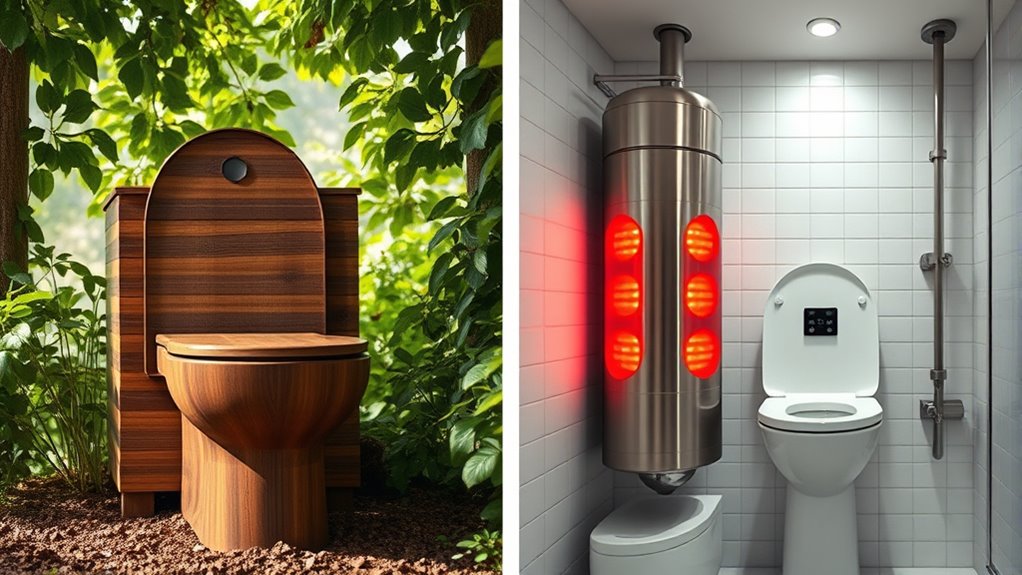
When choosing a sustainable sanitation solution, understanding the key differences between composting and incinerating toilets is essential. Both options aim to reduce water use and minimize environmental impact, but they operate very differently and come with unique safety considerations and maintenance requirements. Recognizing these aspects helps you select the right system for your needs and guarantees proper use and upkeep.
Composting toilets work by decomposing human waste through aerobic bacteria, turning it into compost that can often be safely reused or disposed of. They are generally straightforward to maintain, but you need to be diligent about regular maintenance to prevent odors and ensure safe composting. Safety considerations are critical here; you should always handle the compost carefully and follow guidelines to avoid exposure to pathogens. Proper ventilation is also essential to prevent the buildup of harmful gases, especially in enclosed spaces. Maintenance involves regularly emptying the composting chamber, adding bulking agents like sawdust or ash, and monitoring moisture levels. Neglecting these tasks can lead to foul odors, incomplete decomposition, or health hazards. Additionally, airflow management plays a vital role in maintaining a safe and odorless composting process.
Composting toilets require careful handling, ventilation, and regular maintenance to ensure safe, odor-free decomposition.
Incinerating toilets, on the other hand, dispose of waste by burning it at high temperatures, converting it into sterile ash. They are typically more complex machines, requiring a reliable power source and regular servicing. Safety considerations with incinerating toilets revolve around managing high temperatures and ensuring proper operation to avoid fire hazards or exposure to hot surfaces. Since they generate ash, you need to handle and dispose of this waste safely, following manufacturer instructions. Maintenance requirements include cleaning the combustion chamber and replacing filters or other components as needed. These toilets tend to be more energy-intensive and may have higher initial costs, but they require less frequent attention once installed properly.
In terms of safety, composting toilets demand caution around handling compost and maintaining proper ventilation, whereas incinerating toilets require careful management of heat and ash disposal. Maintenance-wise, composting toilets may require more hands-on effort, such as managing moisture and aeration for effective composting, whereas incinerating systems need regular cleaning and occasional repairs to keep the burning process efficient. Your choice depends on your specific context—whether you prioritize ease of use, safety, environmental impact, or maintenance simplicity. Both systems offer eco-friendly alternatives to traditional toilets, but understanding their operational nuances guarantees you maintain a safe, functional, and sustainable sanitation setup.
Frequently Asked Questions
Are Composting and Incinerating Toilets Suitable for Urban Homes?
Composting and incinerating toilets can be suitable for urban homes if space allows, but they require careful planning. Composting toilets need adequate ventilation and space for composting, making them a good eco-friendly option. Incinerating toilets, on the other hand, need proper ventilation and electrical access. Consider your urban suitability and available space requirements to determine which type fits your home’s layout and environmental goals.
What Is the Maintenance Frequency for Each Toilet Type?
You’ll need to follow a regular maintenance schedule for both types. Composting toilets typically require you to empty the compost bin every few months and occasionally add bulking agents, while cleaning requirements involve rinsing the urine diverters and ventilation parts. Incinerating toilets, on the other hand, need frequent ash removal—often after every use or daily—and regular cleaning of the ash receptacle. Staying consistent guarantees peak performance and hygiene.
Do These Toilets Meet All Environmental Regulations?
Surprisingly, these toilets often meet all environmental regulations—if you choose wisely. Composting toilets excel in waste management by recycling waste naturally, reducing environmental impact. Incinerating toilets, while energy-intensive, also adhere to strict standards if properly maintained. However, regulations vary by region, so it’s smart to check local laws. Ultimately, both can be eco-friendly options, provided you stay compliant and prioritize responsible waste handling.
How Do Costs Compare Over the Long Term?
Over the long term, composting toilets tend to be more cost-efficient because they have lower maintenance and operational costs, leading to greater long-term savings. Incinerating toilets usually require more energy and maintenance, which can add up over time. You’ll find that investing in a composting toilet offers better cost efficiency, reducing your expenses in the long run and making it a more economical choice for sustainable waste management.
Can They Be Installed in Areas Without Plumbing Infrastructure?
You can install composting and incinerating toilets in areas without plumbing infrastructure, making them ideal for remote or off-grid locations. They support waste management and help maintain sanitation standards without traditional sewer systems. Composting toilets transform waste into compost, while incinerating toilets eliminate waste through high heat. Both options are eco-friendly, require minimal water, and are practical solutions where conventional plumbing isn’t available.
Conclusion
In the end, choosing between composting and incinerating toilets is like selecting a dance partner—each has its unique rhythm and charm. Composting transforms waste into life-giving soil, nurturing the earth’s delicate balance, while incinerating turns refuse into ash, like a phoenix rising from the ashes. Whichever you pick, remember it’s a step toward a more sustainable future, where your choices ripple outward, shaping the health of our planet with every flush.