Yes, dual-flush toilets can be prone to leaks over time due to worn or damaged components like the flapper valve or fill valve. Common issues include continuous water seepage, running water, or overflowing. Simple troubleshooting, such as inspecting and replacing faulty parts or adjusting the float, often resolves these problems. To prevent ongoing issues and conserve water, it’s helpful to understand these common causes—you’ll find helpful tips if you continue exploring.
Key Takeaways
- Dual-flush toilets can develop leaks due to faulty flapper valves or fill valve malfunctions over time.
- Common leak signs include continuous running water, water seeping into the bowl, or overflowing into the overflow tube.
- Regular inspection and maintenance of flapper and fill valve components help prevent and identify leaks early.
- Mineral buildup, debris, or component wear increase the likelihood of leaks in dual-flush toilets.
- Prompt troubleshooting and replacement of damaged parts extend toilet lifespan and conserve water.
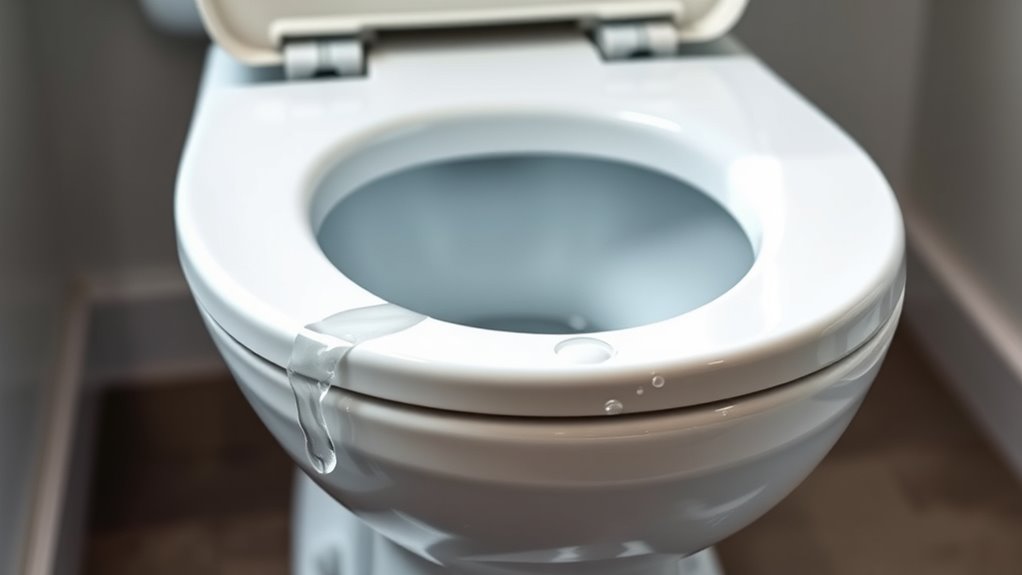
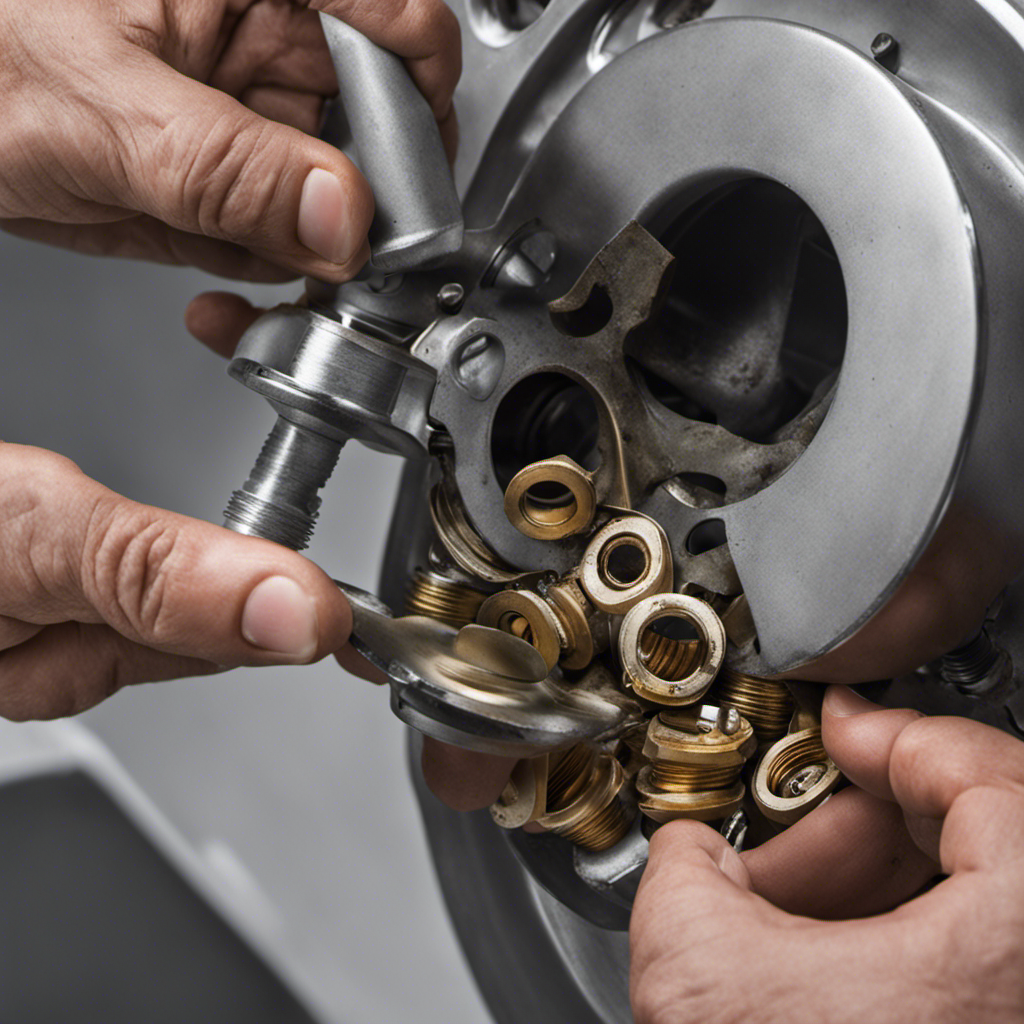
Dual-flush toilets are an efficient way to save water, but they can sometimes develop leaks that waste this precious resource. When your toilet starts running constantly or you notice a sudden spike in your water bill, a leak is likely the culprit. The most common cause of leaks in dual-flush toilets is a faulty flapper valve. This rubber component seals the flush valve opening at the bottom of the tank, controlling water flow during flushing. Over time, the flapper can become warped, cracked, or misaligned, allowing water to seep into the bowl continuously. To troubleshoot, first turn off the water supply and drain the tank. Inspect the flapper for signs of damage or mineral buildup. If you see cracks, or if it doesn’t sit flush against the valve seat, replace it. A new flapper is inexpensive and straightforward to install, often taking just a few minutes, and can immediately stop leaks caused by a faulty seal.
Another common source of leaks is the fill valve, which refills the tank after each flush. If the fill valve is malfunctioning or improperly adjusted, it can cause water to continuously flow into the tank, leading to leaks and wasted water. To diagnose issues with the fill valve, lift the tank lid and observe the water level. If it’s constantly rising or overflowing into the overflow tube, the fill valve needs adjustment or replacement. Many modern fill valves come with an adjustable float arm or a float cup that allows you to set the correct water level. If adjusting doesn’t work, or if the fill valve is damaged, replacing it is usually simple. Turn off the water, disconnect the supply line, remove the old valve, and install the new one according to the manufacturer’s instructions.
Regular maintenance can prevent most leaks. Check the flapper valve for wear and replace it every few years if needed. Also, inspect the fill valve for proper operation. Sometimes, mineral deposits or debris can interfere with the valve’s function, so cleaning or replacing it can restore proper performance. Additionally, preventative maintenance can extend the lifespan of your toilet components and avoid costly repairs. Remember, a constantly running or leaking toilet not only wastes water but can also lead to higher utility bills. Fixing these issues promptly ensures your dual-flush toilet remains water-efficient and functional. With a little troubleshooting and maintenance, you can keep leaks at bay and enjoy the full benefits of your dual-flush system.
dual-flush toilet flapper replacement
As an affiliate, we earn on qualifying purchases.
As an affiliate, we earn on qualifying purchases.
Frequently Asked Questions
Can Dual-Flush Toilet Leaks Be Fixed Without Professional Help?
Yes, you can fix dual-flush toilet leaks yourself with DIY fixes. Start by inspecting the flapper and fill valve for wear or damage, then replace any faulty parts. Make certain all seals are tight and check for cracks. Regular maintenance helps with leak prevention. If you’re comfortable with basic plumbing, these simple steps can save you money and prevent further issues without professional help.
How Often Should I Inspect My Dual-Flush Toilet for Leaks?
You should inspect your dual-flush toilet for leaks at least once a month. Incorporate an inspection routine that includes leak detection by checking for water around the base, listening for hissing sounds, and observing for constantly running water. Regularly performing these checks helps catch issues early, saving water and preventing potential damage. Staying vigilant guarantees your dual-flush toilet functions efficiently and reduces the likelihood of costly repairs.
Do Dual-Flush Toilets Leak More Than Traditional Toilets?
You might wonder if dual-flush toilets leak more than traditional ones, and the answer isn’t straightforward. While leak causes can be similar—faulty seals or worn flappers—dual-flush models sometimes have more complex mechanisms, making leaks trickier to detect. Regular maintenance tips, like inspecting for constant running or water around the base, help prevent leaks. With proper care, dual-flush toilets can be just as reliable, if not more so, than traditional models.
Are There Specific Brands More Prone to Leaks?
Some brands are more prone to leaks due to differences in manufacturer quality and brand reliability. You should research customer reviews and warranty policies to identify brands with a solid reputation. Generally, established brands with a history of quality control tend to have fewer leak issues. Investing in a reputable brand guarantees better durability, and you’re less likely to encounter leaks caused by manufacturing flaws or inferior materials.
What Are the Long-Term Costs of Repairing Dual-Flush Toilet Leaks?
You might find that the long-term costs of repairing dual-flush toilet leaks can add up, especially if leaks happen frequently. A thorough cost analysis shows that repair expenses, like replacing faulty parts or seals, can be modest initially but become significant over time. Coincidentally, addressing minor issues early can save you money in the long run, preventing costly water waste and more extensive repairs later.

Fluidmaster 400H-002 Performax Universal Toilet Fill Valve High Performance Tank and Bowl Water Control, 1-Pack, Multicolor
Fix noisy, or slow filling fill valves with the quietest, most powerful toilet fill valve available
As an affiliate, we earn on qualifying purchases.
As an affiliate, we earn on qualifying purchases.
Conclusion
Think of your dual-flush toilet as a vigilant guardian of your bathroom. When it leaks, it’s like a watchful sentinel losing its grip on a precious treasure. But with a little troubleshooting, you’re the hero restoring balance and peace. Regular maintenance keeps your guardian strong, preventing leaks before they start. So, stay attentive and proactive—your toilet’s reliability depends on your care, turning it from a potential troublemaker into a steadfast protector of your home.

New Resources Group Toilet Leak Detection Dye Tablets (Detect Silent Leaks) Blue 20 Pack
Detect Silent Leaks in your toilet. 20 Packets (2 Blue Tablets per Packet good for 40 tests)
As an affiliate, we earn on qualifying purchases.
As an affiliate, we earn on qualifying purchases.
dual-flush toilet repair parts
As an affiliate, we earn on qualifying purchases.
As an affiliate, we earn on qualifying purchases.