Alright folks, let me break it down for you.
When it comes to replacing a toilet, measurements are key. So, here’s the lowdown on how to get it right.
First things first, you gotta measure that rough-in size. Then, figure out the bowl shape. Don’t forget to assess the height and width too.
Oh, and the water supply line, can’t forget about that. And last but not least, check that floor flange placement.
Trust me, follow these steps and you’ll be swapping toilets like a pro in no time.
Key Takeaways
- The rough-in size is crucial when shopping for a new toilet.
- Different bowl shapes offer various benefits.
- Measure the height and width of the bowl to ensure proper fit and functionality.
- Check the length, diameter, and water pressure of the water supply line for proper installation.
Measuring the Rough-in Size
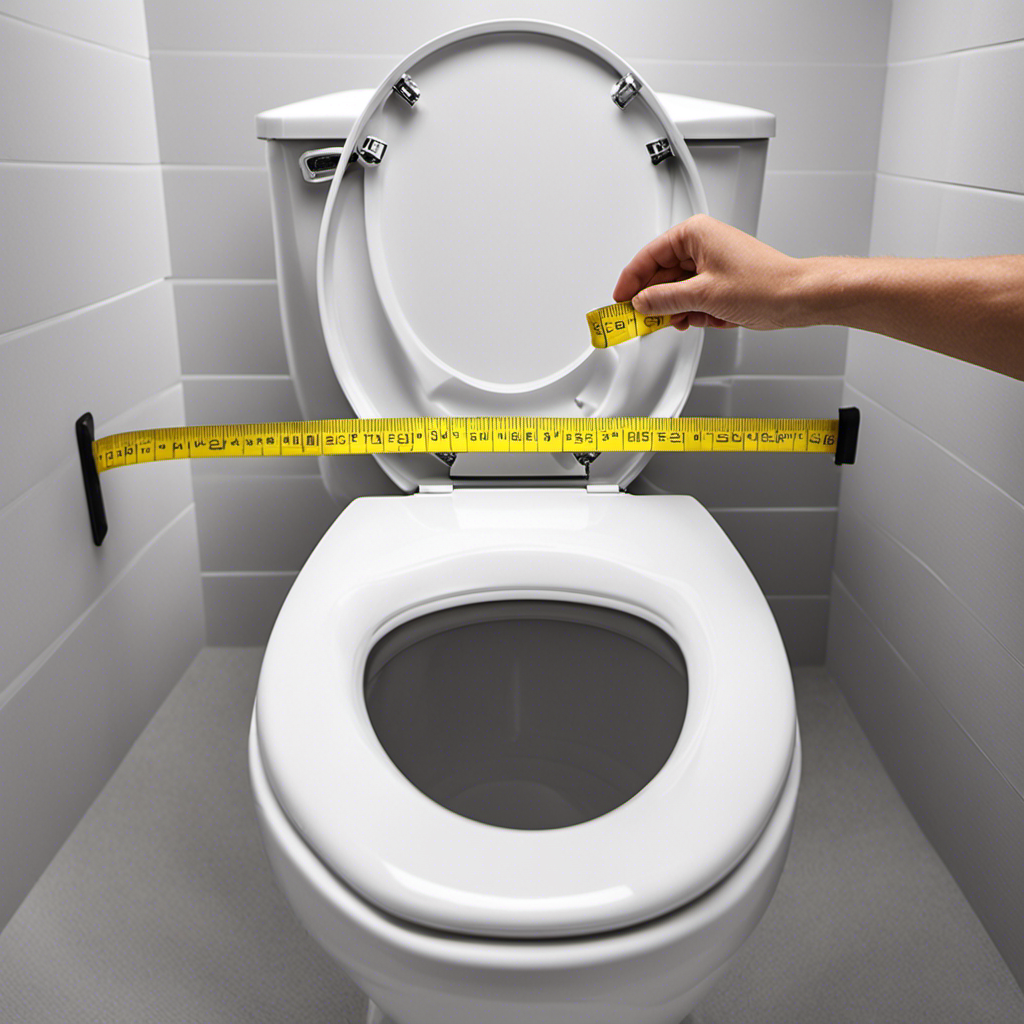
To accurately measure the rough-in size for your toilet replacement, you’ll need a measuring tape. Measuring for a new toilet involves determining the rough-in distance, which is the distance from the wall behind the toilet to the center of the sewer drainpipe.
This measurement is crucial because it ensures that the toilet will fit properly in your bathroom and align with the sewer line. To measure the rough-in distance, start by locating the bolts at the base of your current toilet. Measure from the center of these bolts to the wall behind the toilet. This measurement will give you the rough-in size you need when shopping for a new toilet.
Once you have determined the rough-in size, you can move on to determining the bowl shape for your replacement.
Determining the Bowl Shape
When determining the bowl shape, you’ll want to consider the curvature and design that will best fit your bathroom. Different bowl shapes offer various benefits in terms of comfort and space efficiency. Here are three common bowl shapes and their features:
| Bowl Shape | Description | Benefits |
|---|---|---|
| Round | A circular bowl shape | Ideal for smaller bathrooms or powder rooms, saves space and is often more affordable |
| Elongated | An oval-shaped bowl | Provides added comfort and legroom, suitable for larger bathrooms |
| Compact | A combination of round and elongated bowl features | Offers the benefits of both round and elongated bowls, ideal for bathrooms with limited space |
When choosing a bowl shape, consider the overall design and style of your bathroom. Additionally, you may want to explore different toilet colors and flushing technologies to further enhance your bathroom’s aesthetics and functionality.
Assessing the Height and Width
Consider the height and width of the bowl to ensure a comfortable fit in your bathroom. When evaluating the weight capacity, it’s important to choose a toilet that can support the weight of all users.
Here are the key factors to consider:
-
Height: Measure the distance from the floor to the top of the bowl. This will determine if the toilet is the correct height for you and your family members.
-
Width: Measure the width of the bowl at its widest point. This will help you determine if the toilet will fit in your bathroom space.
-
Weight Capacity: Check the manufacturer’s specifications to ensure that the toilet can support the weight of all users. This is especially important for households with heavier individuals.
-
Flushing Mechanism: Consider the type of flushing mechanism the toilet has. There are different options available, such as gravity-fed or pressure-assisted, each with its own pros and cons.
Measuring the Water Supply Line
Make sure you check the length of the water supply line to ensure it will reach the toilet. In addition to length, it is important to measure the supply line diameter and calculate the necessary water pressure. This will ensure a proper fit and functionality of the toilet. To measure the supply line diameter, use a caliper or a ruler to determine the inner and outer diameter of the existing line. This information will help you select the correct replacement supply line. Calculating the necessary water pressure involves checking the specifications of the toilet and the local water pressure regulations. Refer to the table below for a visual representation of the steps involved in measuring the water supply line:
| Step | Measurement | Calculation |
|---|---|---|
| 1 | Length | – |
| 2 | Inner Diameter | – |
| 3 | Outer Diameter | – |
| 4 | Water Pressure | Toilet Specs + Local Regulations |
Once you have measured the water supply line and calculated the necessary water pressure, you can proceed to the next step of checking the floor flange placement.
Checking the Floor Flange Placement
After checking the water supply line, ensure that the floor flange is properly positioned. The floor flange is a crucial component of toilet installation and repair. It provides a secure connection between the toilet and the waste pipe.
Here are the steps to correctly position the floor flange:
- Remove the old wax ring and inspect the floor flange for any damage or corrosion.
- Clean the flange and surrounding area to ensure a proper seal.
- Align the flange with the waste pipe and make sure it sits flush with the floor.
- Secure the flange to the floor using screws or bolts, ensuring it is stable and level.
Proper floor flange installation is essential for preventing leaks and maintaining the integrity of your toilet. If you notice any issues with the flange, such as cracks or misalignment, it is important to repair or replace it to avoid future problems.
Frequently Asked Questions
How Do I Choose the Right Toilet Seat for My Toilet Replacement?
I choose the right toilet seat for my toilet replacement by considering the toilet seat dimensions and material options. It’s important to measure the dimensions accurately and choose a seat made of a durable and comfortable material.
Can I Install a Bidet Attachment on My New Toilet?
Yes, I can install a bidet attachment on my new toilet. It offers many benefits, such as improved hygiene and water conservation. Proper bidet installation involves following the manufacturer’s instructions and ensuring compatibility with the toilet.
What Should I Do if the Rough-In Size of My Current Toilet Doesn’t Match Any Standard Sizes?
If my current toilet’s rough-in size doesn’t match any standard sizes, I would consider alternative options like adjusting the plumbing or using offset flanges. If unsure, it’s best to seek professional assistance for a precise solution.
Are There Any Specific Requirements for the Height and Width of a Toilet Replacement in Ada-Compliant Bathrooms?
Toilet height and width requirements in ADA-compliant bathrooms include a toilet height between 17-19 inches and a minimum width of 60 inches for accessible stalls. These measurements ensure proper accessibility for individuals with disabilities.
How Can I Check if My Current Water Supply Line Is Compatible With the New Toilet I Plan to Install?
To check if my current water supply line is compatible with the new toilet I plan to install, I will measure the water pressure and determine the shape of the toilet bowl.
Conclusion
In conclusion, accurately measuring for a toilet replacement is crucial to ensure a proper fit and functionality. By following the steps outlined in this article, you can confidently choose the right toilet for your bathroom.
First, start by measuring the rough-in size. This is the distance from the wall to the center of the floor flange bolts. It is typically either 10 inches or 12 inches.
Next, determine the bowl shape that will best suit your needs. There are two options: round or elongated. Measure the length of the bowl to make sure it will fit comfortably in your space.
Assess the height and width of the toilet as well. Consider the comfort and accessibility of the toilet, especially if you have specific needs or preferences.
Don’t forget to measure the water supply line. Ensure that the new toilet will align properly with the existing water supply pipe. This will prevent any leaks or issues with connecting the toilet to the water source.
Lastly, check the placement of the floor flange. Make sure it is secure and in the correct position for the new toilet. This will ensure a stable and reliable installation.
Remember, precision is key when undertaking this task to avoid any future issues. So, take the time to measure correctly and enjoy a seamless toilet replacement process.