To keep your low-flow toilet working smoothly and prevent clogs, regularly inspect and replace the flapper to guarantee a proper seal, which improves flushing power. Remove mineral buildup by pouring vinegar into the tank and scrubbing deposits, while adjusting the chain ensures the flapper opens fully. Routine cleaning of the tank and bowl, along with checking the fill valve, helps maintain water flow and prevent issues. Keep these tips in mind to maintain peak performance and avoid inconvenient clogs.
Key Takeaways
- Regularly inspect and replace the flapper to ensure a proper seal and prevent leaks that can cause clogs.
- Remove mineral buildup using vinegar or descaling solutions to maintain smooth water flow and reduce clog risk.
- Adjust the chain length to ensure proper flapper operation and prevent toilet running or incomplete flushing.
- Clean the tank, bowl, and trap areas periodically to prevent debris accumulation that could block water flow.
- Use gentle cleaning agents and avoid harsh chemicals to protect low-flow components and maintain optimal flushing performance.
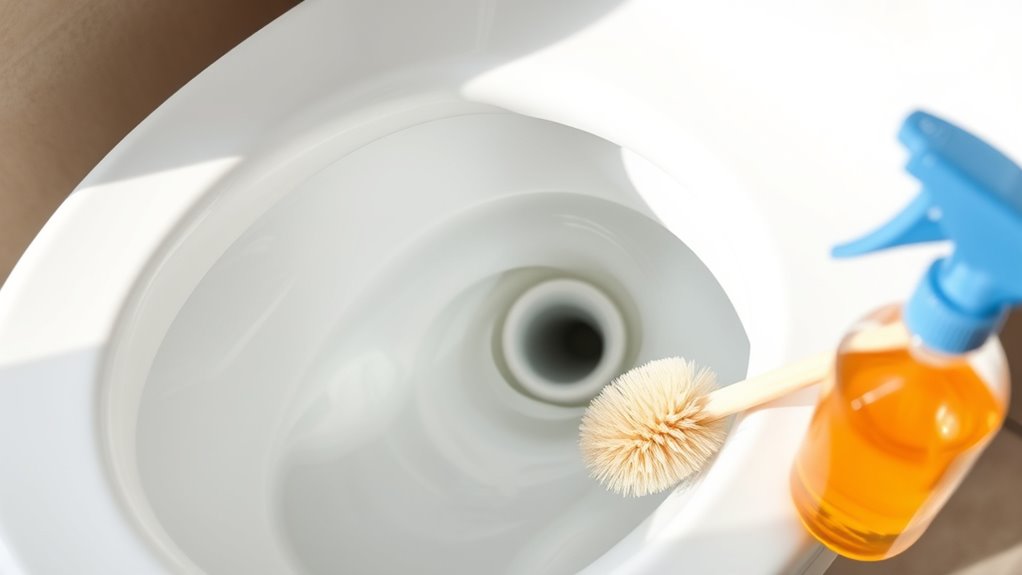
Maintaining and cleaning a low-flow toilet is essential to make sure it functions efficiently and lasts longer. One of the most common issues you’ll encounter with these toilets is a weak flush or frequent clogs, which often stems from problems inside the tank or bowl. Regularly inspecting and replacing parts like the flapper can make a big difference. Over time, the flapper can warp, wear out, or become misaligned, preventing a proper seal that’s necessary for a strong flush. If your toilet isn’t flushing completely or water keeps leaking into the bowl, it’s probably time for a flapper replacement. This simple fix restores the seal, improves flushing power, and helps conserve water.
Regularly inspect and replace the flapper to ensure a strong flush and prevent leaks.
Mineral buildup is another culprit that can hinder your low-flow toilet’s performance. Hard water deposits can accumulate in the tank, bowl, and pipes, reducing water flow and increasing the chance of clogs. To prevent this, you should periodically remove mineral deposits using a descaling solution or a mixture of vinegar and baking soda. Pouring vinegar into the tank and letting it sit overnight dissolves mineral deposits, especially around the fill valve and flush mechanisms. When cleaning the bowl, use a brush and a non-abrasive cleaner to scrub away any buildup in the rim or trap area. Keeping these areas clear ensures smooth water flow and a more effective flush.
In addition to replacing the flapper and removing mineral buildup, you should routinely check the chain that connects the flush handle to the flapper. If it’s too loose or too tight, it can cause the flapper to open or close improperly, leading to ineffective flushing or constant running water. Adjust the chain length so the flapper opens fully when you flush but doesn’t stay open longer than needed. Also, inspect the fill valve for mineral deposits or debris that might restrict water flow. Cleaning or replacing a faulty fill valve keeps the tank filling correctly and maintains proper water levels, reducing the risk of clogs caused by insufficient water in the bowl.
Regular maintenance doesn’t just keep your toilet functioning smoothly; it also prolongs its lifespan and conserves water. Incorporating simple tasks like flapper replacement, descale treatments, and chain adjustments into your routine can prevent many common low-flow toilet problems. Additionally, understanding how data analytics can help identify recurring issues allows for more targeted repairs and maintenance. Remember to use quality parts and gentle cleaning solutions to avoid damage. With consistent care, your low-flow toilet will perform efficiently, flush powerfully, and stay clog-free for years to come.
low flow toilet flapper replacement
As an affiliate, we earn on qualifying purchases.
As an affiliate, we earn on qualifying purchases.
Frequently Asked Questions
How Often Should I Replace Parts in a Low-Flow Toilet?
You should replace parts in your low-flow toilet based on your maintenance schedule and signs of wear. Typically, check the flapper, fill valve, and flush valve annually. If you notice constant running, leaks, or poor flushing, it’s time for parts replacement. Regular maintenance helps prevent clogs and guarantees efficient operation. Stay proactive, and replace worn parts promptly to keep your toilet functioning smoothly and avoid costly repairs.
Can Low-Flow Toilets Be Used With Septic Systems?
Yes, low-flow toilets are compatible with septic systems if you choose models designed for septic use. When doing a low-flow toilet installation, make sure it’s labeled as septic-safe to prevent clogs and system issues. These toilets use less water, which benefits septic systems by reducing overload. Regular maintenance and proper use help your septic system stay healthy, allowing you to enjoy efficient, eco-friendly flushing without worries.
What Are Eco-Friendly Cleaning Products for Toilets?
Imagine giving your toilet a gentle hug with eco-friendly products. You can use biodegradable cleaners and natural disinfectants that are kind to the planet and tough on germs. These green options break down safely, leaving your bathroom fresh without harmful chemicals. By choosing eco-friendly cleaning products, you’re nurturing your home and Earth, turning a routine chore into a small act of environmental love.
How to Identify if a Low-Flow Toilet Is Faulty?
You’ll notice your low-flow toilet is faulty if it keeps running after flushing, which often points to issues with the flapper valve not sealing properly. Check the flush mechanism for any damage or leaks, and listen for continuous running sounds. If you see water slowly draining or the toilet won’t flush completely, these signs indicate a faulty flapper valve or a problem with the flush mechanism that needs fixing.
Are There Specific Maintenance Tips for Vintage Low-Flow Toilets?
Think of your vintage low-flow toilet as a classic car needing special care. For vintage toilet maintenance, use gentle cleaning solutions and avoid harsh chemicals that can damage older parts. Regularly check for leaks and mineral build-up, and replace worn-out parts with compatible vintage-repair kits. Follow low flow vintage tips like adjusting the float and ensuring proper water levels to keep your toilet functioning smoothly without unnecessary clogs or damage.

CLR Brands® Calcium, Lime & Rust Remover, Blasts Calcium, Dissolves Lime Deposits, Zaps Stubborn Rust Stains and Hard Water Deposits, 22 Ounce Spray Bottle (Pack of 1)
HUNDREDS OF USES – Easily tackle a variety of household cleaning jobs with an all in one cleaner…
As an affiliate, we earn on qualifying purchases.
As an affiliate, we earn on qualifying purchases.
Conclusion
By regularly maintaining and cleaning your low-flow toilet, you can greatly reduce the risk of clogs and ensure efficient flushing. Did you know that low-flow toilets save up to 60% more water than traditional models? With simple upkeep, you not only prevent costly repairs but also contribute to conserving our planet’s resources. Stay proactive, keep your toilet clean, and enjoy trouble-free flushing every time. Your efforts make a big difference!

Fluidmaster 400H-002 Performax Universal Toilet Fill Valve High Performance Tank and Bowl Water Control, 1-Pack, Multicolor
Fix noisy, or slow filling fill valves with the quietest, most powerful toilet fill valve available
As an affiliate, we earn on qualifying purchases.
As an affiliate, we earn on qualifying purchases.

Mudder Toilet Handle Chain Stainless Steel Toilet Flapper Lift Chain Replacement Fits Most Flappers(Silver,3 Pieces)
You will receive: 3 pieces toilet flapper chain, each has one hook end and one C-shaped ring end…
As an affiliate, we earn on qualifying purchases.
As an affiliate, we earn on qualifying purchases.