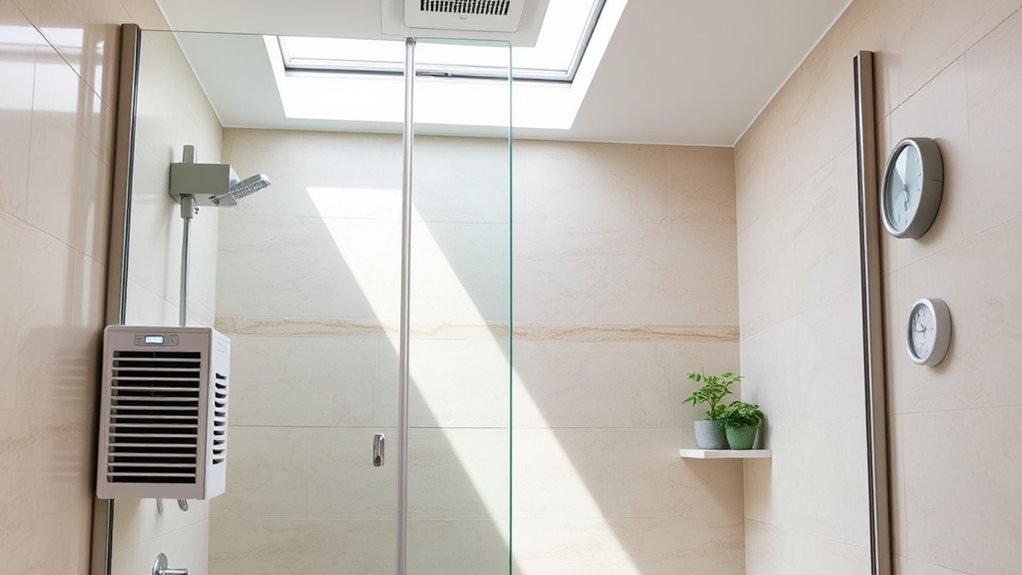
To prevent mold and mildew in your steam shower, make sure to ventilate properly by running your exhaust fan or opening windows for 15-20 minutes after each use. Wipe surfaces dry with a squeegee or cloth to remove excess moisture, and clean grout lines and seals regularly with mold-inhibiting solutions like vinegar or baking soda. Keeping the area dry and well-ventilated is key; discover more tips to keep your shower spotless.
Key Takeaways
- Ensure proper ventilation by running exhaust fans for 15-20 minutes after each use.
- Regularly clean surfaces with mold-inhibiting solutions and wipe down to remove excess moisture.
- Keep shower doors or curtains open after use to promote airflow and quicken drying.
- Seal grout lines and porous surfaces with mold-resistant sealant to prevent mold growth.
- Monitor for early signs of mold, address immediately, and maintain low humidity levels in the bathroom.
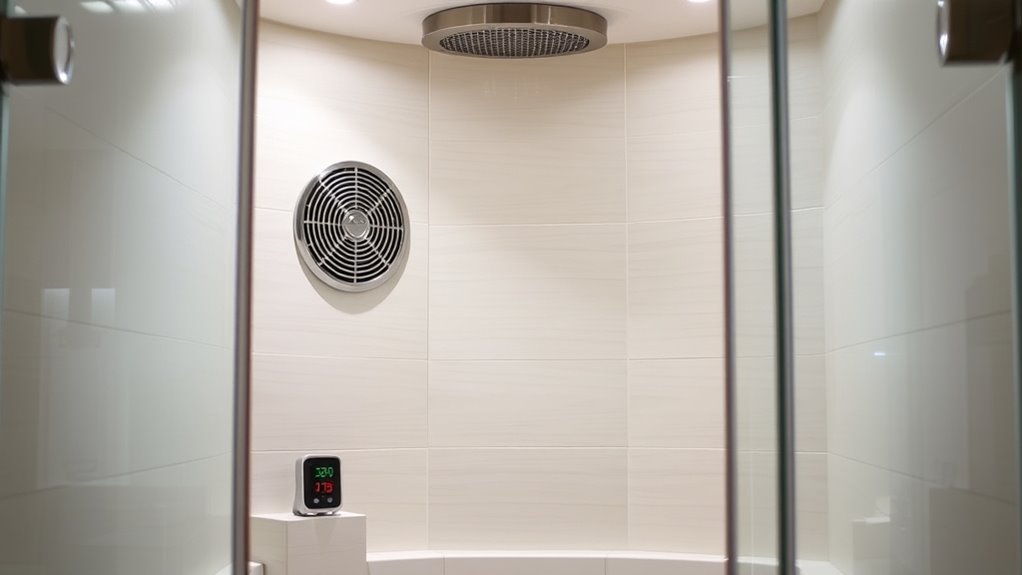
Steam showers create a relaxing experience, but the high humidity can also lead to mold and mildew if you’re not careful. To keep your steam shower healthy and safe, proper ventilation practices are vital. After each use, make sure to turn on the exhaust fan or open a window if possible. This helps remove excess moisture from the air, preventing it from settling on surfaces and creating an ideal environment for mold growth. If your bathroom lacks adequate ventilation, consider installing a high-quality exhaust fan or an additional vent to improve air circulation. Running the fan for at least 15-20 minutes after each session ensures that humidity levels drop quickly, reducing the risk of mold spores taking hold. HEPA filters in ventilation systems can also help trap airborne mold spores, further protecting your space. Consistent ventilation not only keeps your steam shower dry but also improves air quality throughout your bathroom.
Along with good ventilation practices, maintaining a regular cleaning routine is vital. After each shower, wipe down the walls, benches, and glass doors with a squeegee or a microfiber cloth. Removing water droplets prevents soap scum and mineral deposits from accumulating, which can become breeding grounds for mold. Once a week, give your shower a more thorough cleaning using a mild, mold-inhibiting cleaner. Pay special attention to grout lines, corners, and seals, as these areas are particularly prone to mold growth. Use a soft brush or toothbrush to scrub away any buildup and ensure you’re reaching into all the crevices. Avoid harsh chemicals that can damage surfaces; instead, opt for natural solutions like vinegar or baking soda, which are effective and safe.
It’s also important to stay vigilant with your routine. Regularly inspect your shower for signs of mold or mildew—discoloration, musty smells, or fuzzy patches. If you spot any early signs, address them immediately by cleaning the area thoroughly and increasing ventilation efforts. Consider applying a mold-resistant sealant to grout lines and other porous surfaces to create a barrier against moisture intrusion. Additionally, keeping the shower door or curtain open after use promotes airflow, helping surfaces dry more quickly.
Frequently Asked Questions
Can Using a Steam Shower Regularly Cause More Mold Growth?
Using a steam shower regularly can increase the chances of mold growth if you neglect proper steam shower hygiene. Moisture from frequent use creates an ideal environment for mold, so you need mold prevention strategies like ventilation and wiping down surfaces after each use. Regular cleaning, keeping the area dry, and ensuring good airflow are essential to prevent mold build-up and maintain a safe, healthy steam shower environment.
Are There Specific Cleaning Products Best for Mold Prevention?
Yes, using mold-resistant products can help prevent mold growth. You should incorporate regular cleaning schedules with these products, focusing on the shower’s seals, tiles, and drains. Look for cleaners containing mold inhibitors or antimicrobial agents. By consistently applying mold-resistant products and maintaining a routine cleaning schedule, you’ll reduce moisture buildup and inhibit mold formation, keeping your steam shower clean, safe, and mildew-free.
How Long Should I Wait After a Shower to Ventilate the Room?
You should wait at least 15-20 minutes after a shower to ventilate the room. During this time, open the door or turn on the exhaust fan to promote air circulation and humidity control. Proper ventilation helps reduce excess moisture, preventing mold and mildew growth. Ensuring good air circulation immediately after a shower is key to keeping your steam shower clean and dry, protecting your investment long-term.
Does the Type of Tile Affect Mold Resistance?
Yes, the type of tile affects mold resistance. Porcelain and ceramic tiles are less porous, so they resist mold better than natural stone tiles like marble or limestone, which absorb moisture more easily. Additionally, grout composition matters; epoxy grout is more resistant to mold than cement-based grout. Choosing non-porous tile materials and mold-resistant grout helps keep your steam shower cleaner and mold-free longer.
Can Installing a Dehumidifier Help Prevent Mold in Steam Showers?
Think of a dehumidifier as your trusty sidekick in moisture control strategies—it’s quite effective at reducing humidity levels. While it won’t turn your steam shower into a dry land, it helps keep mold at bay by lowering excess moisture. Installing one can definitely help prevent mold in steam showers, especially in humid environments. Just make sure to choose the right size and maintain it regularly to maximize its dehumidifier effectiveness.
Conclusion
To keep your steam shower mold-free, stay consistent with ventilation and dry the area after each use. Did you know that mold can begin growing within just 24 to 48 hours of moisture exposure? By taking these simple steps, you can prevent mold and mildew from taking hold, ensuring a clean, healthy steam shower experience. Keep it dry, ventilate well, and enjoy your relaxing showers without worry!

Liam’s journey with us started as a consumer. Having faced challenges while setting up his own modern bathroom, he delved deep into research.
Recognizing his knack for simplifying complex information and his authentic writing style, we were thrilled to welcome him aboard. Liam’s articles often merge practicality with style, ensuring readers find the perfect fit for their homes. Liam is an avid hiker off-duty and often jokes about finding the best “natural toilets” Mother Earth has to offer.