
Your toilet bowl might empty slowly due to clogs, improper venting, or malfunctioning parts like the flapper valve. Sometimes, mineral buildup or a partially blocked vent pipe can hinder drainage too. Checking for blockages and ensuring the flapper seals properly can help. If you notice gurgling sounds or persistent issues despite your efforts, it’s time to look deeper into the problem. Stay tuned to explore solutions to enhance your toilet’s performance.

Get home appliances delivered free with Prime
- Fast, free delivery on millions of items
- Prime Video, Amazon Music and more included
- Member-only deals all year
Key Takeaways
- Improper drain slope can impede water flow, causing slow bowl emptying.
- Clogs in the siphon jet or rim holes restrict water flow during flushing.
- Vent pipe blockages disrupt air pressure, leading to inefficient drainage.
- A faulty flapper valve may not seal properly, reducing flushing power.
- Mineral buildup in pipes can slow drainage and affect toilet performance.
As an affiliate, we earn on qualifying purchases.
Common Causes of Slow Toilet Drainage

When your toilet bowl empties slowly, it can be frustrating, especially during busy mornings. Several common causes may be at play. One issue could be improper drain slope. If the pipes aren’t angled correctly, water struggles to flow, leading to a sluggish toilet. Another factor is toilet siphoning. If the siphon jet in the bowl is partially clogged, it can’t create the necessary suction to pull water efficiently. Additionally, mineral buildup can restrict flow, affecting drainage speed. Finally, a partially blocked vent pipe can disrupt air pressure, further slowing down the process. Identifying these causes can help you understand what’s behind your toilet’s slow drainage and pave the way for effective solutions.
Simple Fixes for Addressing Slow Drainage

Identifying the causes of slow toilet drainage is the first step, but knowing how to fix them is just as important. Start with basic drainage pipe maintenance. Regularly check for clogs or build-up, and clean the pipes as needed. If you notice stubborn blockages, consider using toilet auger techniques. Insert the auger into the toilet bowl, twisting and pushing until you break up the obstruction. Be gentle to avoid damaging the toilet. Additionally, verify the flapper is sealing properly, as a faulty flapper can lead to poor drainage. Finally, if you’re still facing issues, it might be time to call a plumber to investigate deeper plumbing problems. Taking these steps can greatly improve your toilet’s drainage.
How to Diagnose a Weak Flush in Your Toilet
How can you tell if your toilet’s flush is weak? Start by observing the water level in the bowl after a flush. If it stays low or takes longer to refill, your toilet performance might be compromised. Next, listen for the sound of the water; a faint or gurgling sound can indicate insufficient flush efficiency. You should also check the flapper valve; if it’s worn or not sealing properly, it can cause weak flushing. Additionally, inspect the rim holes for clogs, as buildup can restrict water flow. Finally, if your toilet struggles to clear waste consistently, it’s a clear sign it’s time to diagnose the issue further. Addressing these factors can greatly improve your toilet’s overall performance.
How Venting Problems Affect Toilet Drainage?

A weak flush can often signal a deeper issue, and one common culprit is venting problems. When your toilet’s venting issues arise, it disrupts air flow, which can lead to slow drainage. Here are three ways venting affects your toilet:
- Reduced Pressure: Poor air flow can create negative pressure, making it hard for waste to exit efficiently.
- Slow Drainage: Without proper venting, water struggles to drain, leading to a sluggish flush that leaves waste behind.
- Gurgling Sounds: You might hear gurgling as air tries to escape through the water, indicating a blockage in the venting system.
Addressing these venting issues is essential for restoring ideal toilet performance and ensuring your toilet empties quickly and effectively.
How to Check for Sewer Line Blockages
While a slow-draining toilet can be frustrating, checking for sewer line blockages is essential to pinpoint the problem. Start by inspecting the cleanout access point, usually found outside your home. Use sewer inspection techniques like a plumber’s snake to probe for obstructions. If you can’t locate the blockage, consider using a video inspection camera, which allows for a thorough view of the pipes. Blockage detection methods also include flushing a small amount of dye down the toilet; if it backs up elsewhere, you’ve got a blockage. Don’t forget to check for tree roots or debris around your sewer line, as these can cause significant issues. Identifying the blockage early can save you time and money on repairs.
Hard Water and Toilet Drainage
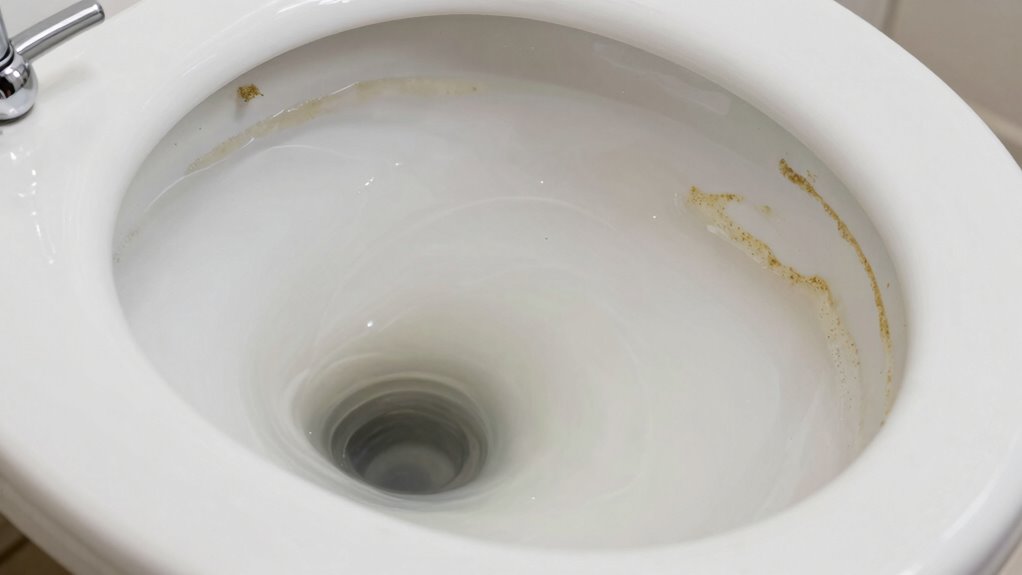
If you’ve noticed your toilet bowl draining slowly, hard water could be the culprit. The minerals in hard water can lead to significant mineral buildup in your toilet, affecting its efficiency. Here are three ways hard water contributes to drainage issues:
If your toilet bowl is draining slowly, hard water might be causing mineral buildup that affects its performance.
- Clogged Jets: Mineral deposits can block the jets under the toilet rim, reducing water flow during flushing.
- Reduced Flush Power: Accumulated minerals can hinder the toilet’s flushing mechanism, making it less effective.
- Frequent Clogs: Over time, mineral buildup can lead to more frequent clogs, causing further drainage problems.
Addressing hard water issues early can help maintain your toilet’s efficiency and prevent ongoing drainage troubles.
When to Call a Plumber for Toilet Issues

Toilet troubles can often be resolved with a little DIY effort, but knowing when to call a plumber is essential. If your toilet’s draining slowly despite your attempts to clear clogs, it might signal a deeper issue. Persistent gurgling sounds or water rising in the bowl could indicate a plumbing emergency that requires professional help. Also, if you notice leaks around the base or water pooling on the floor, this isn’t something you should ignore. For toilet repairs involving complex issues like broken flappers or faulty fill valves, a plumber’s expertise can save you time and further damage. Trust your instincts; when in doubt, reaching out to a professional can prevent costly repairs down the line.
Preventative Tips for Maintaining Toilet Efficiency

To keep your toilet running smoothly, you need to stay on top of a few key tasks. Regularly cleaning the components, checking for clogs, and monitoring the water level can make a big difference. By being proactive, you can prevent slow drainage and other issues down the line.
Regularly Clean Toilet Components
While you might not think about it often, regularly cleaning your toilet components can greatly improve its efficiency. Proper toilet cleaning and component maintenance guarantee everything functions smoothly, preventing slow emptying and other issues. Here are three key areas to focus on:
- Tank Components: Clean the flapper and fill valve to prevent leaks and guarantee proper flushing.
- Bowl Rim: Scrub the rim where water enters the bowl to avoid mineral buildup that can affect flow.
- Holes Under the Rim: Use a brush to clear any blockages in the holes that distribute water into the bowl.
Check for Clogs Frequently
Even if you don’t notice any issues right away, checking for clogs frequently can save you from bigger problems down the line. Regular inspections of your toilet can help with early clog detection. Start by looking for any slow drainage or unusual sounds during flushing. Using a plunger or a toilet auger can help dislodge minor blockages before they escalate. Additionally, keep an eye on the toilet’s components to guarantee everything is functioning properly. If you notice persistent issues, it might be time to call a plumber. By staying proactive with these checks, you’ll make sure your toilet runs smoothly, ultimately avoiding costly repairs and maintaining peak efficiency. Remember, prevention is always easier than fixing a major problem!
Monitor Water Level Consistently
Maintaining the right water level in your toilet tank is essential for efficient flushing. If the water level is too low, your toilet won’t flush properly, causing slow emptying of the bowl. Regularly monitoring this level is a key part of toilet maintenance. Here are three tips to help you stay on track:
- Check the Float: Confirm the float isn’t stuck or damaged, as this directly affects the water level.
- Adjust the Fill Valve: If the water level is consistently low, you may need to adjust or replace the fill valve.
- Inspect for Leaks: Look for any leaks in the tank or bowl that could affect water levels.
The Role of the Flapper Valve in Toilet Function

The flapper valve plays a vital role in how your toilet functions. If it’s not working properly, you might notice your toilet bowl empties slowly or not at all. Let’s explore the basics of the flapper valve, common issues you might face, and some maintenance tips to keep it running smoothly.
Flapper Valve Basics Explained
A flapper valve acts as an essential gatekeeper in your toilet’s flushing system. It controls the water flow from the tank to the bowl, guaranteeing a powerful flush. Understanding flapper types and knowing when to take into account flapper replacement can save you from slow emptying issues.
Here are three key points about flapper valves:
- Material Matters: Flapper types, like rubber or silicone, affect longevity and performance.
- Sizing Counts: Make sure you choose the right size for your toilet to avoid leaks or inefficiency.
- Maintenance is Key: Regularly check for wear and tear to prevent slow flushing and water wastage.
Common Flapper Issues
While you might not think much about your flapper valve, common issues can greatly impact your toilet’s performance. Flapper wear, misalignment, or leaks can lead to slow flushing and wasted water. Regular flapper maintenance is essential. You might need to make flapper adjustments or even consider a flapper replacement if it’s damaged. Different flapper types exist, so make sure you choose the right one during installation. Here’s a quick overview of common flapper issues:
| Issue | Impact | Solution |
|---|---|---|
| Flapper Wear | Reduced flushing power | Replace flapper |
| Flapper Alignment | Incomplete sealing | Adjust position |
| Flapper Leaks | Constant water waste | Check for damage |
| Flapper Types | Compatibility issues | Select the right type |
| Flapper Maintenance | Prolongs lifespan | Regular checks |
Maintenance Tips for Longevity
To keep your toilet functioning smoothly, regular maintenance of the flapper valve is vital. This small but significant component controls water flow from the tank to the bowl, impacting your toilet’s efficiency. Here are some longevity tips for effective toilet maintenance:
- Inspect Regularly: Check the flapper for wear and tear. If you notice cracks or warping, it’s time for a replacement.
- Clean the Valve: Mineral buildup can hinder function. Periodically clean the flapper and surrounding area to guarantee a tight seal.
- Adjust Chain Length: If the chain is too tight or too loose, it can affect the flapper’s operation. Adjust it so that it opens and closes smoothly.
Clogs in the Trap and Their Effects on Toilet Performance
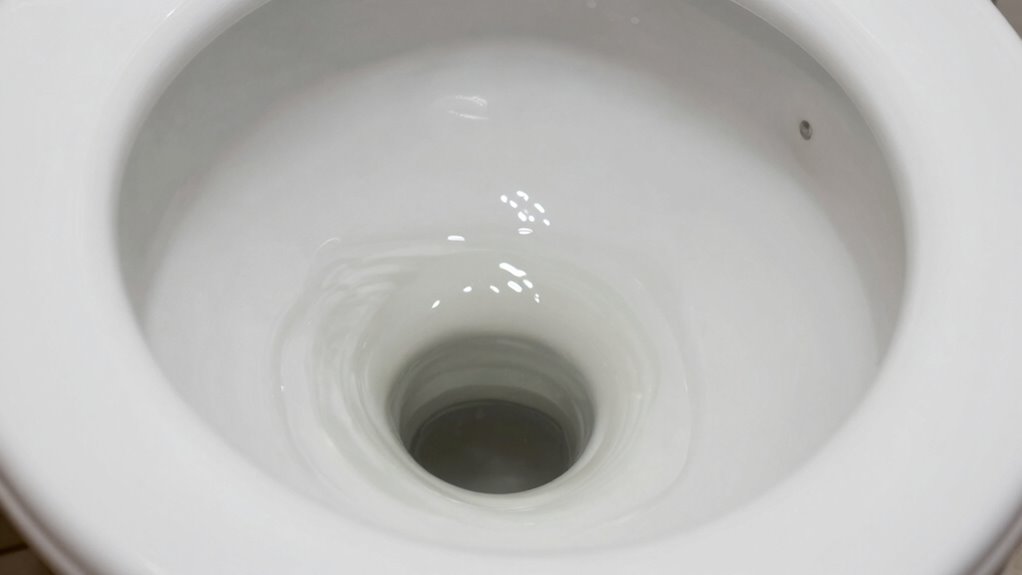
When clogs form in the toilet’s trap, they can greatly hinder its performance. These trap blockages disrupt the flushing mechanisms, causing water to drain slowly. You might notice that the toilet struggles to empty, leaving waste behind. This not only frustrates you but can also lead to more significant plumbing issues down the line.
To better understand the effects of clogs, here’s a quick comparison:
| Effect | Description |
|---|---|
| Reduced Flushing Power | Water can’t flow freely, leading to incomplete flushes. |
| Increased Backups | More frequent blockages could occur, requiring maintenance. |
| Higher Water Usage | You may use more water trying to flush waste effectively. |
Addressing trap blockages promptly can help maintain your toilet’s efficiency.
Frequently Asked Questions
Can Toilet Design Affect How Quickly It Drains?
Yes, toilet design definitely affects how quickly it drains. The shape of the toilet siphon plays an essential role; a well-designed siphon can create a strong vortex, allowing water to flow efficiently. Additionally, the drainage angle matters; if it’s too shallow, water won’t exit quickly. So, when choosing a toilet, consider both the siphon design and the drainage angle to guarantee faster flushing and emptying.
What Role Does Toilet Bowl Shape Play in Drainage Speed?
Toilet bowls are like race cars; their shape can determine how fast they perform. The bowl curvature plays a vital role in drainage speed. A well-designed curve enhances the flushing mechanics, allowing water to flow smoothly and efficiently. If the curvature is too shallow or steep, it can disrupt the flow, causing slow drainage. So, if your toilet’s struggling to empty, the bowl’s shape might be the culprit behind its sluggish performance.
How Does Toilet Age Influence Its Flushing Efficiency?
As your toilet ages, its flushing efficiency can decline due to wear and tear on components. Parts like the flapper and fill valve may not function as effectively, leading to weaker flushes. Regular toilet maintenance can help, but older models may lack modern flushing technology, which optimizes water flow. If you’re noticing slow drainage, consider upgrading to a newer model that incorporates better design and flushing capabilities for improved performance.
Do Toilet Accessories Impact Drainage Performance?
Toilet accessories can make or break your drainage performance. Imagine this: you’ve got a mighty toilet plunger at your side, ready to battle drainage blockages like a superhero. Without it, your toilet might feel like it’s stuck in molasses, draining slower than a snail on a leisurely stroll. So, don’t underestimate the power of your trusty tools; they can transform a sluggish toilet into a swift, efficient flushing machine!
Can Environmental Factors Affect Toilet Bowl Drainage?
Yes, environmental factors can affect your toilet bowl drainage. If you’ve got low water pressure, it can lead to slow emptying. Regular bowl cleaning helps prevent clogs, but if debris builds up in your plumbing, it can create issues too. Poor plumbing maintenance might exacerbate the situation, so always check for any obstructions. Staying proactive about these factors guarantees smooth drainage and keeps your toilet functioning properly.
Conclusion
In the world of plumbing, a slow-draining toilet can feel like a traffic jam on your morning commute—frustrating and time-consuming. By identifying common causes and making simple fixes, you can keep your toilet flowing smoothly, just like a well-timed green light. If you’ve tried everything and it’s still sluggish, don’t hesitate to call a plumber. Remember, just like you wouldn’t ignore a car that won’t start, don’t overlook your toilet’s needs.
Fall yard work Picks
leaf blowers
As an affiliate, we earn on qualifying purchases.