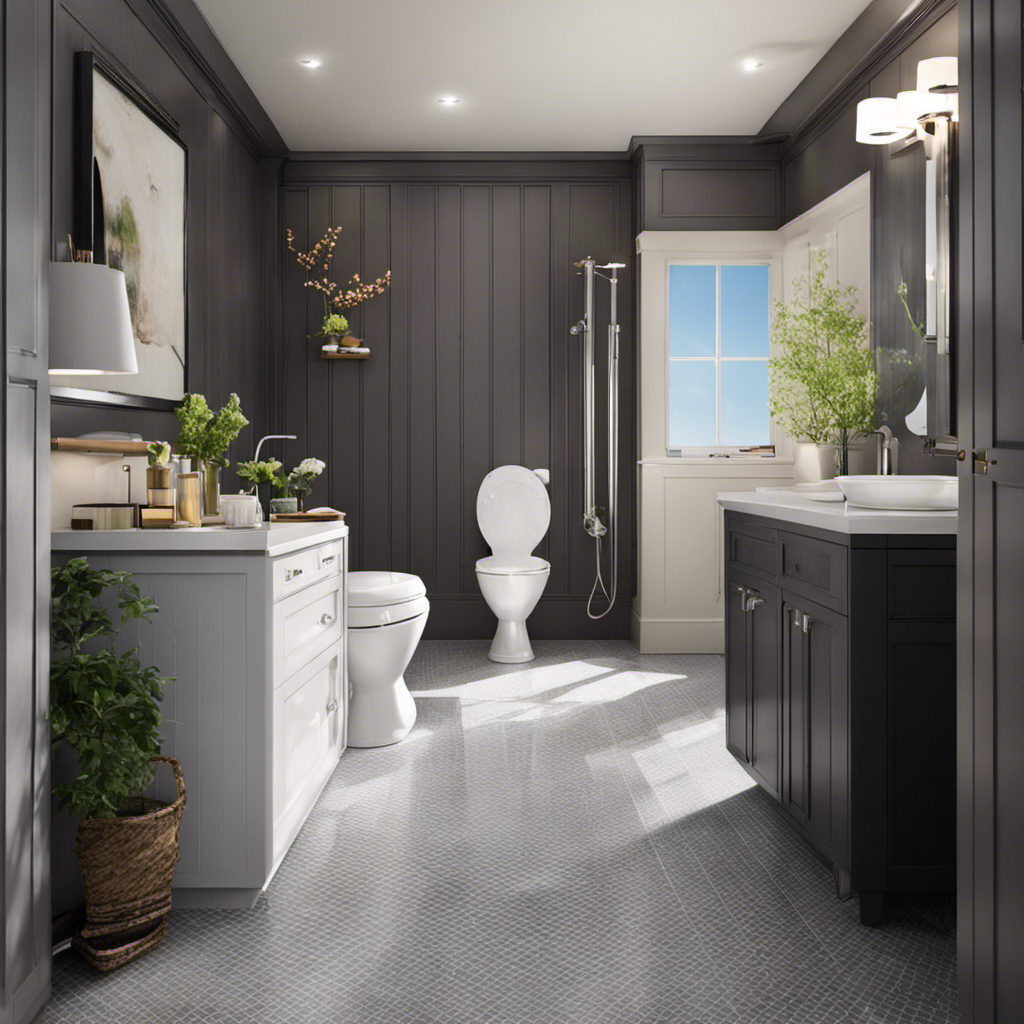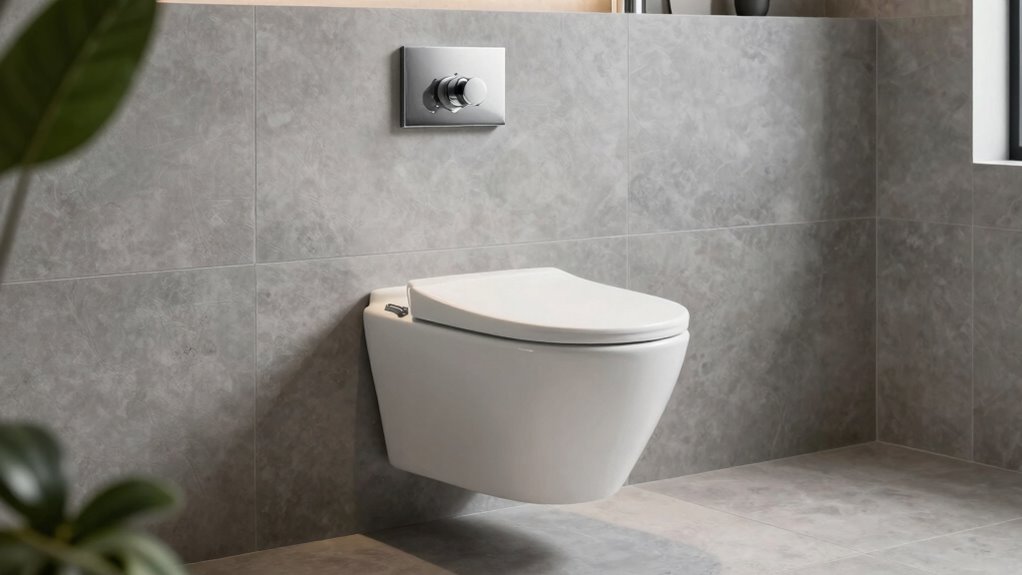

Yes, you can install a wall-hung toilet on a 2×4 wall, but you need to guarantee proper structural support. Make sure to use a sturdy carrier frame, securely anchoring it to the studs. Check the wall’s integrity and reinforce it if necessary. Plumbing connections must be accessible, and you should follow specific installation techniques for alignment and stability. If you want to know more about the process and what to take into account, there’s plenty of important info ahead.

Get home appliances delivered free with Prime
- Fast, free delivery on millions of items
- Prime Video, Amazon Music and more included
- Member-only deals all year
Key Takeaways
- Wall-hung toilets can be installed on 2×4 walls with a sturdy carrier frame anchored to the studs for support.
- Ensure the wall’s structural integrity by checking stud spacing and reinforcing with additional blocking if needed.
- Proper plumbing is crucial; a 3-inch drainage pipe and accessible water supply connections are recommended.
- Use a level for proper alignment during installation and adhere to the manufacturer’s guidelines for optimal performance.
- Consider costs for the toilet, installation, materials, and any plumbing modifications to budget effectively.
wall-hung toilet carrier frame for 2×4 wall
As an affiliate, we earn on qualifying purchases.
As an affiliate, we earn on qualifying purchases.
Can You Install a Wall-Hung Toilet on a 2×4 Wall?
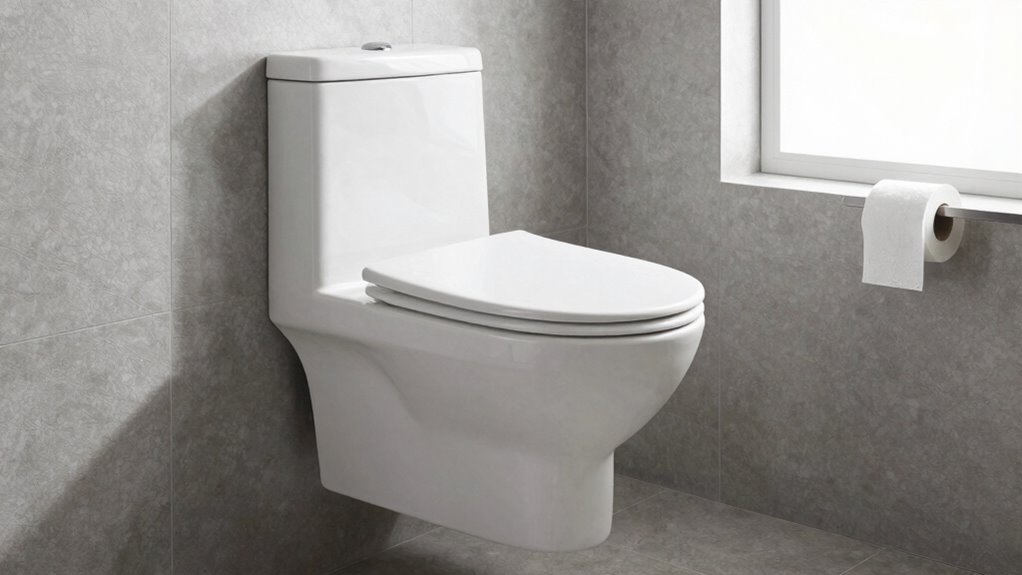
If you’re considering a wall-hung toilet for your bathroom, you might wonder if it’s feasible to install it on a 2×4 wall. The answer is yes, but there are a few key factors to keep in mind. First, make certain you choose the right mounting options; some wall-hung toilets are specifically designed for 2×4 installations. You’ll need a sturdy carrier frame to support the toilet’s weight securely. This approach not only meets functional needs but also enhances your bathroom’s design aesthetics, allowing for a sleek, modern look. Additionally, think about plumbing and accessibility when planning your layout. With the right preparation, you can enjoy both style and practicality in your bathroom renovation.
Understanding Wall-Hung Toilets and Their Benefits
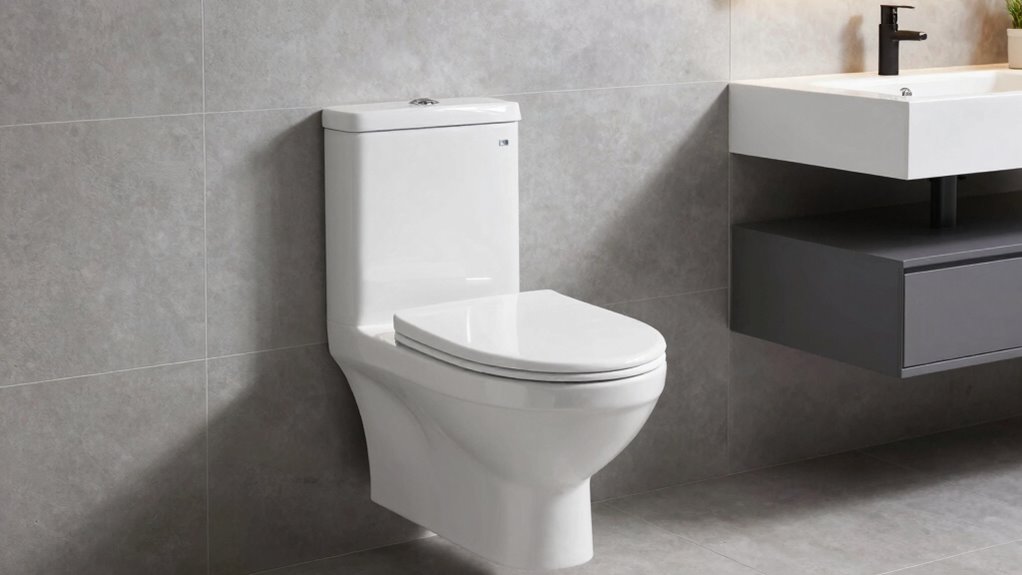
Understanding Wall-Hung Toilets and Their Benefits
Wall-hung toilets are a modern solution that combines style and functionality in your bathroom. These toilets offer several advantages, including space efficiency; they free up floor space, making your bathroom feel larger. Their sleek, modern design adds aesthetic appeal, enhancing your overall decor. Cleaning becomes a breeze since there’s no base to obstruct your cleaning tools. Plus, the height can be adjusted, providing accessibility benefits for everyone, including those with mobility challenges. While plumbing considerations are essential, installation flexibility allows you to position the toilet where it best fits your layout. With these features, wall-hung toilets not only improve your bathroom’s look but also elevate its practicality. Additionally, proper filtration and suction are crucial for maintaining optimal performance in your plumbing system.
Essential Structural Factors for Wall-Hung Toilets on 2×4 Walls
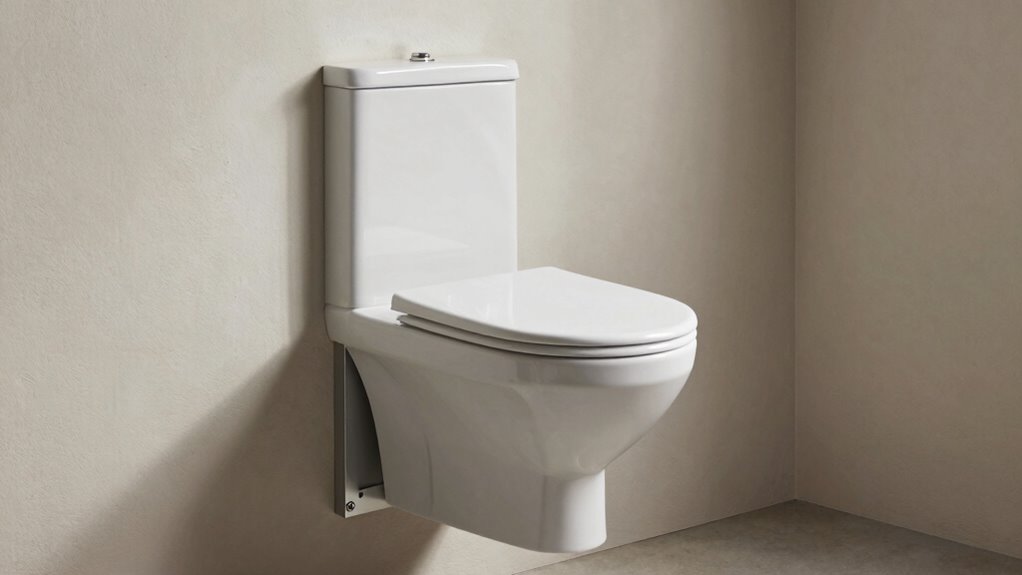
When considering a wall-hung toilet for a 2×4 wall, it’s vital to confirm the wall can support the necessary weight and plumbing requirements. You’ll need to assess the wall materials and make sure they’re sturdy enough for the flush mechanisms.
Here’s a quick overview of important factors:
| Factor | Importance | Considerations |
|---|---|---|
| Wall Materials | Must be strong and stable | Gypsum board vs. plywood |
| Weight Support | Needs to hold toilet + users | Reinforcement options |
| Plumbing Access | Proper installation critical | Location of water lines |
| Flush Mechanisms | Different types available | Choose based on efficiency |
Understanding these factors will help you create a reliable setup for your wall-hung toilet.
How to Assess Weight Support for Wall-Hung Toilets
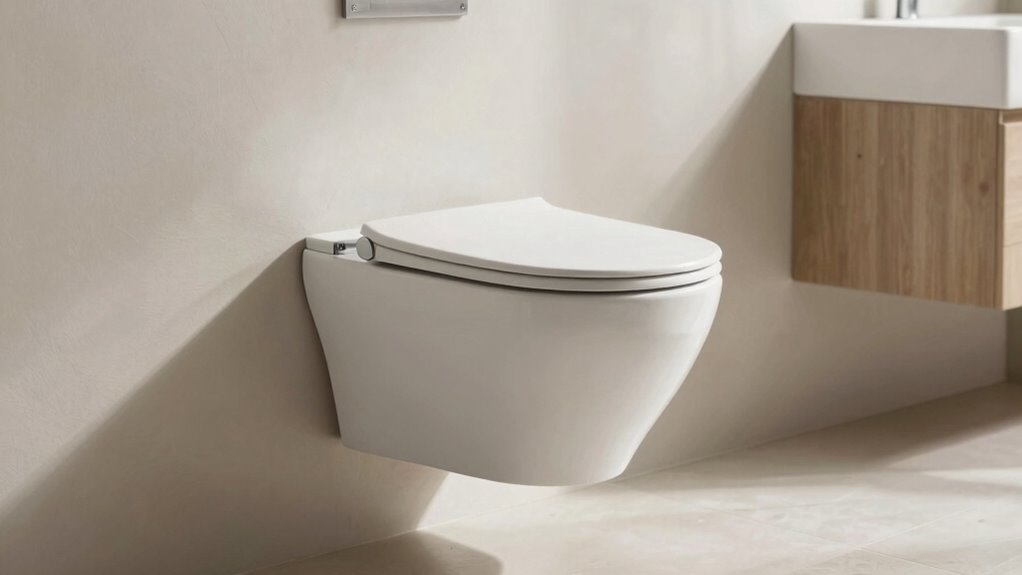
When you’re considering a wall-hung toilet, evaluating the weight support is essential. Start by examining the structural integrity of your wall and the load-bearing capacity it can handle. Then, look into the best installation techniques to guarantee everything stays secure and functional.
Structural Integrity Evaluation
To guarantee your wall-hung toilet is securely installed, it’s essential to evaluate the structural integrity of your 2×4 wall. Start with a thorough structural analysis to confirm the wall can support the weight of the toilet and the user. Check the spacing of the studs; they should ideally be 16 inches apart for ideal load distribution. Reinforce the wall if necessary, using blocking or additional framing to spread the weight more evenly. Don’t forget to inspect the condition of the existing framing—look for any signs of damage or decay that could compromise stability. Additionally, consider regular maintenance practices to ensure that the overall structure remains sound over time. By taking these steps, you’ll confirm your wall-hung toilet is not only functional but also safe for everyday use.
Load-Bearing Capacity Considerations
Evaluating the load-bearing capacity of your wall-hung toilet is essential for guaranteeing its safety and functionality. You need to verify that your 2×4 wall can support the toilet’s weight while maintaining wall stability. Here are some key factors to take into account:
- Toilet weight: Know the total weight of the toilet, including any additional components.
- Wall structure: Check if your wall has adequate framing and reinforcement.
- Installation method: Confirm you’re using the correct brackets and supports.
- User weight: Factor in the maximum weight of users to avoid overloading.
- Local codes: Always adhere to building codes and regulations for safety compliance.
Installation Techniques Overview
Once you’ve assessed the load-bearing capacity of your wall, it’s time to focus on the installation techniques for wall-hung toilets. Start by selecting a sturdy frame that can support the weight, considering installation challenges that may arise with a 2×4 wall. You’ll want to confirm that the frame is securely anchored to the studs.
Next, explore design options that match your bathroom’s aesthetic while maintaining functionality. Be mindful of plumbing and electrical placements, as these can complicate your installation.
Using a level during installation guarantees proper alignment, preventing future issues. Finally, follow the manufacturer’s guidelines closely to guarantee safety and performance. With careful planning, your wall-hung toilet can be both stylish and reliable.
Wall Reinforcements Needed for Installation

When installing a wall-hung toilet on a 2×4 wall, you’ll need to evaluate stud placement carefully. Proper bracing is essential for stability to support the weight of the toilet. Let’s explore how to reinforce your wall effectively. Additionally, considering the load-bearing capacity of kitchen ventilation systems can provide insight into structural support needs. Incorporating strength training fundamentals into your approach can enhance your understanding of the necessary support for such installations. Improving indoor air quality is also crucial, as microplastics in dust can pose health risks that may be exacerbated by renovation activities. Furthermore, ensuring that your installation complies with extension cord standards can help prevent electrical hazards during the renovation process. It’s also important to note that load-bearing walls are critical in supporting heavy fixtures like a wall-hung toilet.
Stud Placement Considerations
Installing a wall-hung toilet on a 2×4 wall requires careful attention to stud placement. Proper stud alignment is essential for a secure and stable installation. Here are some key considerations to keep in mind:
- Check wall thickness: Confirm your wall meets the necessary thickness for mounting.
- Locate existing studs: Use a stud finder to pinpoint where the studs are.
- Add blocking: Install additional blocking if the studs aren’t aligned with the toilet’s mounting brackets. This is crucial to ensure that the acoustic drum shields can effectively support the weight.
- Use the right fasteners: Choose heavy-duty screws designed for wall-hung toilets.
- Verify weight capacity: Ascertain the wall can support the toilet’s weight, especially when occupied. Additionally, consider the weight support requirements for fixtures to ensure a safe installation.
Bracing for Stability
To guarantee your wall-hung toilet is stable and secure, you’ll need to provide adequate bracing within the wall. Start by selecting effective bracing methods, such as adding horizontal blocking between the studs. This not only distributes the weight but also enhances stability reinforcement. You can use plywood or solid wood for this purpose, making certain it’s securely fastened.
When installing the carrier frame, make certain it’s anchored to your bracing for maximum support. Additionally, verify that the wall structure is level and plumb before proceeding. Regularly check for any signs of movement or wear over time; addressing these issues early can prevent costly repairs and make sure your toilet remains safely mounted. Always prioritize safety tips for DIY projects, as they will guide you in preventing accidents during installation.
Plumbing Needs for Wall-Hung Toilets
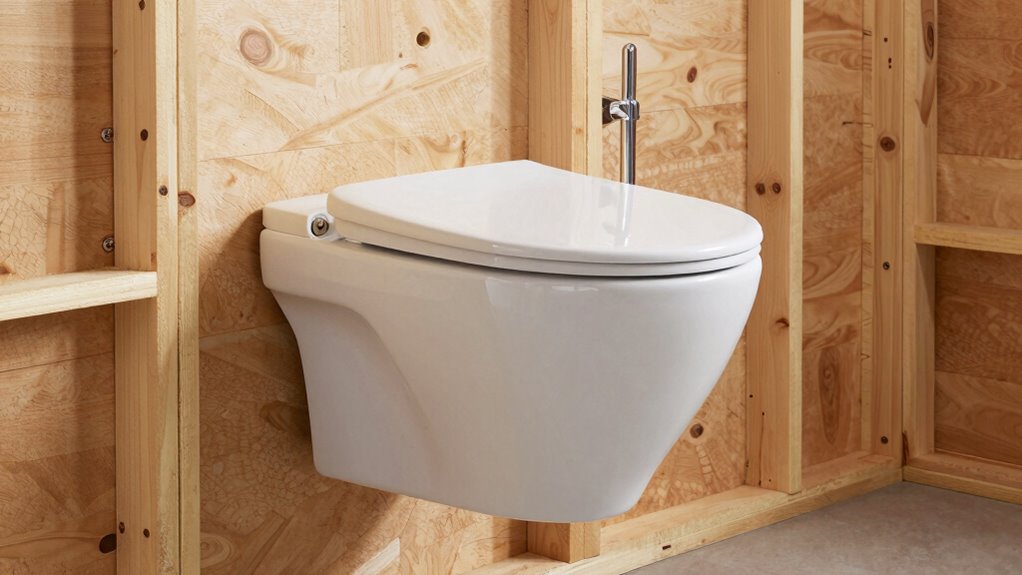
While you might be excited about the sleek design of a wall-hung toilet, understanding the plumbing needs is crucial for a successful installation. You’ll need to make sure your setup meets local plumbing codes and that the drainage systems are properly aligned. Here are some key considerations:
- Water supply connections: Make certain they’re accessible and correctly positioned.
- Drainage pipe: Typically needs a 3-inch diameter for ideal flow.
- Wall support: The wall structure must handle the weight.
- Ventilation: Proper venting prevents sewer gas buildup.
- Professional help: Consider hiring a plumber for compliance and installation accuracy.
Taking these factors into account will help you avoid costly mistakes and make sure your wall-hung toilet functions smoothly.
Installation Techniques for Wall-Hung Toilets on 2×4 Walls
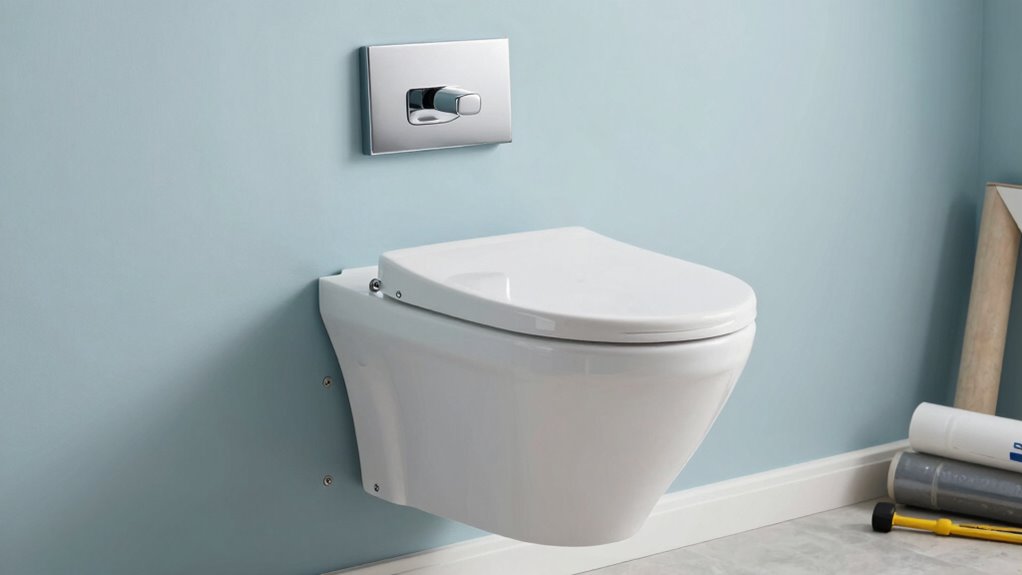
Wall-hung toilets can transform your bathroom, but proper installation on a 2×4 wall is essential for both functionality and safety. To tackle installation challenges, you’ll want to make certain you’ve got the right tools and materials. Here are some key design considerations:
| Step | Action | Notes |
|---|---|---|
| 1. Support Frame | Install a sturdy frame | Use 2×4 lumber |
| 2. Wall Bracing | Reinforce with additional studs | Make certain stability |
| 3. Carrier System | Select the right carrier | Match toilet model |
| 4. Plumbing | Connect water supply | Check for leaks |
| 5. Final Mounting | Secure the toilet | Level it properly |
What to Watch Out for When Installing
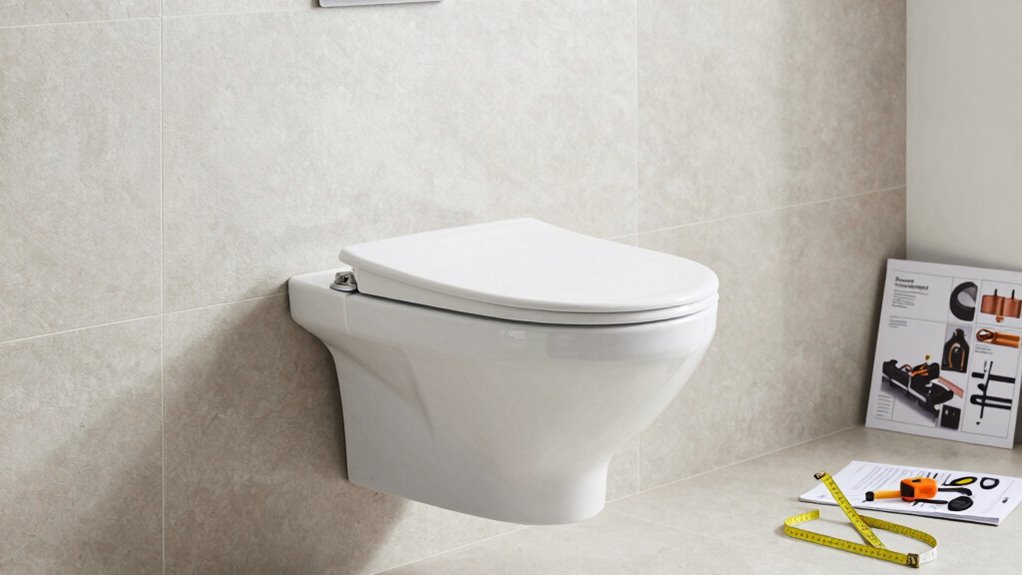
Sure! Here’s your updated content with the requested modifications:
—
When installing a wall-hung toilet, you’ll need to keep an eye out for a few critical factors to guarantee a smooth process. Here are some key points to contemplate:
- Toilet height: Make sure the height suits all users for comfort and accessibility. Installing a wall-hung toilet can also free up valuable floor space, making your bathroom feel larger. Proper height adjustment is essential to ensure comfort for various users. Additionally, consider how user-friendly installation can simplify the setup process. A wall-hung toilet can also enhance overall ventilation in the bathroom, contributing to a more eco-friendly environment.
- Stud placement: Verify the wall studs can support the toilet’s weight and are correctly aligned.
- Wall accessories: Check that all necessary accessories are compatible with the wall structure.
- Water supply: Position the water line properly to avoid any leaks.
- Support frame: Use a sturdy frame designed for wall-hung toilets to ensure stability. Additionally, consider the stability requirements for wall-hung fixtures to prevent future issues.
—
Let me know if you need further adjustments!
Cost Implications of Installing a Wall-Hung Toilet
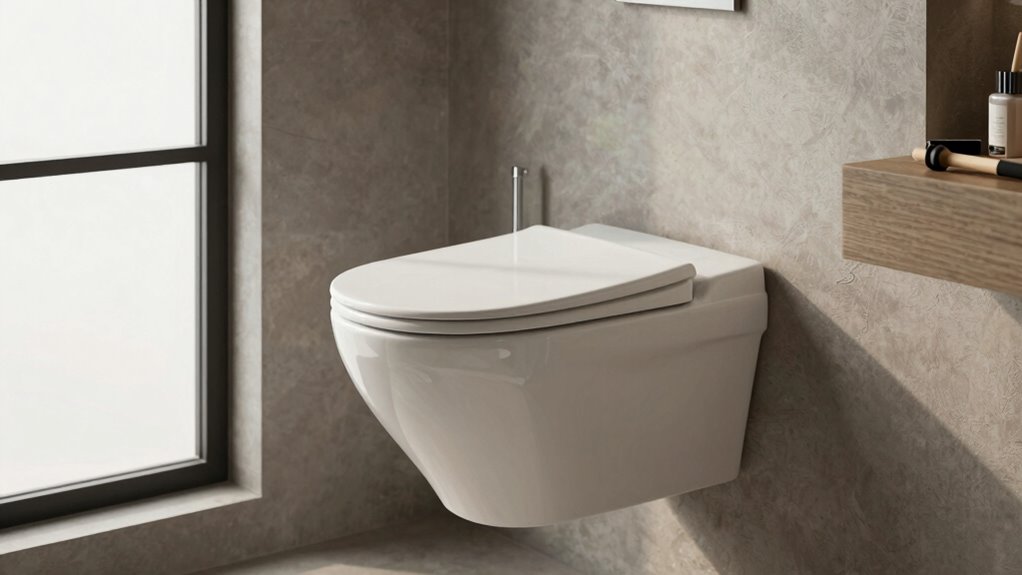
Installing a wall-hung toilet does come with its own set of costs that you should consider. First, check the cost breakdown of the toilet itself; prices can vary greatly based on brand and features. You’ll also need to factor in installation fees, which can add up quickly, especially if you’re hiring a plumber. If your wall isn’t already reinforced, you might need additional materials, like framing or support brackets, which can increase costs further. Don’t forget to account for any plumbing modifications or additional labor that might be necessary. All in all, while wall-hung toilets offer a sleek look, understanding these costs upfront will help you budget effectively for your project.
Frequently Asked Questions
Can I Use Any Wall-Hung Toilet on a 2×4 Wall?
You can’t just use any wall-hung toilet on a 2×4 wall. You’ll need to check the installation requirements, as some models require stronger framing or specific support systems. Weight considerations are essential too; verify your wall can handle the toilet’s weight when in use. Always read the manufacturer’s guidelines and consult a professional if you’re unsure about your wall’s ability to support the installation safely.
How Do I Maintain a Wall-Hung Toilet?
To maintain a wall-hung toilet, regularly check for leaks and guarantee the mounting frame is secure. Clean the toilet with non-abrasive cleaners to prevent damage. For troubleshooting issues, listen for unusual noises and inspect the flush mechanism. If you notice weak flushing, adjust the water flow or check for clogs. Don’t forget to inspect the hidden plumbing annually to catch any problems early. Regular maintenance keeps your toilet functioning smoothly.
Are Wall-Hung Toilets More Expensive to Repair?
Yes, wall-hung toilets can be more expensive to repair due to their unique installation challenges and plumbing issues. Repair costs often rise from the need for specialized tools and parts. However, with proper maintenance tips—like regular checks on the mounting frame—you can minimize potential problems. Investing time in upkeep can save you money in the long run, making repairs less frequent and less costly than you might initially expect.
What Styles Are Available for Wall-Hung Toilets?
You’ll find various styles of wall-hung toilets that cater to different design features. From sleek, minimalist models to more traditional options, each style offers unique aesthetics and functionality. The installation process is straightforward, often involving a concealed tank and sturdy mounting bracket. Whether you prefer a high-end designer look or a budget-friendly option, there’s a wall-hung toilet that suits your taste and bathroom layout perfectly. Choose wisely to enhance your space!
Can I Install a Wall-Hung Toilet Myself?
Sure, you can install a wall-hung toilet yourself—because who wouldn’t want to tackle plumbing? Just remember, DIY isn’t always as easy as it seems! Start with solid installation tips: make sure you’ve got the right support frame and tools. Check your wall’s strength and plumbing layout first. And don’t forget about the DIY considerations; a misstep could lead to a messy bathroom disaster. So, if you’re up for it, go for it!
Conclusion
To sum up, installing a wall-hung toilet on a 2×4 wall is possible, but it requires careful planning and support. As you navigate the process, you might find that reinforcing the wall not only enhances stability but also opens up your space in unexpected ways. Coincidentally, this project could spark a deeper appreciation for DIY tasks or even inspire you to tackle other renovations. So, roll up your sleeves and embrace the journey; you might just surprise yourself!
Fall Picks
fall essentials
As an affiliate, we earn on qualifying purchases.