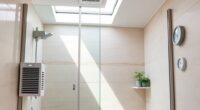
A wet room is an open-plan bathroom with waterproofed flooring and walls that create a seamless, accessible space for showering, without a tray or enclosure. A walk-in shower, by contrast, is a designated shower area often separated by glass or a partition and typically includes a shower tray. Knowing the differences helps you choose the right option for your space. If you want to explore more details, keep going to discover what suits your needs best.
Key Takeaways
- A wet room is an open-plan shower area with waterproofed floors covering the entire bathroom, while a walk-in shower is a designated, enclosed shower space.
- Wet rooms have seamless, accessible designs without enclosures, whereas walk-in showers are confined spaces often separated by glass or partitions.
- Waterproofing in wet rooms covers the entire bathroom surface, requiring thorough installation, unlike the localized waterproofing around a walk-in shower’s tray and walls.
- Wet rooms promote maximum accessibility and sense of space, making them ideal for small bathrooms or mobility needs, while walk-in showers offer versatile style options.
- Proper ventilation is essential for both, but especially critical in wet rooms to prevent moisture buildup and mold.

When choosing between a wet room and a walk-in shower, understanding their differences can help you make the best decision for your bathroom. A wet room is fundamentally an open-plan shower area where the entire bathroom floor is waterproofed, creating a seamless, accessible space. It’s designed to be entirely waterproof, which means you need waterproof flooring that can handle water spreading across the entire floor without leaks. Proper bathroom ventilation is vital here, as it helps prevent moisture buildup, mold, and mildew, ensuring the space remains fresh and hygienic. In addition to waterproof flooring, installing effective bathroom ventilation systems, like extractor fans, is necessary to keep humidity levels low and protect the walls and fixtures. Ensuring proper drainage solutions**** are in place is also crucial to prevent water pooling and potential damage.
Wet rooms feature waterproof flooring across the entire space, requiring excellent ventilation to prevent moisture buildup and mold.
A wet room offers a sleek, modern look and maximum accessibility, especially for those with mobility issues. Since the entire bathroom floor is waterproofed, there’s no need for a shower tray or enclosure, making it easier to move around. This design works well in small bathrooms because it eliminates bulky enclosures, creating a sense of space. The waterproof flooring must be carefully installed with proper drainage solutions, often a linear drain or a slightly sloped floor that directs water toward the drain. You’ll want to guarantee that the waterproofing is thorough to prevent water damage to adjacent areas. Good bathroom ventilation complements this setup by reducing humidity and protecting the room’s structure.
In contrast, a walk-in shower is typically a designated shower space, often separated from the rest of the bathroom with a glass screen or partition. It usually features a shower tray or base, which contains the water within the shower area. Since it’s confined, waterproof flooring is still important, but the focus is on waterproofing the tray and surrounding walls rather than the entire bathroom. The enclosure helps contain water, making bathroom ventilation slightly less critical but still necessary to prevent steam buildup. Walk-in showers are versatile and can fit into various bathroom styles, offering a less open but still accessible shower option.
Ultimately, the key difference lies in their design and waterproofing approach. Wet rooms provide a seamless, open environment requiring thorough waterproof flooring and efficient bathroom ventilation, while walk-in showers are more compartmentalized, with waterproofing concentrated around the shower tray and boundaries. Your choice depends on your bathroom size, style preferences, and how much emphasis you place on accessibility and moisture control. Both options can be highly functional and stylish if installed correctly, with proper attention to waterproofing and ventilation to guarantee durability and comfort.

SSHENGYA Click Lock Vinyl Plank Flooring, Sample Kit -4 Colors Waterproof Wear-Resistant DIY Floor Tiles with Soft Feel for Home, Apartment, Office
6mm Thick with Realistic 3D Wood Visuals** Experience the authentic beauty of wood, enhanced by a generous 6mm…
As an affiliate, we earn on qualifying purchases.
As an affiliate, we earn on qualifying purchases.
Frequently Asked Questions
Can Wet Rooms Be Installed Outdoors?
Yes, you can install a wet room outdoors, but it requires special planning. You need to guarantee weather resistance by choosing materials that withstand rain, snow, and temperature changes. An outdoor installation must have proper drainage, waterproofing, and a sturdy enclosure to protect it from the elements. Consulting professionals helps you design a durable, safe outdoor wet room that can handle weather conditions while providing a seamless shower experience.
Are Wet Rooms Suitable for Elderly or Disabled Users?
Yes, wet rooms are suitable for elderly or disabled users. You can enhance mobility safety and accessibility features by installing handrails, non-slip flooring, and a level-access design. These modifications make movement easier and reduce fall risks. Wet rooms provide a spacious, barrier-free showering area, making daily routines more manageable and comfortable for those with mobility challenges. Proper planning guarantees a safe, inclusive environment for everyone.
What Are the Typical Maintenance Requirements?
You need to regularly clean your wet room to keep it in top shape. Tile maintenance involves using suitable cleaners to prevent grime buildup, while mold prevention requires good ventilation and moisture control. Check seals and grout lines for damage and reapply sealant when needed. By staying on top of these tasks, you’ll keep your wet room fresh, safe, and free from mold, ensuring it stays functional and hygienic.
Do Wet Rooms Increase Home Value?
A wet room can boost your home’s value, especially as a luxury upgrade. For instance, a homeowner in London added a sleek wet room, and it attracted higher offers. Its open design enhances space efficiency, making bathrooms look larger and more modern. Potential buyers see it as a stylish, functional feature, which can give your property a competitive edge in the market.
How Do Costs Compare Between Wet Rooms and Walk-In Showers?
You’ll find that the cost comparison between wet rooms and walk-in showers varies. Wet rooms generally have higher installation expenses because they require waterproofing, drainage, and sometimes structural changes. Walk-in showers tend to be cheaper since they’re easier to install with prefabricated units. However, keep in mind that long-term maintenance costs can influence your overall expense. Ultimately, your choice depends on your budget and desired bathroom style.

GDGZQD 34" X 75" Shower Door Clear Tempered Glass Framed Shower Screen Walk-in Black Finish, Shower Screen Walk-in Black Finish
Dimension: Assembled size is 34” x 75”, our shower door is designed to fit perfectly in various shower…
As an affiliate, we earn on qualifying purchases.
As an affiliate, we earn on qualifying purchases.
Conclusion
So, whether you choose a wet room or a walk-in shower, it’s all about your lifestyle and space. Some worry wet rooms are harder to maintain, but with proper sealing and regular cleaning, they can be just as practical. Both options offer modern, accessible solutions, so you won’t go wrong. Think about what fits your home and needs best—either way, you’ll enjoy a sleek, functional shower space that elevates your bathroom experience.

AVSIILE Linear Shower Floor Drain, 24 Inch Brushed Nickel 304 Stainless Steel Bathroom Drains Kit, Rectangular Shower Trench Drain with Reversable Tile-in Pattern Drain Cover & Hair Catcher
DEEP SLOPE DESIGN – ‘X’ pressed enhanced design ensures water flow effortlessly from the side to the drain…
As an affiliate, we earn on qualifying purchases.
As an affiliate, we earn on qualifying purchases.

Gopper 12" Ultra Quiet Bathroom Exhaust Fan with 6500K LED Light, 1.0 Sone 120 CFM, 10×10 Mount, 1500 LM Ceiling Ventilation Fan, Energy Efficient (6500K LED-W)
12-inch Classic LED Light: Only bright cool white (6500K), non-adjustable color temperature.
As an affiliate, we earn on qualifying purchases.
As an affiliate, we earn on qualifying purchases.