
Choosing between electric and hydronic heated flooring depends on your project size and budget. Electric systems are simple to install, ideal for small spaces and quick upgrades, but can increase operating costs over time. Hydronic systems are more complex and costly upfront but offer better energy efficiency for larger areas and long-term use. To find the perfect fit for your home and needs, exploring details about installation, costs, and long-term benefits can help make an informed decision.
Key Takeaways
- Electric systems are easier and cheaper to install, ideal for small areas or retrofit projects, but may have higher operating costs.
- Hydronic systems offer better energy efficiency and are suitable for large spaces or whole-home heating, with higher upfront costs.
- Electric heated flooring provides quick warmth and responsiveness, while hydronic systems deliver consistent, evenly distributed heat.
- Hydronic systems tend to have a longer lifespan and can increase property value, making them a long-term investment.
- Choosing between systems depends on project scope, budget, and long-term heating needs; electric for quick fixes, hydronic for efficiency.
If you’re considering upgrading your home with heated flooring, understanding your options and how they work is essential. Two main systems dominate the market: electric and hydronic. Both can provide cozy warmth, but they differ considerably in installation costs, energy efficiency, and suitability for various spaces. Knowing these differences will help you make an informed choice that fits your needs and budget.
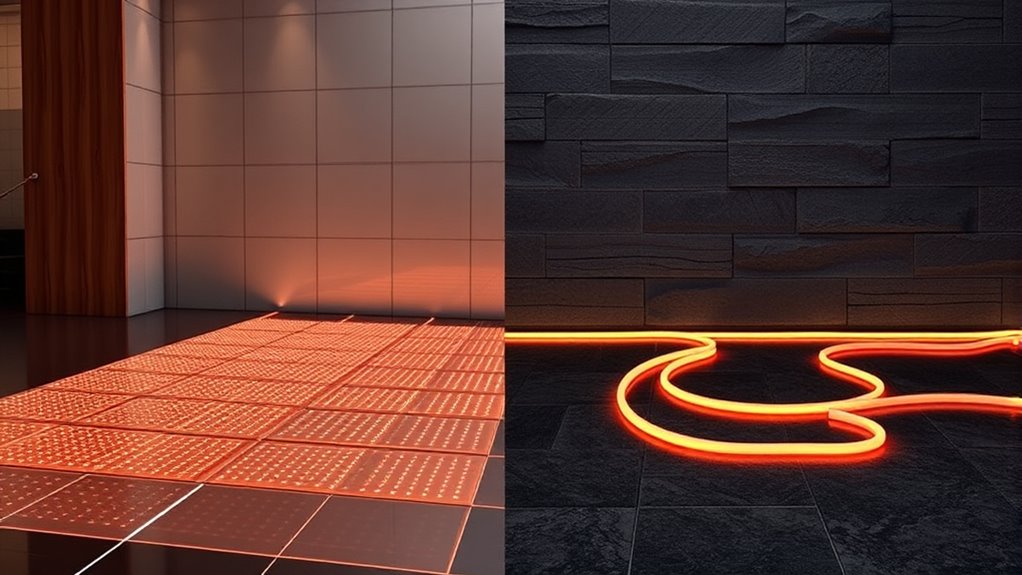
Electric heated flooring is often praised for its straightforward installation process. It involves laying heating mats or cables directly beneath the flooring surface, making it a popular choice for small areas or retrofit projects. Because the installation is simpler and requires less extensive infrastructure, the initial costs tend to be lower compared to hydronic systems. However, the energy efficiency of electric options can vary depending on usage. Electric systems tend to consume more electricity, especially over large areas, which might lead to higher utility bills if used extensively. But they excel at providing rapid, localized heating, making them ideal for bathrooms, kitchens, or rooms where you want quick, consistent warmth.
Hydronic heated flooring, on the other hand, relies on a network of water-filled pipes embedded beneath the floor. These systems are more complex to install because they require a boiler, pumps, and a manifold to circulate hot water. As a result, the installation costs are higher upfront, especially for larger spaces or whole-house systems. However, hydronic systems are generally more energy-efficient over time. They can utilize natural gas, solar, or other sustainable energy sources, which can considerably reduce operating costs. Once installed, hydronic systems tend to deliver more consistent and evenly distributed heat across larger areas, making them a smart choice for whole-home heating. They also tend to have a longer lifespan and can add value to your property. Additionally, advancements in regulation and refrigerant technology are helping to make hydronic systems more environmentally friendly and cost-effective.
Choosing between electric and hydronic systems depends on your specific circumstances. If you’re looking for a quick, cost-effective solution for a small space, electric heated flooring might be the best fit. Conversely, if you want to heat a larger area efficiently and are prepared for a higher initial investment, hydronic systems could be more suitable in the long run. Both options can improve your home’s energy efficiency if installed correctly and used wisely, but their operational costs and installation complexity vary. Ultimately, evaluating your budget, project scope, and long-term heating goals will help you decide which system aligns best with your home improvement plans.
Frequently Asked Questions
Which Heated Flooring System Is More Energy-Efficient?
You’ll find that hydronic systems are generally more energy-efficient than electric ones, especially for larger areas, due to their lower operational costs. When comparing cost, hydronic setups might be pricier initially but save you money long-term through lower energy consumption. Maintenance requirements for hydronic systems can be higher, involving boiler checks and fluid refills, whereas electric systems need minimal upkeep. Overall, choose based on your budget, area size, and willingness for ongoing maintenance.
Can Heated Flooring Be Installed Under Existing Floors?
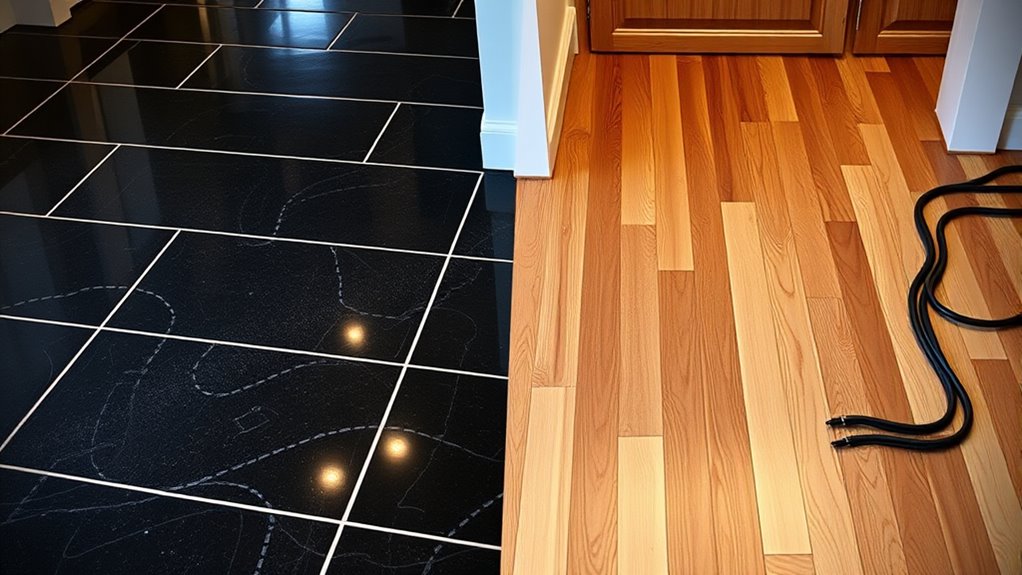
Yes, you can install heated flooring under existing floors, but you’ll face retrofit challenges and need to take into account flooring compatibility. Some flooring types, like tile and concrete, work well, while others, such as hardwood or laminate, may require additional steps or special mats. You’ll want to evaluate your current flooring and consult professionals to ensure a safe, effective installation without damaging your surface.
What Is the Typical Lifespan of Electric Vs Hydronic Systems?
You’ll find that electric heated flooring typically lasts around 20-25 years, while hydronic systems can last 30-40 years. Electric systems usually have lower maintenance concerns, but repair costs can be higher if issues arise. Hydronic systems demand more upkeep, which might lead to higher long-term repair costs, but their durability often makes up for it. Consider your needs for longevity and maintenance when choosing between the two.
Are There Specific Flooring Types Incompatible With Heated Floors?
Certain flooring materials, like vinyl, laminate, and carpet, may face compatibility issues with heated floors due to their melting points or insulation properties. You might encounter installation challenges with materials such as solid hardwood, which can expand or contract unevenly when heated. To guarantee safety and longevity, always check flooring material compatibility and consult professionals for proper installation techniques, minimizing potential damage or inefficiency.
How Much Does Installation Generally Cost for Each System?
Cost comparison comes center stage when choosing between electric and hydronic systems. Electric heated flooring generally costs less upfront, usually between $8 and $12 per square foot for installation. Hydronic systems, though pricier initially—ranging from $10 to $20 per square foot—offer long-term savings through efficiency. The installation process varies: electric systems are simpler and quicker to install, while hydronic systems involve more complex plumbing and labor, impacting overall costs.
Conclusion
Whether you choose electric or hydronic heated flooring, your decision can unexpectedly turn your home into a cozy haven. Imagine walking barefoot on warm tiles after a long day, only to realize that the right system was waiting beneath your feet all along. Sometimes, the perfect comfort comes from understanding what fits your lifestyle best. So, trust your instincts, and soon enough, you’ll find that heated floors aren’t just a luxury—they’re a welcome surprise when you need them most.