
TL;DR

Get home appliances delivered free with Prime
- Fast, free delivery on millions of items
- Prime Video, Amazon Music and more included
- Member-only deals all year
A House Beautiful report outlines a four step method for cleaning stainless steel appliances: avoid harsh or abrasive products, use a cleaner made for stainless steel, wipe with microfiber along the grain and buff dry. It also recommends regular touch ups, though claims about the protective coating come from the product maker.
House Beautiful has published a guide to cleaning stainless steel appliances without leaving streaks or damaging their finish, recommending a stainless steel specific cleaner, a soft microfiber cloth and wiping in the direction of the metal’s grain. The advice matters for homeowners because harsh chemicals and abrasive tools can scratch or dull appliance surfaces, while fingerprints, grease and water spots show readily on reflective steel.
The report advises avoiding bleach, ammonia and chlorine products, along with steel wool, scouring pads and powders. It also cautions against glass cleaner and products made for stainless steel sinks or cookware, which may be too abrasive for appliance finishes. The report says vinegar can cut grease but may dull the finish over time. It describes repeated exposure to some harsh chemicals as a risk to the thin protective layer on stainless steel.
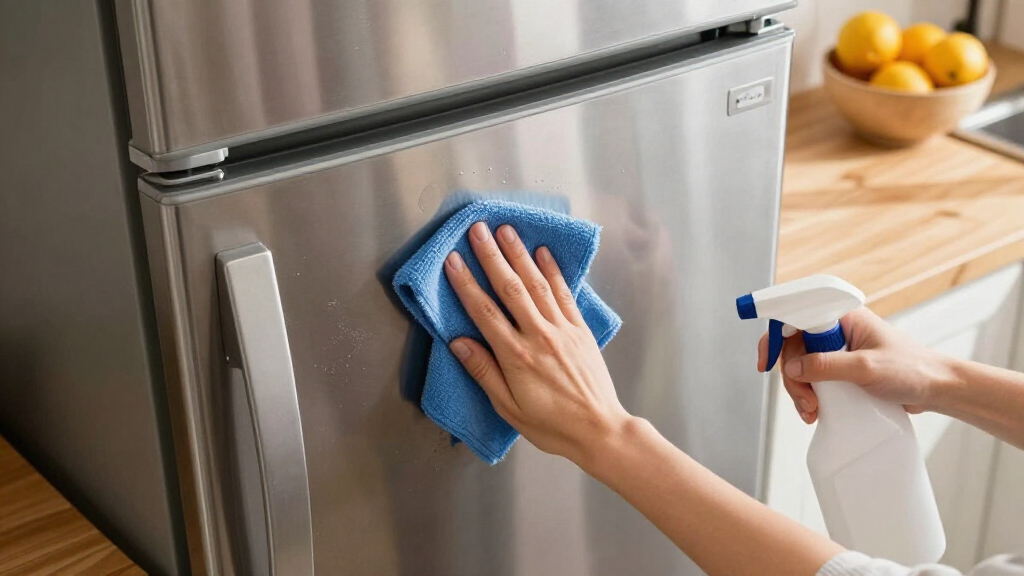
For routine cleaning, the guide recommends choosing a product specifically formulated for stainless steel and applying it with a flat weave microfiber cloth. Wipe with the grain, which may run in different directions on an appliance’s doors, sides or handles. Then use a clean, dry cloth to buff the surface rather than letting it air dry, since air drying can leave spots or streaks.
House Beautiful names Weiman’s 3-in-1 Clean + Shine + Protect cleaner and wipes as examples. Its instructions say to spray the cleaner on the appliance, wipe it away and buff promptly; the wipes are presented as an option for quick touch ups around handles and controls. The report also suggests wiping visible marks regularly and cleaning larger surfaces about once a week.
Protecting Appliance Finishes
Stainless steel’s reflective surface makes smears and water spots easy to see, so cleaning technique affects both the appearance of appliances and the condition of their finish. Using nonabrasive tools and suitable products can reduce the risk of small scratches that may collect grease and dust, according to the report. That gives the advice practical value for people trying to keep refrigerators, ranges and other appliances looking clean without replacing or refinishing them.
The guide also distinguishes appliance surfaces from some other stainless steel items. It says products intended for sinks or cookware may be too abrasive for appliances, even though those sturdier items can tolerate harder use. Readers should follow the care instructions supplied with their own appliance, since the report does not cover every finish or manufacturer’s guidance.
Regular quick cleaning may make larger sessions easier by removing fresh fingerprints and grease before they build up. House Beautiful relays Weiman’s claim that its named products leave a coating intended to repel fingerprints, grease and dust. That is a product claim from the manufacturer, rather than independent evidence presented in the report.
Why Stainless Steel Streaks
Stainless steel contains chromium, which reacts with oxygen in the air to form a thin chromium oxide layer, the report explains. That layer helps protect the steel against rust. Harsh chemicals can damage it, while abrasive materials can scratch the surface. The report says tiny scratches may not be obvious at first but can later make dirt and grease harder to remove.
Because the metal has a visible grain, wiping direction also affects the finished appearance. House Beautiful advises looking for faint horizontal or vertical lines and moving the cloth along them. A single appliance can have different grain directions across its doors, sides and handles, so the direction may need to change as cleaning moves across the surface.
The guide frames cleaning as a four step routine: avoid damaging products, select a suitable cleaner, use the right cloth and technique, and reduce future buildup with regular care. Its product examples and recommendations are drawn from a House Beautiful shopping report that features Weiman items.
““Microfiber is your friend when it comes to applying your cleaner.””
— House Beautiful
Limits of the Cleaning Advice
The report does not provide independent comparative testing of the named products or measurements showing how much the suggested coating reduces fingerprints. Its coating description is attributed to Weiman. The supplied source also does not identify the guide’s publication date or address care instructions for every appliance brand, finish or coating.
It is also unclear from the report how often individual households need to clean their appliances; frequency will depend on use and visible buildup. Readers should check their appliance maker’s care instructions if they are unsure which products are compatible with their particular finish.
Routine Care for Appliances
The guide recommends a quick wipe of visible marks as they appear, followed by cleaning the full appliance surface about once a week. For each cleaning, its sequence is to apply a suitable stainless steel cleaner, wipe along the grain with microfiber and buff promptly with a clean, dry cloth. The report gives no schedule for future updates or additional testing, so its advice remains a practical set of recommendations rather than a formal product comparison.
Key Questions
What should I use to clean stainless steel appliances?
House Beautiful recommends a cleaner formulated for stainless steel and a soft, flat weave microfiber cloth. Check the appliance maker’s care guidance before using a product.
Which cleaning products should I avoid?
The report advises against bleach, ammonia, chlorine containing products, steel wool, scouring pads and powders. It also warns that glass cleaner, vinegar and products made for stainless steel sinks or cookware may harm or scratch appliance finishes.
How do I reduce streaks when wiping?
Wipe with the grain using microfiber, then buff the surface with a clean, dry cloth. The report says air drying can leave spots and streaks.
How often should I clean stainless steel appliances?
The guide suggests wiping visible marks regularly and cleaning the full surfaces about once a week. The right frequency depends on use and how quickly fingerprints or grease accumulate.
Source: rss
Halloween Picks
halloween
As an affiliate, we earn on qualifying purchases.