For a bathroom, an energy recovery ventilator can exchange stale, humid air for outdoor air while transferring some heat and moisture between the air streams. My best overall pick is the Panasonic WhisperComfort 60 for buyers who want a modest-capacity unit from a familiar ventilation line; the VENTS-US TwinFresh Expert RA1-50-2 stands out for ductless, single-room installation, while the Broan B210E75RT suits larger ventilation needs. The main tradeoff is whether a compact room unit or a higher-capacity, ducted system better fits the bathroom and home. Check airflow, installation requirements, and humidity control before choosing, then read on for the full comparison and buying advice.
Complete the kit



Key Takeaways
- Bathroom scale matters more than headline capacity: the 60 CFM Panasonic is a more bathroom-focused choice than the 180–210 CFM whole-house models, which may be excessive for a single small room.
- Ductless choices solve a different problem from ducted ERVs: the TwinFresh Expert RA1-50-2, Pioneer ECOasis 150, and VENTS-US Micra 100 FreshBox can suit room-by-room ventilation where adding ducts is difficult.
- Heat recovery and energy recovery are not interchangeable labels: several listed products are described as heat-recovery ventilators, so buyers should confirm whether the unit transfers moisture as well as heat.
- Controls vary from basic to connected: Pioneer and LINGGONGAIR options add Wi-Fi or remote operation, while the Awoco includes a control panel; those features matter only if they support a ventilation routine you will actually use.
- Whole-house capacity brings installation tradeoffs: AprilAire V22BEC, VENTS-US Frigate ERV 150, and Broan’s 210 CFM models are aimed at broader air-exchange needs, not just a bathroom exhaust problem.
| Weiworld 6-Inch Heat Recovery Ventilator with Ceramic Heat Exchanger |  | Best for Quiet, App-Controlled Bathroom Ventilation | Duct size: 150 mm (6 inches) | Airflow capacity: 60 cubic meters per hour | Heat recovery: Up to 90% | VIEW ON AMAZON | See Our Full Breakdown |
| AprilAire V22BEC Energy Recovery Ventilator, 120 CFM |  | Best for Larger Homes with Existing Ventilation Plans | Airflow capacity: 120 CFM | Recommended home size: Up to 6,000 sq. ft. | Voltage: 120 V | VIEW ON AMAZON | See Our Full Breakdown |
| VENTS-US Frigate ERV 120S Energy Recovery Ventilator |  | Best for Ducted Whole-House Ventilation | Airflow capacity: Up to 162 CFM | Duct diameter: 5 inches | Core: Enthalpy heat and moisture recovery | VIEW ON AMAZON | See Our Full Breakdown |
| VENTS-US Micra 100 FreshBox Single-Room Heat Recovery Ventilation System |  | Best Single-Room Pick for Higher Filtration | Mounting: Through-the-wall | Airflow capacity: 18–59 CFM | Heat recovery efficiency: Up to 98% | VIEW ON AMAZON | See Our Full Breakdown |
| Pioneer ERV-50 Wi-Fi Wall-Mounted Energy Recovery Ventilator |  | Best for Filtered Air and CO₂ Monitoring | Airflow: 11.8–35.3 CFM with F7 filter | Heat recovery efficiency: 97% | Power consumption: 6–8 W | VIEW ON AMAZON | See Our Full Breakdown |
| LINGGONGAIR 4-Inch Heat Recovery Ventilator with WiFi and Remote |  | Best Compact Bathroom-Adjacent Pick | Duct diameter: 4 inches (100 mm) | Motor: EC motor | Power consumption: 5 watts | VIEW ON AMAZON | See Our Full Breakdown |
| VENTS-US Frigate ERV 150 Whole-House Ventilation System, 180 CFM |  | Best for Whole-Home Bathroom Ventilation | Airflow capacity: Up to 180 CFM | Noise level: 1.9 sones | Power: 189 watts | VIEW ON AMAZON | See Our Full Breakdown |
| Broan B210E75RT AI Series 210 CFM Energy Recovery Ventilator |  | Best for Easier System Balancing | Model: B210E75RT | Airflow: 210 CFM | Mounting: Wall or suspended ceiling | VIEW ON AMAZON | See Our Full Breakdown |
| Broan B210E75RS AI Series 210 CFM Energy Recovery Ventilator |  | Best for Side-Port Duct Layouts | Model: B210E75RS | Airflow: 210 CFM | Mounting: Wall or suspended installation | VIEW ON AMAZON | See Our Full Breakdown |
| Awoco 6-Inch Energy Recovery Ventilator, 100 CFM, with Filter and Control Panel |  | Best Adjustable Mid-Capacity ERV | Model: AWC-ERV100EC+CTRL | Airflow capacity: 40–100 CFM | Power: 60 watts | VIEW ON AMAZON | See Our Full Breakdown |
| Panasonic WhisperComfort 60 Energy Recovery Ventilator, FV-06VE1, 60 CFM | 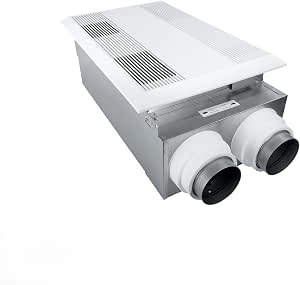 | Best for Bathroom Renovations | Model: FV-06VE1 | Airflow capacity: Up to 60 CFM | Low-speed airflow: 20–50 CFM | VIEW ON AMAZON | See Our Full Breakdown |
| LINGGONGAIR 4-Inch Reversible Ceramic Core Wall Ventilator |  | Best Plug-In Retrofit | Model: VT100 | Installation: Through the wall; wall-mounted | Airflow: Reversible intake and exhaust | VIEW ON AMAZON | See Our Full Breakdown |
| VENTS-US TwinFresh Expert RA1-50-2 Ductless Single-Room Ventilator |  | Best Quiet Compact ERV | Installation: Through the wall | Compatible wall thickness: 5-7/8 to 19-5/8 in. | Airflow capacity: Up to 30 CFM in ventilation mode | VIEW ON AMAZON | See Our Full Breakdown |
| Pioneer ECOasis 150 Ductless Wi-Fi Energy Recovery Ventilator |  | Best for Large, Air-Quality-Focused Bathrooms | Type: Ductless energy recovery ventilator | Coverage: Up to 500 sq. ft. | Filtration: 4-stage; HEPA H10 and activated charcoal | VIEW ON AMAZON | See Our Full Breakdown |
| energy recovery ventilator for bathroom | Airflow capacity | Noise level |
|---|---|---|
| Weiworld 6-Inch Heat Recovery | 60 cubic meters per hour | Under 30 dB |
| AprilAire V22BEC Energy Recove | 120 CFM | 53 dB |
| VENTS-US Frigate ERV 120S Ener | Up to 162 CFM | — |
| VENTS-US Micra 100 FreshBox Si | 18–59 CFM | — |
| Pioneer ERV-50 Wi-Fi Wall-Moun | — | Maximum 32.7 dB(A) |
| LINGGONGAIR 4-Inch Heat Recove | — | — |
| VENTS-US Frigate ERV 150 Whole | Up to 180 CFM | 1.9 sones |
| Broan B210E75RT AI Series 210 | — | — |
| Broan B210E75RS AI Series 210 | — | — |
| Awoco 6-Inch Energy Recovery V | 40–100 CFM | 50 dB |
| Panasonic WhisperComfort 60 En | Up to 60 CFM | 2.5 sones |
| LINGGONGAIR 4-Inch Reversible | — | — |
| VENTS-US TwinFresh Expert RA1- | Up to 30 CFM in ventilation mode | 0.6 sones |
| Pioneer ECOasis 150 Ductless W | — | 23–37.9 dB(A) |
More Details on Our Top Picks
Weiworld 6-Inch Heat Recovery Ventilator with Ceramic Heat Exchanger
For a bathroom where low operating noise and simple room-by-room control matter, the Weiworld VT501-WF offers a compact alternative to the ducted AprilAire V22BEC. Its 6-inch wall-mounted design avoids whole-house ductwork, while fresh-air, exhaust, and recirculation modes give you more options than a basic exhaust-only fan. The stated airflow is 60 cubic meters per hour, and its ceramic core is rated to recover up to 90% of heat from outgoing air. An 8.5 W EC motor and claimed noise below 30 dB suit quieter spaces, though actual bathroom performance depends on placement and installation. The tradeoff is that this is a single-room unit, not a substitute for the Frigate ERV 120S when you need whole-house ventilation; it also needs a wall opening and periodic G4 filter replacement.
Pros:- Three modes provide fresh-air, exhaust, and recirculation options.
- The 8.5 W EC motor and stated noise below 30 dB suit quieter room operation.
- Tuya app, remote, and onboard buttons offer flexible control.
- Magnetic access panel simplifies filter access and cleaning.
Cons:- Wall installation requires a suitable exterior-wall opening.
- The G4 filter needs replacement to maintain airflow and filtration.
- Its single-room airflow is not intended to ventilate an entire home.
Best for: Homeowners seeking a quiet, wall-mounted ventilator for one bathroom who want app or remote controls and do not have central ERV ductwork.
Not ideal for: Buyers who need whole-house ventilation, want to avoid cutting through an exterior wall, or prefer not to maintain a replaceable filter.
- Duct size:150 mm (6 inches)
- Airflow capacity:60 cubic meters per hour
- Heat recovery:Up to 90%
- Motor:8.5 W EC motor with PWM control
- Noise level:Under 30 dB
- Airflow modes:Fresh air, exhaust, and recirculation
- Controls:Tuya app, remote, and buttons
- Filter:Replaceable G4
Our verdict“Choose the Weiworld for quiet, controllable ventilation in one bathroom, but pick a ducted ERV such as the Frigate ERV 120S for whole-house coverage.”
AprilAire V22BEC Energy Recovery Ventilator, 120 CFM
The AprilAire V22BEC is a better fit for a home-scale ventilation project than for a single bathroom refresh. Its 120 CFM capacity and stated suitability for homes up to 6,000 square feet make it a higher-capacity choice than the room-focused Weiworld or Pioneer ERV-50. Wall, ceiling, or floor mounting gives installers more placement options, and the energy recovery core is intended to limit losses in indoor temperature and humidity as outdoor air enters. The compromise is that its 53 dB noise level may be noticeable near living areas, and its push-button controls are simpler but less connected than the Wi-Fi options on the Micra 100. I would shortlist it for a planned whole-home system, not as a direct replacement for a dedicated bathroom exhaust fan without checking the ventilation design.
Pros:- 120 CFM capacity suits broader home ventilation needs than single-room wall units.
- Energy recovery core is designed to help preserve indoor temperature and humidity.
- Wall, ceiling, or floor mounting allows multiple installation approaches.
- Dual fan-speed control uses straightforward push-button operation.
Cons:- The stated 53 dB noise level may be intrusive near quiet rooms.
- Smart integration is limited to select AprilAire thermostats.
- Its home-scale design may be excessive for a single bathroom installation.
Best for: Homeowners planning a central fresh-air system for a larger home who can accommodate a 120 CFM unit and value flexible mounting.
Not ideal for: People seeking a quiet, self-contained single-bathroom unit or app-based control beyond compatible AprilAire thermostat setups.
- Airflow capacity:120 CFM
- Recommended home size:Up to 6,000 sq. ft.
- Voltage:120 V
- Wattage:95 W
- Noise level:53 dB
- Mounting options:Wall, ceiling, or floor
- Controls:Push button; dual fan speed control
- Certifications:ETL, HVI, and UL
Our verdict“Choose the V22BEC for a larger-home ventilation plan, not when your main goal is quiet, room-by-room bathroom control.”
VENTS-US Frigate ERV 120S Energy Recovery Ventilator
Among these five, the Frigate ERV 120S is the clearest choice for a ducted, whole-house ventilation system, rather than a standalone bathroom unit. Its airflow reaches 162 CFM, above the AprilAire V22BEC’s 120 CFM, while the enthalpy core transfers both heat and moisture. That moisture transfer can help moderate incoming air, though it does not remove the need for effective bathroom source exhaust and a suitable duct layout. Electronic freeze protection is a useful distinction for cold-climate installations, and washable MERV 6 filters avoid routine disposable-filter purchases. In exchange, the unit needs 5-inch duct connections and ceiling mounting, making it a larger installation commitment than the wall-mounted Weiworld or Micra 100. Its three listed modes are LOW, MED, and STANDBY, so control detail is more limited than app-equipped room units.
Pros:- Airflow up to 162 CFM supports whole-house ventilation.
- Enthalpy core transfers heat and moisture.
- Electronic freeze protection supports cold-climate operation.
- Washable MERV 6 filters reduce reliance on replacement filters.
Cons:- Requires 5-inch duct connections and a ducted installation.
- Ceiling mounting makes it less suitable as a simple bathroom retrofit.
- LOW, MED, and STANDBY modes offer less control flexibility than Wi-Fi models.
Best for: Homeowners adding balanced, ducted ventilation across multiple rooms who need freeze protection and washable filters.
Not ideal for: Bathroom remodelers seeking a compact through-wall unit, or homes without space for ceiling mounting and 5-inch duct runs.
- Airflow capacity:Up to 162 CFM
- Duct diameter:5 inches
- Core:Enthalpy heat and moisture recovery
- Apparent sensible effectiveness:Up to 65%
- Power consumption:94 W; 19 W on low speed
- Filter:Washable MERV 6
- Operating modes:LOW, MED, and STANDBY
- Mounting:Ceiling mount with brackets
Our verdict“Pick the Frigate ERV 120S for ducted, balanced ventilation across a home; choose the Micra 100 or Weiworld for a single-room installation.”
VENTS-US Micra 100 FreshBox Single-Room Heat Recovery Ventilation System
The Micra 100 makes the strongest case here for a filtered, single-room ventilation system: its supply side includes MERV 8 and MERV 14 filters, with a separate MERV 8 extract filter. Compared with the Weiworld’s replaceable G4 filter, that setup targets finer incoming-air filtration, while five speeds let you adjust its 18–59 CFM range to the room’s needs. The unit also claims up to 98% heat recovery and offers Wi-Fi, a touch panel, remote control, and scheduling. Those features bring more control than the simpler AprilAire V22BEC, but the Micra is not a whole-house solution and needs a through-wall opening. Its listed 240 V supply is a major compatibility check before purchase, and its 53 W draw is higher than the low-power Weiworld and Pioneer ERV-50.
Pros:- MERV 8 and MERV 14 supply filters provide more filtration options than the Weiworld’s G4 filter.
- Five speeds cover an 18–59 CFM airflow range.
- Wi-Fi, touch panel, remote, and scheduling offer several control methods.
- Includes a mounting kit and installation template.
Cons:- Listed 240 V voltage requires a compatibility check before installation.
- Through-the-wall mounting requires an opening in an exterior wall.
- At 53 W, it uses more power than the Weiworld and Pioneer ERV-50.
Best for: Buyers who want a through-wall ventilator for one bathroom or room, with multiple speeds, app control, and higher-grade supply filtration.
Not ideal for: People without a suitable 240 V supply, anyone avoiding exterior-wall work, or homeowners needing whole-house ventilation.
- Mounting:Through-the-wall
- Airflow capacity:18–59 CFM
- Heat recovery efficiency:Up to 98%
- Number of speeds:5
- Filters:MERV 8 and MERV 14 supply filters; MERV 8 extract filter
- Voltage:240 V
- Wattage:53 W
- Controls:Wi-Fi app, touch panel, and remote
Our verdict“Choose the Micra 100 for adjustable, filtered single-room ventilation if its 240 V requirement suits your installation.”
Pioneer ERV-50 Wi-Fi Wall-Mounted Energy Recovery Ventilator
The Pioneer ERV-50 stands apart from the Weiworld by pairing a built-in CO₂ sensor with an F7 (MERV 13) filter, giving buyers air-quality monitoring and finer stated filtration than the Weiworld’s G4 filter. It is ductless and wall-mounted, with Wi-Fi, app, remote, and onboard controls; its 6–8 W power draw is also the lowest stated range in this group. A claimed 97% heat recovery efficiency adds to its appeal for a single room. The limitation is airflow: its 11.8–35.3 CFM range is below the Weiworld’s stated 60 cubic meters per hour and the Micra 100’s 59 CFM upper limit. The product description also recommends two units for seasonal temperature balancing, which can complicate a bathroom-only installation. Check the wall-channel dimensions and IPX4 rating against the intended location.
Pros:- Built-in CO₂ sensor adds room air-quality monitoring.
- F7 (MERV 13) filter and washable prefilters support filtered incoming air.
- Wi-Fi app, handheld remote, and onboard controls provide flexible operation.
- Low stated power consumption of 6–8 W.
Cons:- Maximum airflow of 35.3 CFM is lower than the Micra 100’s 59 CFM upper limit.
- The product description recommends two units for seasonal temperature balancing.
- Wall-channel span and 6¼-inch duct diameter need to suit the installation.
Best for: Homeowners prioritizing low power use, app control, CO₂ monitoring, and higher-grade filtration in a single room.
Not ideal for: Buyers needing higher airflow from one unit or wanting a simple bathroom ventilation install without checking placement and wall-channel fit.
- Airflow:11.8–35.3 CFM with F7 filter
- Heat recovery efficiency:97%
- Power consumption:6–8 W
- Noise level:Maximum 32.7 dB(A)
- Filters:Washable prefilters and F7 (MERV 13) filter
- Controls:Onboard interface, handheld remote, and smartphone app
- Air quality sensor:Built-in CO₂ sensor
- Water resistance:IPX4
Our verdict“Choose the ERV-50 for low-power, filtered room ventilation with CO₂ monitoring, but look to the Micra 100 if higher single-unit airflow matters more.”
LINGGONGAIR 4-Inch Heat Recovery Ventilator with WiFi and Remote
For a bathroom that needs steady fresh-air exchange without a large ducted system, this 4-inch wall-mounted unit is the most compact choice in this batch. Its ceramic core recovers thermal energy as air moves in and out, while a humidity mode can help respond to damp conditions. WiFi and remote controls add convenience, and the 5-watt EC motor suits continuous operation. Compared with the Awoco 6-Inch ERV, it needs a smaller wall opening and uses less listed power, but it is a single-room ventilator rather than a higher-capacity ducted system. The main limitation is its intended setting: it is for clean indoor air, not grease or heavy oil particles. I would also verify bathroom placement and moisture protection requirements before installation; the product data does not specify a wet-location rating.
Pros:- Ceramic heat exchanger recovers thermal energy during air exchange.
- WiFi app and remote provide two ways to operate the unit.
- Humidity, sleep, recirculation, and continuous modes support different room conditions.
- 5-watt EC motor and standard plug suit low-power continuous use.
Cons:- Requires a 4-inch wall opening, which may not fit existing bathroom ductwork.
- Product data does not state a wet-location rating or bathroom-specific moisture protection.
- Not designed for air containing grease or heavy oil particles.
Best for: Homeowners seeking a compact, plug-in ventilator for a bathroom-adjacent room with a suitable 4-inch wall opening and clean-air conditions.
Not ideal for: Buyers who need a confirmed wet-location-rated bathroom exhaust fan, higher whole-home airflow, or ventilation for areas with grease or oily particles.
- Duct diameter:4 inches (100 mm)
- Motor:EC motor
- Power consumption:5 watts
- Controls:WiFi app and remote control
- Operating modes:Supply, exhaust, recirculation, humidity, sleep, and continuous ventilation
- Heat exchanger:Ceramic core
- Power supply:Standard plug
Our verdict“Choose it for compact, low-power room ventilation with heat recovery, but not as a substitute for a bathroom-rated exhaust fan unless its installation suitability is confirmed.”
VENTS-US Frigate ERV 150 Whole-House Ventilation System, 180 CFM
This is the batch’s clearest choice for buyers planning centralized ventilation across several rooms, rather than a single bathroom unit. With up to 180 CFM, heat-and-humidity recovery, washable MERV 6 filters, and automatic frost protection, the Frigate ERV 150 is built around whole-house operation. Its ceiling-mounted, permanent installation is a different proposition from the LINGGONGAIR 4-Inch, which targets one room and needs only a small wall opening. The Frigate’s larger scale can serve a broader ventilation plan, but it also means more involved placement and ducting; the listed dimensions are 31 by 24 by 12 inches. One power level is listed, so buyers wanting documented speed choices should compare control details before selecting it. For a bathroom, it makes sense only as part of a properly designed system, not as a direct ceiling exhaust-fan replacement.
Pros:- Up to 180 CFM supports ventilation beyond one small room.
- Recovers heat and humidity during fresh-air exchange.
- Automatic frost protection helps protect the recovery core in cold conditions.
- Washable MERV 6 filters and mounting brackets are included.
Cons:- Permanent ceiling mounting and whole-house ducting limit placement flexibility.
- Only one power level is listed in the provided product data.
- Its size and system scope may be excessive for a single bathroom.
Best for: Homeowners planning a permanent, ducted whole-house system that will ventilate bathrooms alongside other rooms.
Not ideal for: Anyone seeking a simple single-bathroom retrofit, a portable or plug-in unit, or a system with clearly listed multiple power levels.
- Airflow capacity:Up to 180 CFM
- Noise level:1.9 sones
- Power:189 watts
- Voltage:120 volts
- Mounting:Ceiling mount; permanent installation
- Filter:Washable MERV 6
- Dimensions:31 × 24 × 12 inches
- Certification:ETL
Our verdict“Pick the Frigate ERV 150 when bathroom ventilation is one part of a whole-home ducted plan, not when you need a straightforward bathroom-only installation.”
Broan B210E75RT AI Series 210 CFM Energy Recovery Ventilator
The B210E75RT earns its place for buyers who want a higher-capacity ERV with setup feedback, not simply a bathroom fan with heat recovery. VIRTUO airflow balancing and verification can simplify commissioning, while the integrated LCD shows airflow, power use, and diagnostics—useful when the unit serves bathrooms as part of a wider ventilation system. Its 210 CFM capacity exceeds the Awoco AWC-ERV100EC+CTRL, whose range tops out at 100 CFM, but the Broan is a larger central system with 6-inch top ports. That port position may constrain duct routing compared with the side-port B210E75RS. The washable MERV 8 filter is a practical step up from the Frigate ERV 150’s MERV 6 filter, though HEPA filtration is optional. This is not a direct replacement for a bathroom exhaust fan; plan it as part of a ducted ventilation design.
Pros:- Automatic airflow balancing and verification can reduce setup guesswork.
- LCD reports airflow, power use, and diagnostic information.
- 210 CFM capacity suits broader ventilation plans.
- Reusable, washable MERV 8 filter and wall or suspended mounting offer useful flexibility.
Cons:- Top-port layout can restrict duct-routing options.
- HEPA filtration is optional rather than included.
- Its central-system capacity and installation needs are excessive for a simple bathroom-only retrofit.
Best for: Homeowners or contractors specifying a central ERV for multiple rooms who value automatic airflow balancing and on-unit diagnostics.
Not ideal for: Buyers looking for a compact single-bathroom device, side-port duct routing, or HEPA filtration included as standard.
- Model:B210E75RT
- Airflow:210 CFM
- Mounting:Wall or suspended ceiling
- Ports:Top ports, 6 inches
- Filter:Reusable, washable MERV 8
- Sensible recovery efficiency at 32°F:81% at 64 CFM
- Core and parts warranty:5 years each
- Dimensions:21 × 24.8 × 21.6 inches
- Certifications:HVI Certified; UL Listed
Our verdict“Choose this Broan when you need a central ERV with guided balancing and diagnostics, and your duct plan can accommodate top ports.”
Broan B210E75RS AI Series 210 CFM Energy Recovery Ventilator
The B210E75RS shares the 210 CFM capacity and airflow-management approach of the B210E75RT, but its side ports make it the better fit when overhead or wall-side duct routes work more cleanly than top connections. Automatic balancing and an LCD for airflow, power use, and diagnostics keep system setup and monitoring straightforward. The side-port configuration is its defining difference, while the 10-year core warranty is longer than the RT model’s listed five-year core warranty. Both use washable MERV 8 filters and support wall or suspended installation, so the choice comes down largely to port position and warranty priorities. Like the RT, it is a central ERV, not a small bathroom exhaust fan; a 210 CFM system needs a wider ventilation plan. HEPA filtration is optional, and the product data gives no noise figure.
Pros:- Side ports provide an alternative duct layout to the top-port B210E75RT.
- Automatic airflow balancing and verification support commissioning.
- LCD displays airflow, power consumption, and diagnostics.
- Washable MERV 8 filter and 10-year core warranty are listed.
Cons:- A 210 CFM central ERV may be more system than a single bathroom requires.
- HEPA filtration is optional, not included.
- No noise level is provided in the supplied specifications.
Best for: Buyers planning a multi-room ERV installation whose ductwork benefits from side connections and who value a longer listed core warranty.
Not ideal for: Those who need a single-room bathroom ventilator, require included HEPA filtration, or have ductwork that favors top ports.
- Model:B210E75RS
- Airflow:210 CFM
- Mounting:Wall or suspended installation
- Ports:Side ports, 6 inches
- Filter:Washable MERV 8
- Sensible recovery efficiency at 32°F:81% at 64 CFM
- Core warranty:10 years
- Parts warranty:5 years
- Dimensions:21 × 24.8 × 20.8 inches
Our verdict“Select the B210E75RS over the B210E75RT when side-port routing and its longer listed core warranty better match your whole-home installation.”
Awoco 6-Inch Energy Recovery Ventilator, 100 CFM, with Filter and Control Panel
The Awoco sits between the small-room LINGGONGAIR 4-Inch and the larger 210 CFM Broan units: its adjustable 40–100 CFM range gives a more tailored airflow ceiling for a modest ducted ventilation plan. A touchscreen, humidity sensor, washable filters, and built-in defrost and recirculation dampers add useful control functions. Its brushless EC motors and 60-watt draw are specified, while the Frigate ERV 150 offers higher capacity for whole-house use but lists only one power level. The tradeoff is installation and noise: Awoco requires separate 6-inch ducting, weighs 41 pounds, and lists a 50 dB noise level. Its one-year limited warranty is also shorter than the Broan models’ listed core and parts coverage. For bathroom use, treat it as an ERV for a planned ducted system, not a verified wet-location fan.
Pros:- Adjustable airflow from 40 to 100 CFM supports a range of ventilation needs.
- Built-in humidity sensor, defrost, and recirculation dampers add operating control.
- Washable and replaceable filters reduce dependence on disposable filters.
- Touchscreen panel, knobs, and installation brackets are included.
Cons:- Separate 6-inch ducting is required.
- Listed noise level is 50 dB.
- One-year limited warranty is shorter than the Broan models’ listed core and parts warranties.
Best for: Homeowners who need adjustable, moderate airflow for a small ducted system and want a humidity sensor and included touchscreen controls.
Not ideal for: Buyers without room for 6-inch ducting, those sensitive to a listed 50 dB noise level, or anyone seeking a compact plug-in bathroom unit.
- Model:AWC-ERV100EC+CTRL
- Airflow capacity:40–100 CFM
- Power:60 watts
- Motor:Brushless EC motors
- Duct size:6 inches
- Noise level:50 dB
- Filters:20 PPI, washable and replaceable
- Dimensions and weight:23 W × 28.5 D × 9 H inches; 41 lb
- Warranty:1-year limited
Our verdict“Choose the Awoco for adjustable moderate airflow and built-in humidity controls when you can accommodate its ducting, noise, and attic-mounted form.”
Panasonic WhisperComfort 60 Energy Recovery Ventilator, FV-06VE1, 60 CFM
The WhisperComfort 60 is the strongest fit here for a bathroom renovation that can accommodate a dedicated, balanced ventilation system. Its supply and exhaust operation helps manage moisture without relying on an exhaust fan alone, while selectable airflow from 20–50 CFM and a boost up to 60 CFM offer more flexibility than the VENTS-US TwinFresh Expert RA1-50-2, whose energy-recovery airflow tops out at 15 CFM. Ceiling or wall mounting also gives installers options when the layout is awkward. The tradeoff is that this is a larger unit with a hardwired connection, so it is less of a quick retrofit than the plug-in LINGGONGAIR. At 2.5 sones, it also isn’t the quietest choice in this group. I’d pick it when airflow flexibility matters more than simple installation.
Pros:- Supplies fresh air while exhausting indoor air to support balanced ventilation
- Selectable airflow with a boost setting up to 60 CFM
- Ceiling or wall mounting can suit different renovation layouts
- Static pressure ports allow airflow verification
Cons:- Requires a hardwired electrical connection
- The listed 2.5-sones noise level is higher than the TwinFresh Expert RA1-50-2
- Large dimensions may limit installation options in tight spaces
Best for: Homeowners renovating a bathroom who can arrange hardwired power and want adjustable, balanced ventilation with a boost setting.
Not ideal for: Renters or buyers seeking a simple plug-in wall retrofit, or anyone prioritizing very quiet operation.
- Model:FV-06VE1
- Airflow capacity:Up to 60 CFM
- Low-speed airflow:20–50 CFM
- Noise level:2.5 sones
- Power:50 watts
- Mounting:Ceiling or wall
- Dimensions:17.32 × 31.81 × 12.64 in.
Our verdict“Choose the WhisperComfort 60 for a bathroom renovation where adjustable, balanced airflow is worth the hardwired installation.”
LINGGONGAIR 4-Inch Reversible Ceramic Core Wall Ventilator
The LINGGONGAIR is the most approachable option for a bathroom where adding a dedicated hardwired ERV would be difficult: it plugs into a standard 110-volt outlet and uses a remote to switch between intake and exhaust. Its washable ceramic core supports heat exchange, and the included rain-deflecting hood is useful for a through-wall installation. Compared with the Panasonic WhisperComfort 60, this unit is easier to power but offers no stated CFM range or separate boost setting, so I can’t rank its ventilation capacity as confidently. The reversible operation also differs from a system designed for balanced supply and exhaust at once. Drilling through an exterior wall is still required, and the product data lists a bedroom rather than bathroom as its room type. I’d treat it as a simpler single-room retrofit, not a proven high-moisture bathroom solution.
Pros:- Plug-in operation avoids a hardwired electrical connection
- Remote control switches between fresh-air intake and stale-air exhaust
- Washable ceramic heat-exchange core is reusable
- Rain-deflecting stainless steel exterior hood is included
Cons:- Through-wall installation requires drilling an exterior wall
- No airflow capacity figure is provided in the product data
- Listed for a bedroom, leaving bathroom suitability less clearly specified
Best for: Owners of a small bathroom with an exterior wall and nearby outlet who want a remote-controlled, plug-in ventilator.
Not ideal for: Buyers who need documented airflow capacity, simultaneous balanced ventilation, or a ceiling-mounted bathroom system.
- Model:VT100
- Installation:Through the wall; wall-mounted
- Airflow:Reversible intake and exhaust
- Motor:5-watt EC motor
- Voltage:110 volts
- Control:Remote control
- Dimensions:12.2 × 6.5 × 6.5 in.
Our verdict“Pick this for a straightforward plug-in wall retrofit if you can accept limited published airflow details and reversible rather than simultaneous ventilation.”
VENTS-US TwinFresh Expert RA1-50-2 Ductless Single-Room Ventilator
For a bathroom where quiet operation and heat recovery matter more than high extraction volume, the TwinFresh Expert RA1-50-2 is the clearest specialist in this set. It runs at a listed 0.6 sones and recovers up to 93% of heat and humidity, while its humidity sensor, timer, scheduler, and automatic shutters add useful control without requiring ductwork. Against the Panasonic WhisperComfort 60, it is far quieter and uses less power, but its energy-recovery airflow reaches only 15 CFM; the Panasonic offers up to 60 CFM with boost. That lower capacity makes this a poor stand-alone choice for a bathroom that needs forceful moisture removal. Its through-wall installation also requires a wall at least 5-7/8 inches thick. I’d choose it for a small room with compatible wall construction and modest ventilation demands.
Pros:- Listed noise level of 0.6 sones supports quiet operation
- Energy recovery efficiency is specified at up to 93%
- Humidity sensor, timer, and weekly scheduler provide automatic control options
- Low power consumption of 3.6–5.2 watts
Cons:- Energy-recovery airflow is limited to 15 CFM
- Requires wall thickness of 5-7/8 to 19-5/8 inches
- Through-wall installation may not suit bathrooms without an exterior wall
Best for: Homeowners with a small bathroom, a sufficiently thick exterior wall, and a preference for quiet, low-power heat-recovery ventilation.
Not ideal for: People seeking strong bathroom moisture extraction, higher ERV-mode airflow, or a unit for a thin wall.
- Installation:Through the wall
- Compatible wall thickness:5-7/8 to 19-5/8 in.
- Airflow capacity:Up to 30 CFM in ventilation mode
- Energy-recovery airflow:Up to 15 CFM
- Noise level:0.6 sones
- Power consumption:3.6–5.2 watts
- Energy recovery efficiency:Up to 93%
Our verdict“Choose the TwinFresh for quiet, low-power ventilation in a small bathroom when its 15-CFM recovery mode is enough for the room.”
Pioneer ECOasis 150 Ductless Wi-Fi Energy Recovery Ventilator
The ECOasis 150 is the feature-rich choice for a large bathroom where owners want to track indoor air conditions as well as bring in tempered outdoor air. Its PM2.5 and CO2 sensors, four-stage filtration, and app, touchscreen, and remote controls offer more monitoring and control than the Panasonic WhisperComfort 60, which focuses more directly on adjustable ventilation airflow. The ECOasis is specified for rooms up to 500 square feet, but the product data does not give a CFM figure, making it harder to judge bathroom air-change performance. Its 82% heat-recovery figure is also below the TwinFresh’s stated maximum of 93%. At 22 pounds and 17.75 inches wide, it needs a suitable wall location; its stated purification efficiency is a product claim rather than a bathroom moisture-removal measure. I’d choose it for monitoring and filtration, not solely for rapid humidity control.
Pros:- Built-in PM2.5 and CO2 sensors monitor indoor air conditions
- Four-stage filtration includes HEPA H10 and activated charcoal
- App, touchscreen, and remote provide several control methods
- Designed for rooms up to 500 square feet
Cons:- No airflow capacity in CFM is listed, limiting comparison for bathroom extraction needs
- Heat-recovery efficiency of up to 82% is below the TwinFresh’s stated maximum
- Wall-mounted unit weighs 22 pounds and requires suitable installation space
Best for: Owners of a large bathroom or connected room who value air-quality monitoring, filtration, and app-based controls alongside heat recovery.
Not ideal for: Buyers who need a clearly specified CFM rating for bathroom moisture control or a compact, lightweight wall unit.
- Type:Ductless energy recovery ventilator
- Coverage:Up to 500 sq. ft.
- Filtration:4-stage; HEPA H10 and activated charcoal
- Heat recovery efficiency:82%
- Power consumption:35 watts
- Noise level:23–37.9 dB(A)
- Controls and sensors:Smartphone app, touchscreen, remote; PM2.5 and CO2 sensors
- Dimensions:17.75 × 26 × 6.13 in.
Our verdict“Choose the ECOasis 150 when monitoring and filtration are priorities, but favor a model with a stated CFM rating if bathroom moisture removal is the main goal.”

How We Picked
I ranked these 14 options by how well their stated design and capacity appear to match bathroom ventilation needs, then weighed installation format, control approach, filtration details where provided, and the likely maintenance burden. A useful bathroom pick needs to address moisture and stale air without asking buyers to install a system sized for an entire home when a single-room unit may do.
The order also reflects how clearly each product’s stated use aligns with the query. The Panasonic WhisperComfort 60 leads as a lower-capacity ERV option, while ductless models rank well for retrofit situations and larger ducted systems are better matches for whole-home projects. Product names and stated specifications do not confirm bathroom suitability, local code compliance, moisture-transfer performance, or installation compatibility, so buyers should check manufacturer documentation and consult a qualified installer before purchase.
Factors to Consider When Choosing Energy Recovery Ventilator For Bathroom
Choosing an ERV for a bathroom is not just a matter of picking the biggest airflow number. I would first establish whether the goal is to ventilate one room, improve air exchange across the home, or replace an existing exhaust setup; then I would check how the unit handles humidity, where it can be mounted, and what upkeep it needs.
Match the airflow to the room and the job
Start with the bathroom’s size, how often it is used, and whether the unit is intended to ventilate only that room or serve a larger area. A high CFM rating does not automatically make a better bathroom choice: a whole-house unit such as a 180–210 CFM model may need a duct plan and balancing that a small room does not call for. A lower-capacity model may be more appropriate for a single bathroom, but the right number depends on the room and applicable ventilation rules. Check the manufacturer’s airflow guidance at the installed duct length and static pressure, not just the headline rating. If the room already has a working exhaust fan, ask whether the ERV supplements or replaces it. Avoid sizing by product name alone.
Check moisture transfer and bathroom humidity needs
ERVs exchange indoor and outdoor air while transferring heat and, depending on the core, some moisture; HRVs generally focus on heat transfer. That distinction can affect comfort and indoor humidity, especially in climates with damp summers or very dry winters. Product listings sometimes use ERV and heat-recovery language loosely, so verify the core type and moisture-transfer details in the manufacturer’s technical documents. A ventilation unit is not a substitute for a properly sized shower exhaust strategy if rapid moisture removal is the priority. Consider whether the device has a humidity sensor, timed boost, or a control connection that can raise airflow after bathing. If those controls are absent, plan how the unit will run when humidity spikes.
Choose ducted or ductless based on the building
Ducted ERVs can connect to a broader ventilation layout, but they need routes for both incoming and outgoing air, suitable exterior penetrations, and room for the equipment. Ductless wall units reduce ductwork and can make sense in a retrofit, yet they still require a properly placed wall opening and clearance on both sides of the wall. A bathroom’s exterior wall, tile layout, wiring, and nearby fixtures can limit placement more than the product dimensions suggest. Check whether the unit is designed for the bathroom itself or for an adjacent room, and confirm any required separation from showers and water sources. Get installation requirements before buying so the chosen format does not force a costly redesign.
Treat noise, controls, and run time as practical requirements
A ventilator that is noisy or awkward to operate may be used less often, which undercuts its purpose. Look for sound data at the airflow setting you expect to use; a single noise figure may not describe performance at boost speed. Wi-Fi and remote controls can help with access or scheduling, but they do not replace a clear plan for continuous operation and post-shower ventilation. Check whether the control system supports automatic humidity response, timed operation, or only manual speed selection. Also consider who will adjust the unit: a simple wall control may be easier for shared households than an app-only routine. Prioritize dependable, understandable controls over features you are unlikely to use.
Plan for filters, core cleaning, and access
Filters and heat- or energy-transfer cores need access for inspection and cleaning, and bathroom dust or lint can add to upkeep. Before installation, confirm how often the manufacturer recommends service and whether replacement filters are available for the exact model. A unit mounted high on a wall or tucked into a ceiling may be difficult to maintain without safe access. Ask whether cleaning requires tools, whether the core can be removed, and whether filter status is indicated by the controls. Less maintenance is not a reason to skip scheduled checks: a clogged filter can reduce airflow and compromise ventilation. Include access and replacement-part availability in the installation plan, not as an afterthought.
Know when a whole-house ERV is worth the added scope
A larger ERV can make sense when the project includes ventilation for several rooms or when an existing duct system can support balanced air exchange. It is rarely a straightforward swap for a bathroom fan: the design may require supply and exhaust ducts, airflow balancing, electrical work, and professional commissioning. If the bathroom is the only problem area, a room-focused unit may avoid paying for capacity and installation complexity the home will not use. If several rooms need fresh-air ventilation, a whole-house system can address a broader need, but its airflow must be planned across the home rather than concentrated in one bathroom. Compare the total installation scope and operating plan, not only the unit’s CFM. Local ventilation and electrical requirements may affect which route is practical.
Frequently Asked Questions
Can I use an ERV instead of a standard bathroom exhaust fan?
Possibly, but the answer depends on the ERV’s intended use, airflow, controls, and local ventilation requirements. An ERV can exchange stale indoor air for outdoor air while recovering some energy, but it may not provide the fast, dedicated moisture removal expected from a bathroom exhaust fan. Check whether the manufacturer approves the unit for bathroom installation and whether it has a boost mode or humidity control. Some homes may need a separate exhaust fan or a specific ventilation arrangement. Ask an installer to confirm the design before removing existing equipment.
Is an HRV good enough, or do I need an ERV for my bathroom?
An HRV transfers heat between outgoing and incoming air, while an ERV can also transfer some moisture, depending on its core. That difference can matter when outdoor air is very humid or very dry, but it does not by itself determine how well a unit removes bathroom moisture. Check the product’s documented transfer characteristics and the climate guidance from its manufacturer. Also confirm that the model is intended for the bathroom or the broader ventilation plan. A qualified installer can help weigh indoor humidity goals against the need for direct moisture exhaust.
Should I choose a ductless unit or a whole-house ERV for one bathroom?
For a single-room retrofit with no practical duct routes, a ductless model may be easier to fit, though it still needs an exterior-wall opening and suitable placement. A whole-house ERV makes more sense when several rooms need controlled ventilation and the home can support ductwork and balancing. Installing a large unit for one bathroom can add complexity without addressing that room’s needs more effectively. Compare the complete installation plan, including ducts, controls, and commissioning, rather than comparing airflow figures alone. Verify that a ductless option is approved for the intended room and use.
Are Wi-Fi controls worth choosing for bathroom ventilation?
Wi-Fi can be useful if you want remote scheduling or the unit is difficult to reach, but it does not guarantee automatic moisture control. Check whether the model offers humidity sensing, a timed boost, or only app-based manual settings. A straightforward wall control may be more reliable for guests and other household members who will not use the app. Also confirm that basic ventilation continues if the network is unavailable. Choose connected features only when they solve a real control problem in your home.
What should I confirm before installing an ERV in a bathroom?
Confirm the product’s approved installation locations, required clearances, airflow needs, electrical requirements, and whether it can handle the bathroom’s moisture conditions. Check whether it needs two exterior openings or duct connections, and make sure the planned location leaves room to clean filters and the core. Review local building and ventilation rules, which can differ by location. Ask an installer to verify the unit’s suitability, especially if it will replace an existing exhaust fan. Do not rely on the product title alone to establish that a model is bathroom-rated.
Conclusion
My best overall pick is the Panasonic WhisperComfort 60 for a buyer seeking a more modest-capacity ERV option rather than a whole-house system. For best value in a retrofit-style setup, compare the ductless VENTS-US TwinFresh Expert RA1-50-2 and the VENTS-US Micra 100 FreshBox against your wall and control requirements; the available product details do not support a claim that one is universally cheaper. The Broan B210E75RT is my best premium-style choice for broader ventilation needs, while beginners may find a straightforward room-focused model easier to plan around than a high-capacity ducted system. For buyers who want connected controls, look at the Pioneer ERV-50 or Pioneer ECOasis 150; for broader whole-home projects, compare the AprilAire, Frigate 150, and Broan models with a qualified installer. Before choosing any unit, confirm bathroom suitability, humidity handling, airflow, and installation requirements.