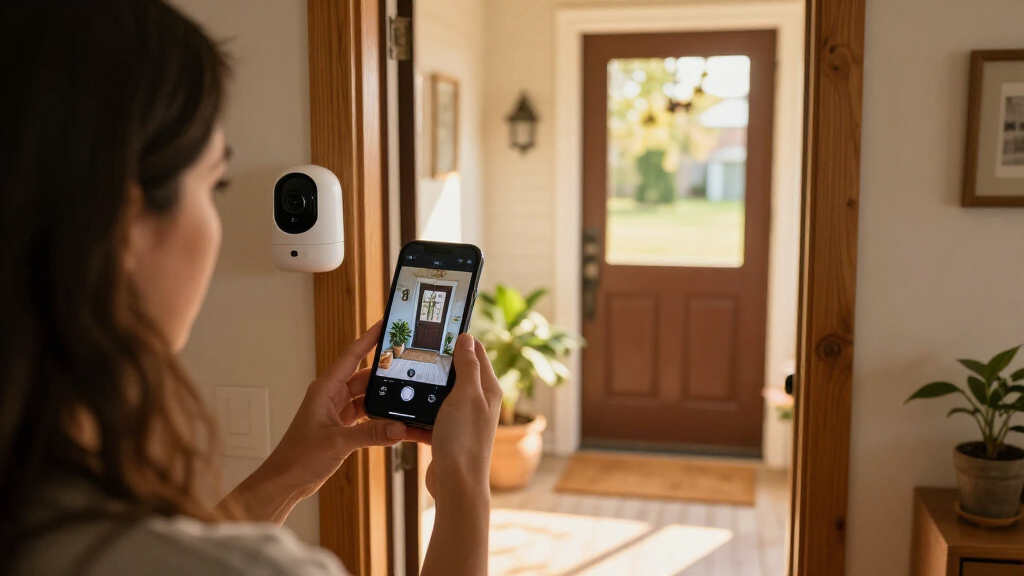

Choosing a smart security camera is less about which one has the longest feature list and more about where you need coverage and how consistently you need it. Wired cameras connect to household power or a dedicated recording system; battery-powered cameras can be mounted in more places without running a cable. That difference affects installation, recording continuity, maintenance, and total cost—not just convenience.

Get home appliances delivered free with Prime
- Fast, free delivery on millions of items
- Prime Video, Amazon Music and more included
- Member-only deals all year

Blink Outdoor 4 and Wired Doorbell 2K+ (Newest Model) — 5 Cameras + Doorbell, Black
- ✔ Outdoor video: 1080p HD
- ✔ Doorbell video: 2K
- ✔ Camera count: 5 Outdoor 4 cameras plus 1 wired doorbell
Blink Outdoor 4 and Wired Doorbell 2K+ (Newest Model) – 3 Cameras + Doorbell, Black
- ✔ Outdoor video: 1080p HD
- ✔ Doorbell video: 2K (1920 × 1920)
- ✔ Camera count: 3 Outdoor 4 cameras plus 1 wired doorbell
Blink Outdoor 4 and Wired Doorbell 2K+ (Newest Model) – 2 Cameras + Wired Doorbell, Black
- ✔ Outdoor video: 1080p HD
- ✔ Doorbell video: 2K
- ✔ Camera count: 2 Outdoor 4 cameras plus 1 wired doorbell
Wired models make more sense for fixed, high-priority locations such as an entryway or driveway where reliable power and longer recording are valuable. Battery cameras suit renters, detached structures, and locations where wiring is difficult or a camera may need to move. The best choice depends on whether you value dependable, hands-off coverage more than flexible placement and simpler setup.
At a Glance
| Criteria | Wired smart security cameras | Battery-powered smart security cameras | Winner |
|---|---|---|---|
| Installation and placement | Requires a nearby outlet, cable routing, or professional installation; placement is less flexible. | Mounts without running power cables; easier for renters and hard-to-wire locations. | B |
| Power and maintenance | Usually runs continuously from household power; fewer battery checks, though systems may need backup power. | Needs periodic recharging or battery replacement; cold weather and frequent activity can shorten runtime. | A |
| Recording continuity | Often supports continuous recording when the model and storage plan allow it. | Typically records motion events rather than uninterrupted footage to conserve power. | A |
| Connectivity and reliability | A power cable does not guarantee a stronger Wi-Fi signal; wired-network models can avoid Wi-Fi dependence. | Placement depends on Wi-Fi and a usable signal; low batteries or missed motion can leave gaps. | Depends |
| Upfront and ongoing cost | Can cost more to install, but avoids routine battery charging and may offer local recording. | Often cheaper to install, though extra batteries, subscriptions, or cloud storage can add costs. | Depends |
| Privacy and outage resilience | May keep recording during internet outages if local storage is configured; power loss still matters. | Can keep operating through a household power outage if its network and service remain available. | Depends |
| Best use case | Permanent coverage of important entrances, garages, and other fixed locations. | Temporary coverage, remote sheds, rental homes, and locations where wiring is impractical. | Depends |
Blink Outdoor 4 and Wired Doorbell 2K+ (Newest Model) — 5 Cameras + Doorbell, Black
The five-camera package takes the top spot for homes where perimeter coverage is the main priority. Along with the 2K wired doorbell, it provides five Outdoor 4 units for separate views around a property. That makes it the most adaptable choice here for monitoring multiple entrances, a driveway, side access, or a backyard without buying the smaller bundle and immediately wishing it included more cameras.Its advantage is quantity rather than a different level of camera performance. The Outdoor 4 cameras are specified for 1080p HD video, while the doorbell is 2K; the three-camera and two-camera kits use the same basic combination. The outdoor units run on two AA lithium batteries each and are rated for up to two years, and the set is weather-resistant for outdoor placement. Alexa compatibility and two-way audio add useful ways to check in and communicate, but the product information does not establish that every detection feature is included without a plan.Compared with the three-camera bundle, this kit is the clearer choice if you can name more than a few areas that need coverage. If your monitoring plan is only the front door and a yard, the extra cameras may be unnecessary: the three-camera version is a more restrained middle ground, and the two-camera kit is a better fit for a compact setup. Before choosing this largest bundle, confirm that your Wi-Fi reaches each planned location and that you have suitable wiring for the doorbell. Cloud storage beyond the trial and some advanced alerts may require a compatible plan, so factor that into the system’s ongoing setup as well.
Pros:
- Five outdoor cameras provide the widest coverage in this lineup.
- 2K wired doorbell pairs with 1080p HD Outdoor 4 cameras.
- Outdoor cameras use included AA lithium batteries and are rated for up to two years.
- Weather-resistant design, two-way audio, and Alexa compatibility support flexible monitoring.
Cons:
- More cameras can be unnecessary when only a few locations need monitoring.
- Doorbell installation requires compatible 12–24V wiring.
- Cloud video storage beyond the trial and some smart detection may require a plan.
Best for: Households with several outdoor access points or distinct areas to monitor, such as a front entry, side gate, driveway, and backyard.
Not ideal for: Smaller homes that only need a doorbell and one or two outdoor views, or buyers without compatible doorbell wiring or 2.4 GHz Wi-Fi coverage.
Bottom line: We recommend the five-camera bundle for buyers who will use its extra coverage, but the three-camera kit is a more sensible fit when fewer outdoor views are needed.
“We recommend the five-camera bundle for buyers who will use its extra coverage, but the three-camera kit is a more sensible fit when fewer outdoor views are needed.”
Blink Outdoor 4 and Wired Doorbell 2K+ (Newest Model) – 3 Cameras + Doorbell, Black
For many households, three outdoor cameras are a more practical match than the five-camera package. This bundle combines three battery-powered outdoor views with a 2K wired doorbell, offering enough units to cover a front entry and a couple of additional areas while avoiding the largest kit’s extra coverage. We place it second because it is the lineup’s most balanced configuration, even though buyers who need the widest perimeter coverage will get more flexibility from the five-camera version.The core experience is otherwise closely aligned with the other bundles. The Outdoor 4 cameras record in 1080p HD, and the doorbell is listed at 2K with a 140-degree horizontal and vertical field of view. The outdoor units have a 143-degree diagonal field of view, run on two AA lithium batteries apiece, and are rated for up to two years of battery life. Weather resistance and two-way audio make the package suitable for common outdoor monitoring tasks, while Alexa compatibility gives it a place in an Alexa-centered smart home.Compared with the two-camera option, this kit gives you one more outdoor placement for a side entrance, garage approach, or rear area. Compared with the five-camera bundle, it asks you to decide which views matter most instead of providing the broadest coverage. That tradeoff makes it the strongest middle choice for a typical property, but it is not a cure for weak Wi-Fi or missing doorbell wiring. The wired doorbell needs compatible 12–24V power, all units rely on 2.4 GHz Wi-Fi, and the stated subscription requirements matter if you want cloud recordings or certain detection alerts.
Pros:
- Three Outdoor 4 cameras give a useful middle level of coverage.
- 2K wired doorbell and 1080p HD outdoor video address different monitoring needs.
- Outdoor cameras are battery powered and rated for up to two years of use.
- Weather-resistant construction, two-way audio, and Alexa compatibility.
Cons:
- The doorbell requires existing compatible wiring.
- The system is limited to 2.4 GHz Wi-Fi.
- Cloud video storage and some smart detection features may require a plan.
Best for: Buyers who want a front-door camera plus three outdoor monitoring points and do not need the broadest available bundle.
Not ideal for: Large properties that need five distinct outdoor views, or smaller setups where two cameras would cover the only areas of concern.
Bottom line: We see this as the most balanced choice when two outdoor cameras feel limiting but five would be more coverage than the home needs.
“We see this as the most balanced choice when two outdoor cameras feel limiting but five would be more coverage than the home needs.”
Blink Outdoor 4 and Wired Doorbell 2K+ (Newest Model) – 2 Cameras + Wired Doorbell, Black
This two-camera bundle is the most focused option in the lineup: it pairs a 2K wired doorbell with two Outdoor 4 cameras for homes where the front entry and one or two other views are the priority. It earns a distinct place by keeping the setup compact, not by offering different camera technology. Buyers who do not need to cover several sides of a property may prefer this configuration to paying for cameras that are likely to go unused.Like the larger bundles, it combines a 2K doorbell with 1080p HD outdoor cameras. The outdoor units are weather-resistant, use two AA lithium batteries each, and are rated for up to two years. The product description also notes mounting kits and wireless installation for the outdoor cameras, an advantage if running power to exterior camera locations is inconvenient. Two-way audio and Alexa compatibility support routine smart-home use, while smart detection claims should be considered alongside the stated plan requirements.The tradeoff is straightforward: compared with the three-camera bundle, this set provides one fewer outdoor camera, so covering a front entry, side access, and backyard may require prioritizing or buying another unit separately. The five-camera kit is the better comparison for larger properties. This smaller option still includes the same wired-doorbell constraint, 2.4 GHz Wi-Fi requirement, and potential subscription needs for cloud recordings or advanced detection. Choose it when the intended layout is clear and limited; skip it if you expect to monitor multiple entrances or want room to expand your initial coverage without adding hardware.
Pros:
- Compact bundle for focused coverage around the entry and one additional area.
- 2K wired doorbell combined with 1080p HD Outdoor 4 video.
- Battery-powered outdoor cameras avoid running exterior power cables.
- Weather-resistant design and Alexa compatibility.
Cons:
- Two outdoor cameras offer the least perimeter coverage in this comparison.
- Doorbell needs compatible 12–24V wiring.
- Cloud storage beyond the trial and some smart detection features may require a subscription.
Best for: Smaller homes, apartments with suitable doorbell wiring, or buyers who mainly want front-door monitoring plus one additional outdoor camera.
Not ideal for: Households that need three or more separate outdoor camera positions from the start, or anyone without compatible doorbell wiring.
Bottom line: We would choose this bundle for a deliberately small camera layout, but the three-camera kit is the safer pick if you already have three outdoor areas in mind.
“We would choose this bundle for a deliberately small camera layout, but the three-camera kit is the safer pick if you already have three outdoor areas in mind.”
As an Amazon Associate we earn from qualifying purchases.
Key Differences
The central tradeoff is steady power versus freedom of placement. A wired camera can remain active without battery management and may record continuously, which is useful when a short motion clip could miss what happened just before or after an event. That advantage depends on the specific product: some wired cameras still record only on motion, and continuous footage may require local storage, a paid plan, or both.
Battery cameras avoid cable routing and are easier to reposition, but their convenience shifts work into ongoing upkeep. Battery life varies with temperature, activity, signal quality, settings, and device design; advertised runtimes are not a dependable promise for every home. Their motion-triggered approach can also leave gaps between events. Costs follow the same split: battery models can be cheaper to install, while a wired setup may make more sense over time for a fixed camera used every day. Check storage fees and installation costs before treating either type as the cheaper option.
Neither power type automatically wins on image quality, privacy, or outage performance. Those depend on camera specifications, network design, storage choices, and security settings. A battery camera can be a strong fit where wiring is impossible, while a wired camera is the safer default for a critical location where missed footage would matter. Some homes will benefit from using both.
Detailed Comparison
Installation and placement (Battery-powered smart security cameras wins — moderate)
Battery-powered cameras win by a moderate margin for setup flexibility. They can go on a fence, detached garage, or rental property wall without a nearby power outlet or cable route, and many can be moved as needs change. Wired cameras need a suitable power source and may call for drilling, cable concealment, or paid installation. For a homeowner planning permanent coverage, that work can be worthwhile; for a renter or a camera mounted far from the house, it can be the deciding drawback.
Power and maintenance (Wired smart security cameras wins — moderate)
Wired cameras win by a moderate margin for low-maintenance operation. Once installed and powered, they do not need routine battery charging, making them a better fit for hard-to-reach mounts and busy locations. Battery cameras can work for long periods between charges, but activity, weather, and settings affect runtime, so owners need to check and recharge them before they run flat. Wired models still depend on household power unless they have a suitable backup.
Recording continuity (Wired smart security cameras wins — major)
Wired cameras win by a major margin when continuous recording is a priority. A powered camera is better suited to capturing a full timeline, while battery models generally conserve power by recording when motion is detected. That can be enough for alerts and quick checks, but an event between triggers—or the moments before a person enters the frame—may be missing. Verify that a particular wired model supports continuous recording and check what storage or subscription it requires.
Connectivity and reliability (moderate difference)
This is a tie overall, with the specific connection setup deciding the winner. Both camera types can depend on Wi-Fi, and a wired power connection does not fix a weak wireless signal. A wired-network camera can be more dependable where Wi-Fi is unreliable, while a battery camera may be easier to install near a strong signal without extending cables. In either case, check coverage at the exact mounting location and see whether the camera can store footage locally if the internet drops.
Upfront and ongoing cost (moderate difference)
There is no universal price winner. Battery cameras can cost less to install because they avoid electrical work, which matters for a single camera or a short-term setup. But replacement batteries, charging accessories, and cloud subscriptions can raise long-term costs. Wired equipment or professional installation may cost more at the start, while steady power and local recording can reduce upkeep for a permanent system. Compare the full setup cost, including storage and any installation, rather than the camera alone.
Privacy and outage resilience (minor difference)
Neither power type wins on its own. A wired camera may continue recording through an internet outage if it has local storage, but it will stop if power fails unless the system has backup power. A battery camera can stay powered during a household outage, yet may still lose access to live viewing or cloud storage if the router or internet connection is down. Privacy depends more on account security, encryption, permissions, and local-versus-cloud storage than on whether the camera uses a battery or cable.
Best use case (major difference)
Neither wins for every home. Wired cameras are the stronger choice for fixed entrances, garages, and other high-priority spots where continuous or dependable recording matters. Battery cameras win for rental homes, outbuildings, and temporary monitoring where running power is impractical. If a home has both types of locations, mixing camera types can provide a better fit than forcing one setup everywhere.
Wired smart security cameras: Pros and Cons
Pros:
- Steady power avoids routine camera battery charging.
- Better suited to continuous recording and full event timelines.
- A permanent installation can be dependable at important fixed locations.
- Some models support local recording without relying solely on cloud storage.
Cons:
- Power cables or installation work limit placement and can add upfront cost.
- A power outage can stop operation without backup power.
- Wired power alone does not improve Wi-Fi reception.
- Continuous recording and storage may require a subscription or extra equipment.
Battery-powered smart security cameras: Pros and Cons
Pros:
- Can be mounted where running a cable is difficult or not allowed.
- Simpler to install and reposition, useful for renters and temporary coverage.
- Battery power can keep the camera running through a household power outage.
- Often avoids the cost and disruption of electrical installation.
Cons:
- Needs periodic charging or battery replacement.
- Battery life changes with activity, conditions, and settings.
- Motion-triggered recording may miss footage between events.
- Still depends on suitable connectivity and may have cloud-storage costs.
Who Should Choose What
Choose Wired smart security cameras if:
- You want dependable coverage at a permanent entrance, garage, or driveway.
- You need continuous recording or want to reduce gaps between motion events.
- The camera will be difficult to reach for battery charging.
- You can route power safely and are comfortable with the installation cost.
Choose Battery-powered smart security cameras if:
- You rent or cannot run power cables to the location.
- You need coverage for a shed, fence, or other spot away from outlets.
- You value easy installation and the ability to reposition the camera.
- Motion alerts and recorded event clips are enough for your needs.
Skip both if: If reliable recording during power and internet outages is a firm requirement, choose a system with verified local recording, network and power backup, and confirm the full setup supports those needs; camera power type alone is not enough.
Value for Money
Paying more for a wired camera or installation is worth it when the camera covers a high-priority location, will stay there for years, and continuous recording or low maintenance has real value. The upfront expense can be easier to justify than repeatedly charging a hard-to-reach camera or accepting gaps in event footage. It is less compelling if the camera only needs to provide occasional motion alerts or if installation requires costly work.
Battery cameras are often better value when avoiding cable installation matters more than uninterrupted recording. Include likely charging effort, spare batteries, and any subscription in the comparison. For a low-cost setup, a battery camera with local storage and no unwanted service fee may beat a cheaper-looking model tied to a paid plan. For a larger property, a mixed system may be the best value: wired coverage for the most important fixed areas, battery units where cables cannot reasonably reach.
Final Verdict
For most homeowners installing permanent cameras at important entry points, choose wired. Steady power and better support for continuous recording address the main job of a security camera: producing useful footage when an event happens. Pay extra for installation only when the location and recording needs justify it, and confirm the model’s storage terms before buying.
Choose battery-powered cameras when wiring is impractical, you rent, or flexibility matters more than a complete recording timeline. Their lower installation burden is a real advantage, not a compromise to dismiss, but plan for charging and motion-recording gaps. The deciding question is simple: would a missing clip or a dead battery be more frustrating than the cost and work of running power? If missed footage matters more, go wired; if installation constraints dominate, go battery.
Frequently Asked Questions
Do wired smart security cameras record continuously?
Some do, but being wired does not guarantee continuous recording. Check the camera’s recording modes, storage requirements, and whether continuous footage needs a subscription, memory card, or base station.
How often do battery security cameras need charging?
There is no dependable universal interval. Runtime changes with motion activity, temperature, Wi-Fi signal, video settings, and battery capacity. Check the manufacturer’s estimates, then expect real-world use at a busy location to differ from a low-activity test scenario.
Are wired cameras more secure than battery cameras?
Power type does not determine digital security. Use a unique account password, enable available multi-factor authentication, install updates, and review who can access the camera. For privacy, compare local and cloud storage options and their policies.
Which type works better during a power outage?
A battery camera can keep running if its battery is charged, but internet-dependent alerts and cloud recording may still fail if the router loses power. A wired camera needs backup power to keep operating, though local recording may preserve footage during an internet outage. Check each system’s backup behavior.
Can I use wired and battery cameras in the same home?
Yes. A mixed setup can use wired cameras at important entrances where steady power is practical and battery cameras in remote or hard-to-wire spots. Confirm that the cameras work with the same app or recording system if unified management matters.