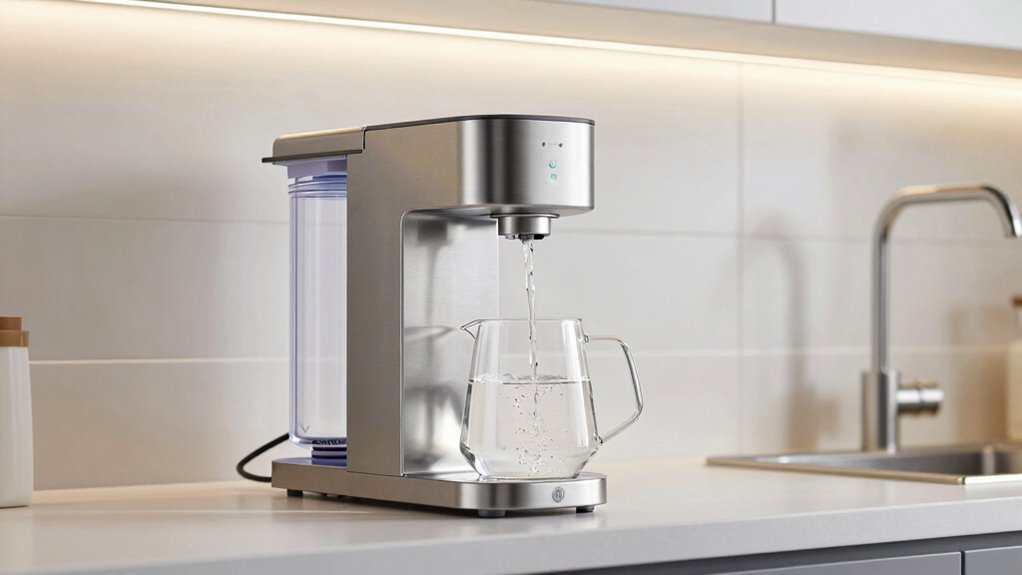

A tankless reverse osmosis system saves under-sink space by filtering water on demand, but flow rate, mineralization, and added features vary widely. My best overall pick is the Waterdrop X8-WAN, which pairs tankless RO filtration with alkaline mineralization. The Waterdrop G3P800 stands out for higher stated capacity, while the Waterdrop T3-M offers a more moderate-flow option with remineralization. The main tradeoffs are output speed versus cost and complexity, plus whether you want minerals added back or prefer simpler filtration. Read on for the full breakdown and help matching a system to your kitchen and water needs.

Get home appliances delivered free with Prime
- Fast, free delivery on millions of items
- Prime Video, Amazon Music and more included
- Member-only deals all year
Complete the kit



Key Takeaways
- The X8-WAN is my best overall pick because it combines tankless RO filtration with alkaline mineralization rather than focusing on capacity alone.
- Higher GPD is not the only measure of fit: the G3P800 and GFU03 are rated at 800 GPD, while several options offer lower stated output that may still suit lighter household demand.
- Mineralization is a major dividing line. Several Waterdrop models and the iSpring RO500AK add minerals, while options such as the G3P800 and G2 emphasize RO filtration without that feature in their names.
- The lineup spans very different levels of complexity: the G2 and G2P600 are comparatively straightforward choices, while the KJ600 adds instant hot water and more specialized functionality.
- Check fit and upkeep before choosing by headline specs: a tankless system still needs under-sink space, a compatible water connection, filter replacements, and an electrical outlet.
| Waterdrop X8-WAN Alkaline Mineral Tankless Reverse Osmosis System |  | Best Overall for Remineralized Water | Filtration: 10-stage; 0.0001 μm RO membrane | Production rate: 800 GPD | Pure-to-drain ratio: 2:1 | VIEW ON AMAZON | See Our Full Breakdown |
| Waterdrop G3P800 Tankless Reverse Osmosis Water Filter System, 800 GPD |  | Best for Water Efficiency | Filtration: 10-stage reverse osmosis | Production rate: 800 GPD | Pure-to-drain ratio: 3:1 | VIEW ON AMAZON | See Our Full Breakdown |
| GLACIER FRESH GFU03 Tankless Reverse Osmosis Water Filter, 800 GPD |  | Best Electricity-Free Pick | Filtration: 5-stage reverse osmosis | RO membrane: 0.0001 μm | Maximum flow: 0.6 gpm | VIEW ON AMAZON | See Our Full Breakdown |
| Waterdrop T3-M 9-Stage Tankless Reverse Osmosis Water Filter with Remineralization, 450 GPD |  | Best Compact Remineralizing Option | Filtration: 9-stage reverse osmosis | RO membrane: 0.0001 μm | Flow rate: 450 GPD | VIEW ON AMAZON | See Our Full Breakdown |
| Waterdrop X12 Alkaline Mineral Reverse Osmosis System, 1200 GPD |  | Best for High-Demand Households | Filtration: 11 stages | RO membrane: 0.0001 μm, 16 layers | Production rate: 1200 GPD | VIEW ON AMAZON | See Our Full Breakdown |
| Waterdrop G6A6 Compact Alkaline Mineral Reverse Osmosis System, 600 GPD |  | Best Compact Mineralizing Pick | Filtration: 8 stages; 0.0001 μm RO membrane | Capacity: 600 gallons per day | Pure-to-drain ratio: 2:1 | VIEW ON AMAZON | See Our Full Breakdown |
| Waterdrop WD-T4-A Alkaline Reverse Osmosis Water Filter System |  | Best for Choosing Between Plain and Mineralized Water | Filtration: 10 stages | Capacity: 450 gallons per day | Pure-to-drain ratio: 2:1 | VIEW ON AMAZON | See Our Full Breakdown |
| Waterdrop G5P700A Alkaline Mineral Reverse Osmosis Water Filter, 700 GPD |  | Best Higher-Capacity Mineralizing Pick | Filtration: 8-stage RO; 0.0001 μm membrane | Capacity: 700 gallons per day | Maximum flow rate: 1.31 L/min | VIEW ON AMAZON | See Our Full Breakdown |
| Waterdrop G2P600 Tankless Under-Sink Reverse Osmosis Water Filtration System |  | Best Value for Straightforward RO | Filtration: 7-stage reverse osmosis | Maximum capacity: 600 gallons per day | Maximum flow rate: 25 mL/s | VIEW ON AMAZON | See Our Full Breakdown |
| Waterdrop T3-C Tankless Reverse Osmosis Water Filtration System, 450 GPD |  | Best for Flexible Installation and Automated Upkeep | Filtration: 8-stage reverse osmosis | Flow rate: 450 GPD | Pure-to-drain ratio: 2:1 | VIEW ON AMAZON | See Our Full Breakdown |
| Waterdrop G5P500A Tankless Reverse Osmosis System with Alkaline Mineralization |  | Best for Alkaline Water and Appliance Connections | Filtration: 8-stage reverse osmosis | RO membrane: 0.0001 μm | Pure-to-drain ratio: 2:1 | VIEW ON AMAZON | See Our Full Breakdown |
| Waterdrop G3P600 Tankless Reverse Osmosis Water Filter System, 600 GPD |  | Best for High Output and Water Monitoring | Filtration: 8 stages; reverse osmosis and carbon block | Pure-to-drain ratio: 2:1 | Maximum flow rate: 0.42 GPM | VIEW ON AMAZON | See Our Full Breakdown |
| Waterdrop G2 Tankless Reverse Osmosis Water Filtration System, 400 GPD |  | Best for Water Efficiency on a Simpler Setup | Filtration: 7-stage reverse osmosis | Pure-to-drain ratio: 1:1 | Maximum flow rate: 0.28 GPM | VIEW ON AMAZON | See Our Full Breakdown |
| Waterdrop KJ600 Tankless Reverse Osmosis System with Instant Hot Water, 600 GPD |  | Best for Hot Water at the Faucet | Purification: 5-stage reverse osmosis | Pure-to-drain ratio: 2:1 | Hot-water settings: 104°F–203°F | VIEW ON AMAZON | See Our Full Breakdown |
| iSpring RO500AK Alkaline Tankless Reverse Osmosis System, 500 GPD |  | Best for Certified RO with Mineralization | Purification: Reverse osmosis with alkaline filter | Maximum flow rate: 0.4 GPM | Pure-to-waste ratio: 2:1 | VIEW ON AMAZON | See Our Full Breakdown |
| tankless reverse osmosis system | Pure-to-drain ratio | Filtration | Dimensions | Power |
|---|---|---|---|---|
| Waterdrop X8-WAN Alkaline Mine | 2:1 | 10-stage; 0.0001 μm RO membrane | 18.2 × 6.25 × 16.72 in | Corded electric |
| Waterdrop G3P800 Tankless Reve | 3:1 | 10-stage reverse osmosis | 18.12 × 5.67 × 17.72 in | Corded electric |
| GLACIER FRESH GFU03 Tankless R | 3:1 | 5-stage reverse osmosis | 13.58 × 8.27 × 16.54 in | No electric drive |
| Waterdrop T3-M 9-Stage Tankles | 2:1 | 9-stage reverse osmosis | 13.39 × 6.22 × 17.95 in | Plug-in required |
| Waterdrop X12 Alkaline Mineral | 3:1 | 11 stages | 18.2 × 6.25 × 16.72 in | Corded electric |
| Waterdrop G6A6 Compact Alkalin | 2:1 | 8 stages; 0.0001 μm RO membrane | 15.94 × 5.31 × 9.61 in | — |
| Waterdrop WD-T4-A Alkaline Rev | 2:1 | 10 stages | 16.54 × 6.22 × 17.95 in | Electrical connection required |
| Waterdrop G5P700A Alkaline Min | 2:1 | 8-stage RO; 0.0001 μm membrane | — | — |
| Waterdrop G2P600 Tankless Unde | 2:1 | 7-stage reverse osmosis | 17.3 × 5.9 × 14 in | — |
| Waterdrop T3-C Tankless Revers | 2:1 | 8-stage reverse osmosis | — | Electrical connection required |
| Waterdrop G5P500A Tankless Rev | 2:1 | 8-stage reverse osmosis | 16.69 × 5.69 × 13.9 in | — |
| Waterdrop G3P600 Tankless Reve | 2:1 | 8 stages; reverse osmosis and carbon block | 18.12 × 5.67 × 17.72 in | Corded electric |
| Waterdrop G2 Tankless Reverse | 1:1 | 7-stage reverse osmosis | 17.3 × 5.9 × 14 in | — |
| Waterdrop KJ600 Tankless Rever | 2:1 | — | — | Corded electric |
| iSpring RO500AK Alkaline Tankl | — | — | 17.5 × 5.2 × 16.25 in | — |
More Details on Our Top Picks
Waterdrop X8-WAN Alkaline Mineral Tankless Reverse Osmosis System
I’d put the Waterdrop X8-WAN first for buyers who want a fast tankless RO system without giving up mineralized taste. Its 800 GPD capacity is a strong fit for regular household use, while the alkaline stage adds calcium, magnesium, sodium, and potassium after purification. Compared with the Waterdrop G3P800, the X8-WAN gives up some water efficiency—the listed ratio is 2:1 rather than 3:1—in exchange for remineralization. The smart faucet adds at-a-glance TDS and filter-life information, which makes routine upkeep easier to track. The tradeoffs are a countertop faucet hole and an under-sink electrical outlet, so it is not a simple fit for every kitchen. I’d choose it over the G3P800 when mineralized water matters more than maximizing the pure-to-drain ratio.
Pros:- 800 GPD stated production capacity supports frequent household water use.
- Alkaline stage adds calcium, magnesium, sodium, and potassium after RO filtration.
- Smart faucet displays TDS and filter-life information.
- 24-month stated filter lifespan and 2:1 pure-to-drain ratio.
Cons:- Faucet installation requires drilling a countertop hole.
- Corded electric design needs an under-sink power outlet.
- Its 2:1 pure-to-drain ratio is less water-efficient than the G3P800’s listed 3:1 ratio.
Best for: Households seeking high-capacity tankless RO water with added minerals and a faucet that displays TDS and filter life.
Not ideal for: Renters or kitchens without a suitable faucet opening and under-sink outlet; buyers prioritizing a 3:1 pure-to-drain ratio should compare the G3P800.
- Filtration:10-stage; 0.0001 μm RO membrane
- Production rate:800 GPD
- Pure-to-drain ratio:2:1
- Mineralization:Adds calcium, magnesium, sodium, and potassium
- Certifications:NSF/ANSI 42, 58, and 372
- Filter lifespan:Up to 24 months
- Dimensions:18.2 × 6.25 × 16.72 in
- Power:Corded electric
Our verdict“Choose the X8-WAN if you want fast RO water with added minerals and useful faucet monitoring, and can accommodate its electrical and drilling requirements.”
Waterdrop G3P800 Tankless Reverse Osmosis Water Filter System, 800 GPD
The Waterdrop G3P800 is the efficiency-focused choice in this group: its listed 3:1 pure-to-drain ratio yields more purified water per unit of drain water than the X8-WAN’s 2:1 ratio. It also pairs an 800 GPD stated capacity with a smart TDS faucet, giving buyers fast dispensing and a visible water-quality reading without adding a storage tank. Its IAPMO R&T certifications to NSF/ANSI 42, 53, 58, and 372 provide a broader specified certification set than the X8-WAN’s listed set. The key distinction is what it does not offer: unlike the X8-WAN, it has no listed alkaline mineralization stage. Installation also calls for holes for the faucet and drain connection, plus an electrical outlet. I’d favor this model when water efficiency and certified contaminant reduction matter more than mineralized taste.
Pros:- 3:1 pure-to-drain ratio is more efficient than the X8-WAN’s listed 2:1 ratio.
- 800 GPD stated capacity supports frequent use.
- Smart faucet shows TDS and lights during dispensing.
- IAPMO R&T certified to NSF/ANSI 42, 53, 58, and 372.
Cons:- Does not list an alkaline mineralization stage.
- Installation requires holes for the RO faucet and drain connection.
- Corded electric operation requires an under-sink power source.
Best for: Households that want high stated output, a 3:1 pure-to-drain ratio, and faucet-based TDS monitoring.
Not ideal for: Buyers who want alkaline remineralization, or kitchens where drilling and an under-sink power connection are impractical.
- Filtration:10-stage reverse osmosis
- Production rate:800 GPD
- Pure-to-drain ratio:3:1
- Certifications:IAPMO R&T certified to NSF/ANSI 42, 53, 58, and 372
- Faucet:Smart faucet with TDS display and automatic LED
- Maximum supported TDS:500 ppm
- Dimensions:18.12 × 5.67 × 17.72 in
- Power:Corded electric
Our verdict“Pick the G3P800 over the X8-WAN if water efficiency and its specified certification coverage matter more to you than added minerals.”
GLACIER FRESH GFU03 Tankless Reverse Osmosis Water Filter, 800 GPD
The GLACIER FRESH GFU03 stands apart by running without an electric drive, a useful distinction from the plug-in Waterdrop G3P800 and both alkaline Waterdrop models here. That can simplify placement where an outlet is unavailable, while its 3:1 purified-water-to-drain ratio matches the G3P800’s listed efficiency. The GFU03 uses a five-stage process and a 0.0001 μm membrane, with NSF/ANSI 58, 372, and 401 certifications listed. Its pull-out filter cartridges are designed for tool-free replacement, and a pressure gauge gives a direct way to check operating conditions. The tradeoff is that flow depends on inlet pressure; the supplied data recommends at least 40 PSI, and the listed maximum flow is 0.6 gpm. Faucet installation needs a sink hole, and new filters require a 10–20 minute rinse.
Pros:- No electric drive, unlike the G3P800 and X8-WAN.
- Listed 3:1 purified-water-to-drain ratio.
- Pull-out cartridges allow tool-free filter replacement.
- Includes a pressure gauge and lists NSF/ANSI 58, 372, and 401 certifications.
Cons:- Flow depends on inlet pressure, with at least 40 PSI recommended.
- Requires drilling a 1/2–1 in sink hole for the faucet.
- Filters need a 10–20 minute rinse after installation or replacement.
Best for: Homeowners who want tankless RO without an electrical connection and have adequate incoming water pressure.
Not ideal for: Homes with low or uncertain water pressure, or kitchens where drilling a faucet hole and rinsing replacement filters are undesirable.
- Filtration:5-stage reverse osmosis
- RO membrane:0.0001 μm
- Maximum flow:0.6 gpm
- Pure-to-drain ratio:3:1
- Certifications:NSF/ANSI 58, 372, and 401
- Operating pressure:0.25–0.7 MPa; at least 40 PSI recommended
- Dimensions:13.58 × 8.27 × 16.54 in
- Power:No electric drive
Our verdict“Choose the GFU03 if you need tankless RO without a power outlet and can provide adequate water pressure and a faucet opening.”
Waterdrop T3-M 9-Stage Tankless Reverse Osmosis Water Filter with Remineralization, 450 GPD
At 13.39 inches long, the Waterdrop T3-M is the space-conscious mineralizing pick, notably shorter than the roughly 18-inch X8-WAN and X12 systems listed here. Its 450 GPD capacity is also more modest than those models’ 800 and 1200 GPD figures, making it a better match for buyers who value a smaller cabinet footprint over maximum stated output. The nine-stage process uses a 0.0001 μm membrane and adds minerals such as calcium and magnesium; automatic flushing and smart filter alerts help with routine operation. Compared with the X8-WAN, the T3-M offers the same listed 2:1 pure-to-drain ratio but has staged filter replacement intervals of six, 12, and 24 months rather than a single 24-month lifespan. It still needs power and a drilled faucet opening.
Pros:- Shorter listed length than the X8-WAN and X12, helping in tight under-sink layouts.
- Adds calcium, magnesium, and other minerals after RO filtration.
- Automatic flushing and smart filter alerts support routine maintenance.
- 0.0001 μm membrane and 2:1 pure-to-drain ratio.
Cons:- 450 GPD stated capacity is below the 800 GPD X8-WAN and 1200 GPD X12.
- Faucet installation requires drilling a countertop hole.
- Requires a plug-in power connection and has different replacement intervals across filter stages.
Best for: Owners with limited under-sink length who want remineralized RO water for a smaller household or moderate daily use.
Not ideal for: Large households seeking the highest stated production capacity, or kitchens without an outlet or permission to drill a countertop hole.
- Filtration:9-stage reverse osmosis
- RO membrane:0.0001 μm
- Flow rate:450 GPD
- Pure-to-drain ratio:2:1
- Filter life:CF: 6 months; CB: 12 months; RO: 24 months
- Certification:NSF/ANSI 372
- Dimensions:13.39 × 6.22 × 17.95 in
- Power:Plug-in required
Our verdict“Choose the T3-M when under-sink length and remineralization matter more than the higher stated capacity of the X8-WAN or X12.”
Waterdrop X12 Alkaline Mineral Reverse Osmosis System, 1200 GPD
For buyers who prioritize maximum stated production, the Waterdrop X12 leads this lineup at 1200 GPD, above the X8-WAN’s 800 GPD and the T3-M’s 450 GPD. It combines an 11-stage process and a 0.0001 μm, 16-layer membrane with alkaline mineralization, so it suits households that want both high output and mineral-added water. Its smart faucet displays TDS and filter life, and supports measured dispensing—more dispensing control than the listed faucet functions on the G3P800. The listed 3:1 pure-to-drain ratio also improves on the X8-WAN’s 2:1 figure. There is a spec distinction worth noticing: despite the 1200 GPD production rate, maximum flow is listed as 0.4 gpm. The corded setup and possibility of slightly higher TDS after mineralization also make this less compelling for buyers seeking the simplest, lowest-TDS output.
Pros:- 1200 GPD stated production rate exceeds the X8-WAN and T3-M.
- Adds alkaline minerals after 11-stage RO filtration.
- Smart faucet displays TDS and filter life and supports measured dispensing.
- Listed 3:1 pure-to-drain ratio.
Cons:- Maximum flow is listed as 0.4 gpm despite the 1200 GPD production-rate figure.
- Mineralization may slightly increase TDS.
- Under-sink installation requires a corded power source.
Best for: High-use households that want alkaline remineralization, measured dispensing, and the highest stated daily production capacity in this group.
Not ideal for: Buyers who want the lowest possible TDS reading, do not need high stated capacity, or lack an under-sink outlet and space for installation.
- Filtration:11 stages
- RO membrane:0.0001 μm, 16 layers
- Production rate:1200 GPD
- Maximum flow rate:0.4 gpm
- Pure-to-drain ratio:3:1
- Maximum supported TDS:1000 ppm
- Certifications:IAPMO R&T tested and certified to NSF/ANSI 42, 58, and 372
- Dimensions:18.2 × 6.25 × 16.72 in
- Power:Corded electric
Our verdict“Choose the X12 if your household needs the highest stated production capacity and wants remineralized water with measured faucet dispensing.”
Waterdrop G6A6 Compact Alkaline Mineral Reverse Osmosis System, 600 GPD
The Waterdrop G6A6 is a strong fit when under-sink room is tight but you still want mineral-enhanced RO water. Its 15.94 × 5.31 × 9.61-inch footprint is notably narrower and shorter than the Waterdrop G5P700A, while its 600 GPD capacity and 2:1 pure-to-drain ratio keep daily output and water use competitive. The mineral layer adds calcium, magnesium, sodium, and potassium, so this is aimed at buyers who prefer that profile rather than plain RO water. SGS testing reports up to 99% reduction of listed contaminants, though its stated certification is for lead-free materials, not a broad filtration standard. The tradeoff is under-sink installation and recurring filter changes; its 6-month carbon filter interval is shorter than the RO membrane’s 24 months.
Pros:- Compact 15.94 × 5.31 × 9.61-inch tankless unit frees space compared with larger systems such as the G5P700A.
- Adds calcium, magnesium, sodium, and potassium after RO filtration.
- 600 GPD capacity and a 2:1 pure-to-drain ratio suit regular household use.
- Built-in replacement reminders and quick filter changes simplify maintenance.
Cons:- Requires under-sink installation and an appropriate connection point.
- The G6CFA filter has a 6-month replacement interval.
- Listed certification covers lead-free materials, while contaminant reduction is described as SGS-tested.
Best for: Apartment or small-kitchen owners who want a compact under-sink RO system with mineral-enhanced water and 600 GPD capacity.
Not ideal for: Buyers who cannot accommodate under-sink plumbing or want independently certified contaminant-reduction claims beyond the listed testing.
- Filtration:8 stages; 0.0001 μm RO membrane
- Capacity:600 gallons per day
- Pure-to-drain ratio:2:1
- Minerals added:Calcium, magnesium, sodium, and potassium
- Filter lifespan:G6RO-600: 24 months; G6CFA: 6 months
- Dimensions:15.94 × 5.31 × 9.61 in
- Installation and design:Under-sink; tankless
- Certification:IAPMO R&T certified to NSF/ANSI/CAN 372 for lead-free materials
Our verdict“Choose the G6A6 if a compact footprint and added minerals matter more than avoiding under-sink installation or frequent carbon-filter changes.”
Waterdrop WD-T4-A Alkaline Reverse Osmosis Water Filter System
The Waterdrop WD-T4-A earns its place for households that want a choice: it provides standard RO water alongside a separate alkaline mineral-enhanced option. That flexibility distinguishes it from the Waterdrop G6A6, which adds minerals but does not list a separate plain-water selection. The T4-A’s 10-stage filtration and 450 GPD capacity suit everyday use, though it has less stated output than the G6A6’s 600 GPD or the Waterdrop G5P700A at 700 GPD. Its 2:1 pure-to-drain ratio and filter-life alerts make routine ownership easier, but this is not a no-installation countertop choice: it needs under-sink placement, power, and countertop drilling for the included faucet. The body is also taller than several compact options, so measure the cabinet before choosing it.
Pros:- Offers standard RO water and a separate alkaline mineral-enhanced option.
- Ten-stage filtration and 450 GPD capacity suit routine household drinking-water use.
- Filter-life alerts help track the different replacement schedules.
- 2:1 pure-to-drain ratio limits wastewater relative to less efficient systems.
Cons:- Faucet installation requires drilling the countertop.
- Requires an electrical connection under the sink.
- At 17.95 inches tall, it may be harder to fit than the compact G6A6.
Best for: Households with different water preferences who want both standard RO water and a mineral-enhanced option from one under-sink system.
Not ideal for: Renters or buyers with limited cabinet height who cannot drill a faucet hole, provide power, or fit a 17.95-inch-tall unit.
- Filtration:10 stages
- Capacity:450 gallons per day
- Pure-to-drain ratio:2:1
- Filter life:CF: 6 months; RO membrane: 24 months; CB: 12 months; alkaline mineralizer: 12 months
- Dimensions:16.54 × 6.22 × 17.95 in
- Weight:10.98 kg
- Power:Electrical connection required
- Certification:NSF/ANSI 372
Our verdict“Pick the T4-A if separate plain and mineralized water options matter more than a smaller cabinet footprint or simpler installation.”
Waterdrop G5P700A Alkaline Mineral Reverse Osmosis Water Filter, 700 GPD
For buyers who want mineralized RO water without stepping up to a high-output model such as the 800 GPD Waterdrop G3P800, the G5P700A lands at a useful middle ground. It supplies up to 700 GPD, adds calcium, magnesium, sodium, and potassium, and pairs an 8-stage process with a 0.0001 μm membrane. Its listed NSF/ANSI 58 and 372 certifications give it a different documented certification profile from the G6A6, whose stated certification covers lead-free materials. The 2:1 purified-water-to-drain ratio also keeps its water use competitive. The tradeoffs are practical: it needs electricity and a drilled countertop faucet installation, and its 21.4-pound body is not the easiest option to maneuver into a crowded cabinet. Its one-year warranty is another limit for buyers comparing long-term coverage.
Pros:- 700 GPD capacity exceeds the G6A6 and WD-T4-A for households with heavier water demand.
- Adds calcium, magnesium, sodium, and potassium to RO-filtered water.
- Lists NSF/ANSI 58 and 372 certifications.
- 2:1 purified-water-to-drain ratio helps limit wastewater.
Cons:- Requires an electrical outlet and countertop drilling for the faucet.
- At 21.4 lb, it is heavier than the WD-T4-A and may be awkward to install in a cramped cabinet.
- The stated warranty is one year.
Best for: Households wanting mineral-enhanced water, 700 GPD capacity, and listed NSF/ANSI 58 certification in a tankless under-sink system.
Not ideal for: Renters, buyers unable to drill a countertop, or anyone seeking a lighter unit or longer stated warranty.
- Filtration:8-stage RO; 0.0001 μm membrane
- Capacity:700 gallons per day
- Maximum flow rate:1.31 L/min
- Pure-to-drain ratio:2:1
- Minerals added:Calcium, magnesium, sodium, and potassium
- Operating pressure:14.5–87 psi
- Dimensions and weight:16.69 × 5.69 × 13.9 in; 21.4 lb
- Certifications and warranty:NSF/ANSI 58 and 372; 1 year
Our verdict“Choose the G5P700A if you want higher output and mineralization with listed NSF/ANSI 58 certification, and can accommodate its installation requirements.”
Waterdrop G2P600 Tankless Under-Sink Reverse Osmosis Water Filtration System
The Waterdrop G2P600 focuses on the essentials: 600 GPD capacity, seven-stage RO filtration, and a 2:1 pure-to-drain ratio, without a mineralizer or extra water-selection features. That makes it a simpler alternative to the mineral-adding G6A6 and the dual-option WD-T4-A. Twist-and-pull filters can be changed without tools, while replacement indicators provide a basic maintenance prompt. Its 25 mL-per-second maximum flow rate is a useful output measure, but actual performance depends on water conditions and installation. The system still needs under-sink space and corded power, so it is not a fit for a kitchen without an outlet or for buyers seeking a portable setup. Its stated NSF/ANSI 372 certification concerns lead-free materials, not a broad list of filtration claims.
Pros:- 600 GPD capacity offers substantial output without moving to the larger 700 or 800 GPD options.
- Twist-and-pull filters allow replacement without tools.
- Filter-life indicators help signal when maintenance is due.
- 2:1 pure-to-drain ratio limits wastewater.
Cons:- Requires under-sink installation and corded electrical power.
- Does not add minerals or provide a separate alkaline-water option like the G6A6 or WD-T4-A.
- NSF/ANSI 372 certification is for lead-free materials rather than broad filtration performance.
Best for: Buyers who want a high-capacity tankless RO system with tool-free filter changes and do not need mineralization.
Not ideal for: People who want mineralized or selectable water, lack an under-sink power connection, or need broader contaminant-reduction certification.
- Filtration:7-stage reverse osmosis
- Maximum capacity:600 gallons per day
- Maximum flow rate:25 mL/s
- Pure-to-drain ratio:2:1
- Maximum supported TDS:500 ppm
- Dimensions:17.3 × 5.9 × 14 in
- Power and installation:Corded electric; under-sink
- Certification and warranty:NSF/ANSI 372; 1 year
Our verdict“The G2P600 makes sense for buyers who want straightforward, tool-free-maintenance RO and have no need for mineralization.”
Waterdrop T3-C Tankless Reverse Osmosis Water Filtration System, 450 GPD
The Waterdrop T3-C is the most flexible fit here for buyers whose cabinet layout makes a standard under-sink placement awkward: it supports either under-sink or wall-mounted installation. Smart filter alerts and automatic flushing reduce the need to track every maintenance task manually, while its RO filter is listed for 24 months. Compared with the WD-T4-A, it has a similar 450 GPD capacity but focuses on automated upkeep rather than offering standard and mineral-enhanced water choices. The T3-C uses eight-stage filtration and a 2:1 pure-to-drain ratio, but it does not list mineralization or an NSF/ANSI 58 certification in the supplied specifications. Its electrical requirement and countertop drilling for the faucet remain installation hurdles, and its 450 GPD output is below the G5P700A’s 700 GPD.
Pros:- Supports under-sink or wall-mounted installation to fit more cabinet layouts.
- Automatic flushing and smart filter alerts simplify routine upkeep.
- RO filter lifespan is listed at 24 months.
- 2:1 pure-to-drain ratio helps limit wastewater.
Cons:- Requires an electrical connection and a drilled countertop faucet opening.
- 450 GPD capacity is lower than the G2P600 and G5P700A.
- No mineralizer or NSF/ANSI 58 certification is listed in the supplied specifications.
Best for: Homeowners who need the option to wall-mount an under-sink RO system and want automatic flushing plus filter alerts.
Not ideal for: Buyers seeking mineralized water, higher stated output, or an installation that avoids electrical power and countertop drilling.
- Filtration:8-stage reverse osmosis
- Flow rate:450 GPD
- Pure-to-drain ratio:2:1
- Filter life:CF: 6 months; CB: 12 months; RO: 24 months
- Installation:Under-sink or wall-mounted
- Dimensions and weight:13.39 × 6.22 × 17.95 in; 8.89 kg
- Power:Electrical connection required
- Certification:NSF/ANSI 372
Our verdict“Choose the T3-C if flexible mounting and automated upkeep matter more than mineralization or higher daily capacity.”
Waterdrop G5P500A Tankless Reverse Osmosis System with Alkaline Mineralization
I’d choose the G5P500A when mineralized water and the option to supply a compatible refrigerator or ice maker matter more than maximum output. Its 8-stage filtration and 0.0001 μm RO membrane target contaminants such as lead, fluoride, chlorine, and PFAS; the alkaline stage then adds calcium, magnesium, sodium, and potassium. At 500 GPD and a 2:1 pure-to-drain ratio, it offers a useful balance for household drinking water without a storage tank. Compared with the Waterdrop G3P600, it produces less water and lacks that model’s TDS-monitoring smart faucet, but it adds mineralization and appliance connections. The tradeoffs are a required electrical outlet and countertop drilling for the included faucet, so renters or buyers avoiding modifications should look elsewhere.
Pros:- Alkaline stage adds calcium, magnesium, sodium, and potassium
- Rated for up to 500 GPD with a 2:1 pure-to-drain ratio
- Can connect to compatible refrigerators and ice makers
- NSF/ANSI 58 and 372 certifications
Cons:- Requires a corded electrical connection under the sink
- Faucet installation requires drilling into the countertop
- Lower rated capacity than the Waterdrop G3P600
Best for: Households wanting remineralized RO water and a system that can feed a compatible refrigerator or ice maker.
Not ideal for: Renters who cannot drill a faucet hole, or buyers who want a monitoring faucet or the higher output of the Waterdrop G3P600.
- Filtration:8-stage reverse osmosis
- RO membrane:0.0001 μm
- Pure-to-drain ratio:2:1
- Maximum flow rate:1.31 L/min
- Dimensions:16.69 × 5.69 × 13.9 in
- Certifications:NSF/ANSI 58 and 372
- Maximum supported TDS:500 ppm
Our verdict“Choose the G5P500A if you want mineralized RO water and appliance compatibility, and can accommodate a powered, drilled-faucet installation.”
Waterdrop G3P600 Tankless Reverse Osmosis Water Filter System, 600 GPD
The G3P600 is the pick I’d favor when frequent filling and at-a-glance system feedback matter more than remineralization. Its 600 GPD rating exceeds the G5P500A and G2, while the smart faucet displays TDS and filter life—useful cues for tracking water quality and replacement needs. Eight-stage filtration, a 2:1 pure-to-drain ratio, and certifications for TDS reduction, lead-free materials, and chlorine, taste, and odor reduction make it a strong feature-led option. Unlike the G5P500A, it doesn’t add alkaline minerals, and its stated maximum supported TDS is higher at 1,500 ppm. That added capacity and monitoring come with a larger cabinet footprint: at 18.12 × 5.67 × 17.72 inches, it needs a careful fit check. It also needs under-sink power.
Pros:- 600 GPD rated capacity, higher than the G5P500A and G2
- Smart faucet displays TDS and filter life
- 2:1 pure-to-drain ratio
- Tool-free filter changes
Cons:- Larger dimensions may limit fit in crowded cabinets
- Requires a corded electrical connection under the sink
- Does not include alkaline remineralization
Best for: Busy households that fill bottles and cookware often and want TDS and filter-life information on the faucet.
Not ideal for: Buyers seeking alkaline remineralization, a compact cabinet fit, or a system that can operate without under-sink electricity.
- Filtration:8 stages; reverse osmosis and carbon block
- Pure-to-drain ratio:2:1
- Maximum flow rate:0.42 GPM
- Dimensions:18.12 × 5.67 × 17.72 in
- Maximum supported TDS:1,500 ppm
- Certifications:NSF/ANSI 42, 58, and 372; FCC
- Power:Corded electric
Our verdict“Pick the G3P600 for higher rated output and useful faucet monitoring, provided your cabinet has room and an electrical outlet.”
Waterdrop G2 Tankless Reverse Osmosis Water Filtration System, 400 GPD
I’d shortlist the Waterdrop G2 for buyers who value a low water-to-drain ratio over smart monitoring or extra capacity. Its 1:1 pure-to-drain ratio is more water-efficient on paper than the 2:1 ratios listed for the G3P600 and G5P500A, while its 400 GPD rating suits everyday drinking and cooking needs. Seven-stage RO filtration, two pre-installed filters, and twist-and-pull filter replacement keep the setup relatively straightforward. The compromise is a more basic feature set: it has no TDS-display faucet, and its NSF/ANSI 372 certification covers lead-free materials rather than the broader certification details listed for the G3P600. Like the other powered options here, it needs an electrical outlet, and installation requires drilling. Its 300 ppm maximum supported TDS is also lower than the G3P600’s.
Pros:- 1:1 pure-to-drain ratio
- 400 GPD rated capacity for everyday household use
- Twist-and-pull filters are designed for quick replacement
- Includes two pre-installed filters and a mechanical faucet
Cons:- Requires an under-sink electrical outlet
- Installation requires drilling holes
- NSF/ANSI 372 certification listed; no TDS-monitoring faucet
Best for: Households prioritizing a 1:1 pure-to-drain ratio and uncomplicated RO filtration for regular drinking-water use.
Not ideal for: Buyers who need higher rated output, a faucet TDS display, broader listed performance certifications, or a no-drill installation.
- Filtration:7-stage reverse osmosis
- Pure-to-drain ratio:1:1
- Maximum flow rate:0.28 GPM
- Dimensions:17.3 × 5.9 × 14 in
- Maximum supported TDS:300 ppm
- Certification:NSF/ANSI 372
- Warranty:1 year
Our verdict“Choose the G2 if water efficiency and simple filter changes matter more to you than high capacity or built-in monitoring.”
Waterdrop KJ600 Tankless Reverse Osmosis System with Instant Hot Water, 600 GPD
The KJ600 serves a different purpose from the G3P600: instead of focusing on TDS monitoring and standard cold-water filtration, it adds an integrated dispenser for hot and cold RO water. Adjustable hot settings from 104°F to 203°F can make tea, instant meals, or warm drinks easier without a separate kettle. Its 600 GPD rating and 2:1 pure-to-drain ratio match the G3P600’s listed capacity and ratio, while the smart faucet adds TDS and filter-status information plus a child lock. The convenience has limits: heating from room temperature to 203°F takes about 15 minutes, temperature can vary with external conditions, and the system cannot connect to a refrigerator or ice maker. Buyers who only need filtered cold water may find the G3P600’s simpler setup a better fit.
Pros:- Dispenses both hot and cold purified water
- Adjustable hot-water settings from 104°F to 203°F
- Smart faucet displays TDS and filter status
- Child lock and dry-burn protection
Cons:- Takes about 15 minutes to heat from room temperature to 203°F
- Does not support refrigerator or ice-maker connections
- Water temperature may vary with external factors
Best for: Households that regularly use hot water for drinks or quick meals and want dispensing temperatures adjustable at the faucet.
Not ideal for: Buyers who need a refrigerator or ice-maker connection, want near-immediate maximum-temperature hot water, or only need cold filtered water.
- Purification:5-stage reverse osmosis
- Pure-to-drain ratio:2:1
- Hot-water settings:104°F–203°F
- Maximum hot-water flow:0.4 GPM
- Heating time:About 15 minutes from room temperature to 203°F
- Refrigerator or ice-maker connection:Not supported
- Power:Corded electric
Our verdict“Choose the KJ600 if hot-water dispensing is a regular kitchen need; pick the G3P600 instead if you want a more conventional RO system.”
iSpring RO500AK Alkaline Tankless Reverse Osmosis System, 500 GPD
The iSpring RO500AK is a solid choice for shoppers who want a clearly stated NSF/ANSI 58 certification and an alkaline filter without stepping up to a more feature-heavy system. It offers 500 GPD, a 2:1 pure-to-waste ratio, and automatic membrane flushing, while filter-change alerts give you a prompt to keep up with maintenance. Compared with the Waterdrop G5P500A, it shares the same rated capacity and drainage ratio, but the supplied details do not list the G5P500A’s multi-contaminant claims, 0.0001 μm membrane, or appliance connections. The iSpring’s 0.4 GPM maximum flow and quick-connect fittings are practical advantages, though an under-sink power source is still required. Its alkaline filter and alerts add convenience, but periodic filter replacement remains part of ownership.
Pros:- NSF/ANSI 58 certified
- Alkaline filter adds minerals back after RO treatment
- 2:1 pure-to-waste ratio and automatic membrane flushing
- Filter-change alerts and quick-connect fittings
Cons:- Requires a corded electrical connection under the sink
- Filters need periodic replacement
- Product details do not specify an appliance connection or TDS-monitoring faucet
Best for: Buyers who want an NSF/ANSI 58-certified tankless RO system with alkaline remineralization, automatic flushing, and filter alerts.
Not ideal for: Shoppers who need refrigerator or ice-maker connections, a faucet TDS monitor, or a system that avoids routine filter replacement.
- Purification:Reverse osmosis with alkaline filter
- Maximum flow rate:0.4 GPM
- Pure-to-waste ratio:2:1
- Dimensions:17.5 × 5.2 × 16.25 in
- Maximum supported TDS:1,000 ppm
- Operating pressure:15–70 psi
- Certification:NSF/ANSI 58
Our verdict“Choose the RO500AK if certification, remineralization, and maintenance alerts matter more than appliance connections or smart-faucet monitoring.”

How We Picked
I compared the 15 systems on the factors that shape daily use: stated GPD capacity, whether the model adds minerals, how clearly its role is defined, and whether it includes specialized features such as instant hot water. I also weighed practical ownership questions—under-sink footprint, installation needs, filter replacement, and how much added complexity the feature set may bring. Since product names and capacity figures do not establish water quality or real-world output in every home, I avoid treating GPD as a guarantee of performance.
The ranking favors systems that balance useful capacity with a clear reason to choose them, rather than rewarding the largest number alone. The X8-WAN leads as a broadly appealing mineralizing option; high-capacity choices such as the G3P800 serve buyers prioritizing output, and simpler or lower-capacity models suit households with different needs. Specialized picks rank for their intended audience, not as universal upgrades. Confirm current specifications, installation requirements, and filter availability before buying.
| tankless reverse osmosis system | Power |
|---|---|
| Waterdrop X8-WAN Alkaline Mine | Corded electric |
| Waterdrop G3P800 Tankless Reve | Corded electric |
| GLACIER FRESH GFU03 Tankless R | No electric drive |
| Waterdrop T3-M 9-Stage Tankles | Plug-in required |
| Waterdrop X12 Alkaline Mineral | Corded electric |
| Waterdrop G6A6 Compact Alkalin | — |
| Waterdrop WD-T4-A Alkaline Rev | Electrical connection required |
| Waterdrop G5P700A Alkaline Min | — |
| Waterdrop G2P600 Tankless Unde | — |
| Waterdrop T3-C Tankless Revers | Electrical connection required |
| Waterdrop G5P500A Tankless Rev | — |
| Waterdrop G3P600 Tankless Reve | Corded electric |
| Waterdrop G2 Tankless Reverse | — |
| Waterdrop KJ600 Tankless Rever | Corded electric |
| iSpring RO500AK Alkaline Tankl | — |
Factors to Consider When Choosing Tankless Reverse Osmosis System
Choosing a tankless RO system is less about finding the biggest capacity label and more about matching the system to your water use, kitchen setup, and maintenance preferences. These factors can prevent a mismatch that is easy to miss when comparing product names alone.
Match Rated Capacity to How Your Household Uses Water
GPD is a useful way to compare stated production capacity, but it is not a promise that a faucet will deliver that amount under every home’s conditions. Water pressure, temperature, and the system’s operating conditions can affect actual output. Think about when demand peaks: a household filling several bottles before school has a different pattern from a single person making occasional drinking water. Avoid paying for a high capacity figure if your daily use is modest and your chosen model meets your needs. Conversely, frequent cooking, drinking, and bottle filling make output speed more relevant. Compare specifications on the same basis and check whether the manufacturer publishes operating requirements.
Decide Whether You Want Remineralization
Some systems in this roundup add minerals after RO filtration, while others focus on filtration without mineralization in the model name. This is a preference and water-profile decision, not proof that one approach is universally better. If you want a mineralized taste, check what the remineralization stage is designed to add and whether its cartridge is a separate replacement item. If you prefer fewer stages and simpler upkeep, a non-mineralizing model may be a better match. A common mistake is choosing a system based on the word “alkaline” without checking the exact filtration stages and replacement schedule. Consider your household’s taste preferences and the maintenance that comes with the added stage.
Measure the Installation Area Before Comparing Features
Tankless describes the filtration format, not a guarantee that every unit will fit any cabinet. Measure the available width, depth, and height, then account for hoses, filter access, and the room needed to remove cartridges. Check whether installation calls for a dedicated faucet, a compatible drain connection, or a nearby electrical outlet. That last point can rule out a model even when its dimensions look suitable. Do not measure only the unit’s outer shell; service access matters once filters need changing. If you rent or do not want to alter plumbing, confirm installation rules with the property owner or a qualified installer.
Compare Filter Upkeep, Not Just the Number of Stages
A higher stage count does not automatically mean lower maintenance or better value for every household. Look for the replacement interval and cost of each cartridge, whether filters are sold separately, and whether the system signals when service is due. Some models use multiple cartridges with different schedules, which can make upkeep less predictable. Check that replacement filters are readily available for the exact model, since product names across a lineup can be similar. Estimate maintenance over several years rather than focusing only on the initial setup. A simpler system may be the better choice if you want fewer parts and an easier routine.
Treat Extra Features as Tradeoffs, Not Automatic Upgrades
Features such as alkaline mineralization and instant hot water can make a system better suited to particular routines, but they add components and may bring extra maintenance or installation needs. The KJ600’s hot-water function is a specialized convenience, not a reason every household should choose it over a conventional RO unit. Likewise, mineralization can appeal to people who prefer that taste, while buyers seeking straightforward filtration may not need it. Before paying for an added function, ask how often you will use it and whether it replaces a separate appliance or adds one more service task. Compare the complete setup requirements, not just the feature list. Choose extra functionality when it solves a real household need.
Check Water Conditions and Claims Before You Buy
RO systems can differ in what they are certified or tested to reduce, so do not infer contaminant performance from the words “reverse osmosis” alone. Identify the water concerns you want to address, then compare the exact model’s documentation and certifications against those needs. Municipal water reports can help identify what is present, while a suitable test may be useful for private wells. Also check whether the manufacturer specifies feed-water limits, pressure requirements, or pretreatment for certain conditions. A system that does not match your source water may need extra equipment or professional advice. This step is more reliable than selecting by marketing language or capacity alone.
Frequently Asked Questions
Is an 800 GPD system worth choosing over a 450 or 600 GPD model?
It depends on how much filtered water your household uses and how often several people need it at once. The G3P800 and GFU03 have higher stated capacity than the T3-M and T3-C, but that figure alone does not establish how quickly water will flow in your home. Check the manufacturer’s operating conditions and consider your usual peak demand, not just household size. If use is occasional, a lower-capacity option may be sufficient and may keep the choice simpler. For frequent bottle filling or cooking, comparing higher-capacity models is more relevant.
Should I choose a mineralizing model or a standard tankless RO system?
Choose based on your preferred taste and willingness to maintain an added stage, rather than assuming mineralization is required for RO filtration. This roundup includes mineralizing choices such as the X8-WAN, T3-M, and iSpring RO500AK, alongside models positioned around filtration without mineralization in their names. Review what minerals the specific system adds and how often that cartridge needs replacement. If you want a simpler filter setup, a non-mineralizing model may suit you better. Compare the exact product documentation, since similar names can describe different configurations.
Can a tankless RO system fit under any kitchen sink?
No; tankless systems avoid a storage tank but still need room for the unit, plumbing lines, and filter changes. Measure the cabinet and leave access space so cartridges can be removed without dismantling stored items or pipes. Confirm whether the model needs an electrical outlet, dedicated faucet, and drain connection before ordering. A disposal, water heater, or pull-out bin can make a nominally compact unit impractical. If the cabinet is crowded, compare actual installation dimensions or ask an installer to check the layout.
What should I verify before installing one on well water?
Start by testing the well water and comparing the results with the system’s feed-water specifications and certifications. Well water can vary in sediment, hardness, and other characteristics, so a standard RO unit may need pretreatment to protect its filters or membrane. Check whether the manufacturer permits your water conditions and whether pressure requirements are met. If the test results show concerns outside the system’s stated scope, consult a water-treatment professional before buying. Selecting by GPD or an alkaline label will not answer whether the unit suits your well.
What makes the KJ600 different, and who should choose it?
The KJ600 is distinguished in this lineup by its instant hot-water feature in addition to tankless RO filtration. It is most relevant to households that expect to use hot filtered water often and value having that function integrated into the system. Buyers who only need drinking and cooking water may find a more conventional model easier to compare and sufficient for their routine. Check its power, plumbing, installation, and maintenance requirements before choosing it for the extra function. Treat hot water as a specific convenience, not a substitute for checking filtration specifications.
Conclusion
For a balanced starting point, I recommend the Waterdrop X8-WAN as best overall, especially for buyers who want tankless RO with mineralization. The Waterdrop G3P800 is my capacity-focused pick for households prioritizing a higher stated GPD, while the Waterdrop G2 is the best value-style choice for shoppers who prefer a more straightforward model over added features. Beginners can start with a simpler option such as the G2 or G2P600, after checking installation and filter requirements. For a premium or specialized setup, consider the KJ600 for instant hot water or the X12 for its stated 1,200 GPD capacity; confirm the fit and upkeep suit your kitchen. The right choice depends on your water use, taste preferences, cabinet space, and willingness to maintain extra stages—not capacity alone.
Fall Picks
fall essentials
As an affiliate, we earn on qualifying purchases.