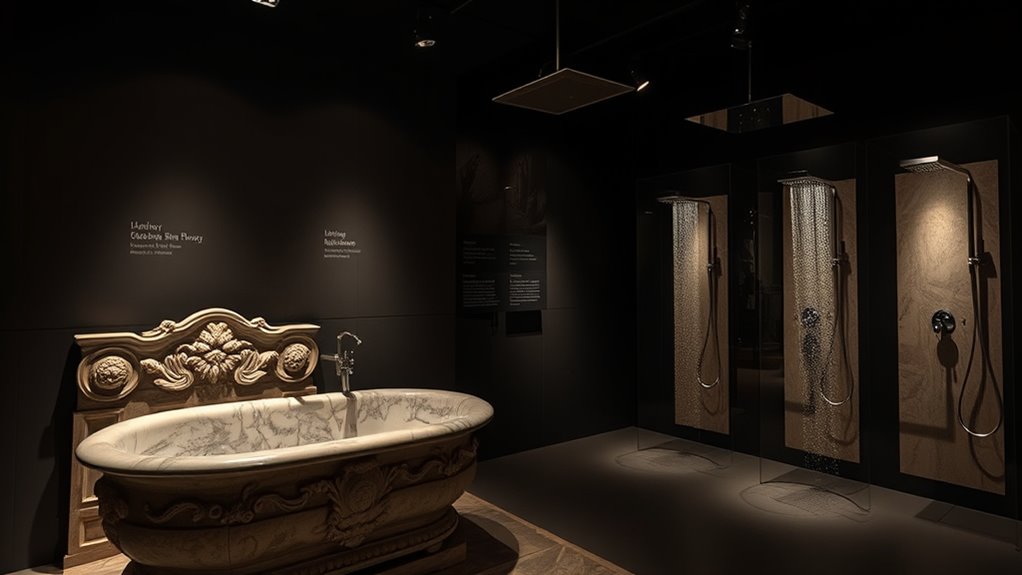

The journey from ancient baths to modern spa showers shows how human innovation improved hygiene practices over time. In Greece and Rome, communal baths and aqueducts made water accessible, fostering social and cleanliness habits. During medieval times, private bathing declined, but technological advances in the 19th century brought us enclosed, heated shower units. Today’s showers feature adjustable sprays and controls, reflecting centuries of progress. Discover more about how these innovations shaped today’s bathing experience.

Get home appliances delivered free with Prime
- Fast, free delivery on millions of items
- Prime Video, Amazon Music and more included
- Member-only deals all year
Key Takeaways
- Ancient Greece prioritized communal baths for hygiene and socialization, using simple water channels and basins.
- Romans advanced water control with aqueducts and public baths, laying groundwork for shower technology.
- Medieval and Renaissance periods saw a decline in baths, with private washing using basins and cloths.
- The 19th century introduced modern plumbing and water heating, enabling enclosed, efficient showers.
- Today’s spa showers feature adjustable sprays and thermostats, reflecting centuries of technological and hygiene innovations.

The shower, a common feature in modern bathrooms, has a surprisingly long and fascinating history. Long before sleek fixtures and high-tech controls, people sought ways to cleanse themselves and maintain hygiene. In ancient Greece, hygiene was a crucial part of daily life, and public baths played a central role. Greeks believed cleanliness contributed to health and social standing, so they built communal bathhouses equipped with water channels, basins, and showers that used simple pouring systems. These early methods allowed individuals to wash away dirt and sweat, emphasizing the importance of personal hygiene in Greek culture.
The Romans took these ideas a step further, pioneering engineering feats that revolutionized bathing. Their vast aqueduct systems transported fresh water from distant sources into cities, making large-scale public baths possible. These baths weren’t just places for cleanliness; they became social hubs where people gathered, relaxed, and conducted business. Romans developed more sophisticated bathing facilities, including devices that allowed water to flow over the body in a controlled manner—an early precursor to modern showers. While they didn’t have the enclosed shower stalls we recognize today, their innovations laid the groundwork for future developments by emphasizing water delivery and control.
Throughout the Middle Ages and into the Renaissance, bathing practices fluctuated in popularity and sophistication. Public baths declined in some regions due to health concerns or societal changes, and private bathing became less common. However, the desire for cleanliness persisted, especially among the wealthy, who used handheld basins and cloths to maintain hygiene. It wasn’t until the 19th century that technological advancements and a better understanding of health renewed interest in showering. The invention of plumbing and water heating systems made it possible to create enclosed, efficient shower units that resembled today’s fixtures. The development of water heating technology was particularly instrumental in making modern showers feasible and comfortable.
As you look around your bathroom today, it’s easy to forget how far shower technology has come. From Greek communal baths to Roman aqueducts supplying endless streams of water, each innovation contributed to the modern shower experience. The evolution reflects a continuous human pursuit of cleanliness, comfort, and convenience. Modern showers, with adjustable sprays and thermostatic controls, are the result of centuries of experimentation and ingenuity. They stand as a tribute to our enduring commitment to hygiene, a legacy that dates back to ancient civilizations that understood the importance of water in health and social life.
Frequently Asked Questions
How Did Ancient Civilizations Maintain Hygiene Without Showers?
Ancient civilizations maintained hygiene through various early sanitation methods, relying on practices like bathing in rivers, using communal baths, or sponging off with water. You would have used tools like strigils to scrape your skin or applied natural oils and powders for cleanliness. These ancient hygiene practices focused on cleanliness and health, even without showers, emphasizing the importance of water and personal care in daily routines.
What Were the Earliest Forms of Shower Technology?
You’ll find that the earliest forms of shower technology evolved from ancient bathing rituals involving early water delivery systems. These primitive setups used simple devices like aqueducts and water channels to pour or spray water over the body. In some civilizations, communal bathing involved pouring water from vessels or using rudimentary showerheads made of hollowed-out gourds or shells, marking the beginnings of modern shower concepts.
When Did Indoor Showers Become Common in Households?
Indoor showers became common in households during the early 20th century, thanks to advances in bathroom architecture and improved water supply systems. You’ll find that plumbing technology evolved, making it easier to install dedicated shower spaces with reliable water flow. This shift transformed daily hygiene routines, moving away from baths and into more convenient, efficient shower setups. As a result, indoor showers became a standard feature in modern homes.
How Have Shower Designs Evolved Over Different Historical Periods?
You see, shower designs have evolved through luxury innovations like multi-head systems and digital controls, making showers more personalized and efficient. Over time, modern designs focus on environmental impacts, incorporating water-saving features and eco-friendly materials. This evolution reflects a desire for comfort while reducing resource use, transforming the everyday shower into a luxurious yet sustainable experience. It’s a perfect blend of innovation and environmental consciousness shaping today’s bathroom trends.
What Cultural Influences Shaped Modern Shower Development?
Imagine blending luxury bathing with cultural rituals—that’s what shaped modern showers. You’re influenced by diverse traditions: Japanese onsen culture emphasizes simplicity and purity, while European spa rituals add elegance and comfort. These cultural influences transformed shower design into a symbol of relaxation and personal care. Today’s showers reflect a fusion of history and innovation, making everyday routines feel like indulgent experiences rooted in centuries of cultural significance.
Conclusion
Now that you’ve seen how far showers have come, isn’t it amazing to think about all the history behind that simple act? From ancient baths to modern spa showers, each step reflects our desire for cleanliness and comfort. So next time you turn on the water, remember you’re part of a long, fascinating tradition. Isn’t it incredible how something so ordinary can carry centuries of innovation and culture?
Fall yard work Picks
leaf blowers
As an affiliate, we earn on qualifying purchases.