
Linear drains give you a stylish and efficient way to manage water in spaces like bathrooms or patios. They improve drainage and keep moisture at bay, preventing structural damage. However, you need proper slope and installation to avoid pooling, and they can fail if not sized right. Choosing the right material matters too, as durability varies. If you want to learn about ideal scenarios, common mistakes, and comparison with traditional drains, there’s more to explore.
Key Takeaways
- Pros of Linear Drains: They offer sleek designs, effective water management, and improved drainage efficiency, reducing puddles and maintaining indoor air quality.
- Cons of Linear Drains: Installation can be complex; improper slope or sizing may lead to pooling and inadequate drainage performance.
- Durability Concerns: Material choices vary, with stainless steel and cast iron being durable, while plastic composites may lack longevity under heavy use.
- Maintenance Needs: Regular cleaning and inspection are essential to prevent blockages and ensure optimal performance of linear drains.
- Aesthetic Alignment: Choosing a drain that complements flooring materials and overall decor enhances visual appeal, turning functionality into a design feature.

HTOH Shower Drain, Linear Shower Drain 24 Inch(Brushed Nickel),Modern 304 Stainless Steel Shower Floor Drain with Grate Removable, Adjustable Leveling Feet, Rectangular Shower Drain
▶[ 304 Stainless Steel ] HTOH shower drain is mainly made of high-quality stainless steel material,sturdy,rust-proof and wear-resistant….
As an affiliate, we earn on qualifying purchases.
As an affiliate, we earn on qualifying purchases.
What Are Linear Drains and How Do They Work?

Linear drains are sleek, modern solutions for effective water drainage in various spaces, from showers to outdoor patios. Their innovative drain design allows for a streamlined look, minimizing visible drainage elements while maximizing efficiency. You’ll notice that water flow is directed toward the linear channel, preventing pooling and ensuring quick drainage. These drains typically consist of a long, narrow channel that collects water along its length, often featuring grates that blend into the surrounding area. Installing a linear drain can enhance both functionality and aesthetics in your space. By promoting ideal water flow, they reduce the risk of slips and falls, making them a practical choice for both indoor and outdoor environments.

6 Pack Trench Drain System, Channel Drain with Plastic Grate, Driveway Drainage Channel Systems,Channel Drain Pipe Outdoor Trench Drainage System,5.9X5.1X39 Inch
Key Features: Made from high-density polyethylene, our product is designed for exceptional durability ad wear-resistance. It is easy…
As an affiliate, we earn on qualifying purchases.
As an affiliate, we earn on qualifying purchases.
Top Benefits of Choosing Linear Drains for Your Space
Sure! Here’s the revised content for your article subheading with the requested changes:
—
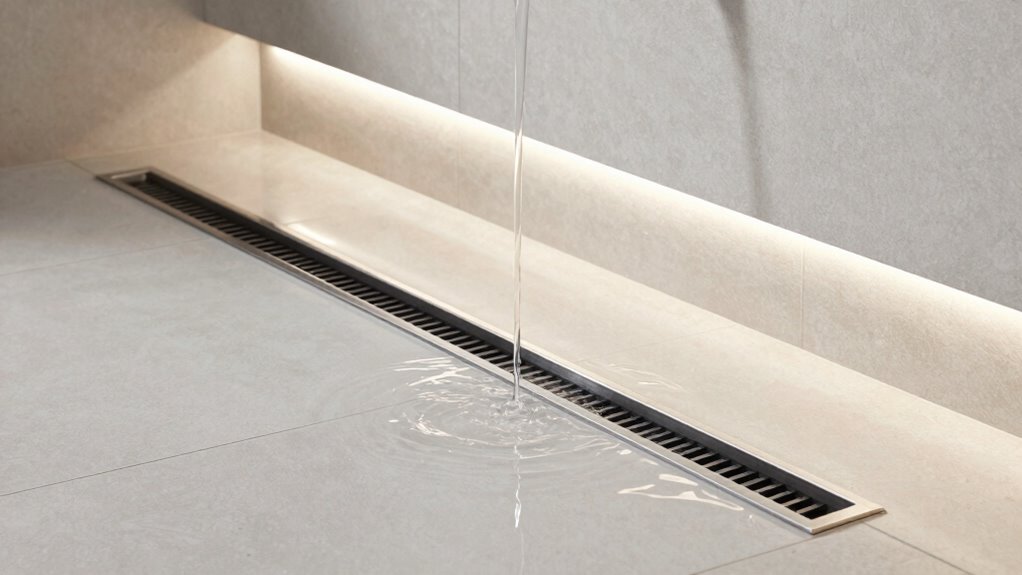
When you choose linear drains for your space, you’re not just opting for style; you’re also embracing practicality. These drains enhance both the look and functionality of your area. Here are some key benefits:
- Improved Drainage Efficiency: Linear drains provide a more effective way to direct water away, reducing puddles and potential flooding. Additionally, maintaining indoor air quality is crucial as poor drainage can lead to moisture buildup, which may contribute to mold and allergens. This moisture can also exacerbate the presence of microplastics in dust, affecting overall health. Proper drainage systems are essential for pool maintenance to ensure long-lasting functionality. Moreover, effective water management is vital in preventing structural damage to your property.
- Sleek Design Aesthetics: With their minimalist design, linear drains seamlessly blend into any décor, elevating the overall appearance of your space.
- Versatile Installation Options: You can install them in various locations, from bathrooms to patios, making them a flexible choice for any project. Additionally, incorporating eco-friendly HVAC solutions can further enhance the overall efficiency of your space.
—
Let me know if you need any more changes!
linear bathroom drain installation kit
As an affiliate, we earn on qualifying purchases.
As an affiliate, we earn on qualifying purchases.
Understanding the Limitations of Linear Drains

While linear drains offer impressive benefits, it’s important to recognize their limitations as well. One key issue is the need for a proper drain slope. If the slope isn’t adequate, water won’t flow efficiently, leading to pooling and potential water damage. Additionally, their drainage capacity can be a concern in high-traffic or large areas. Linear drains might struggle to handle heavy rainfall or significant water flow, which can overwhelm their design. Moreover, installation can be tricky; improper setup can affect performance. You need to take into account these factors to guarantee that a linear drain meets your specific needs. Understanding these limitations can help you make informed decisions for your project.
sloped linear drain for patio
As an affiliate, we earn on qualifying purchases.
As an affiliate, we earn on qualifying purchases.
Ideal Scenarios for Installing Linear Drains
Ideal Scenarios for Installing Linear Drains
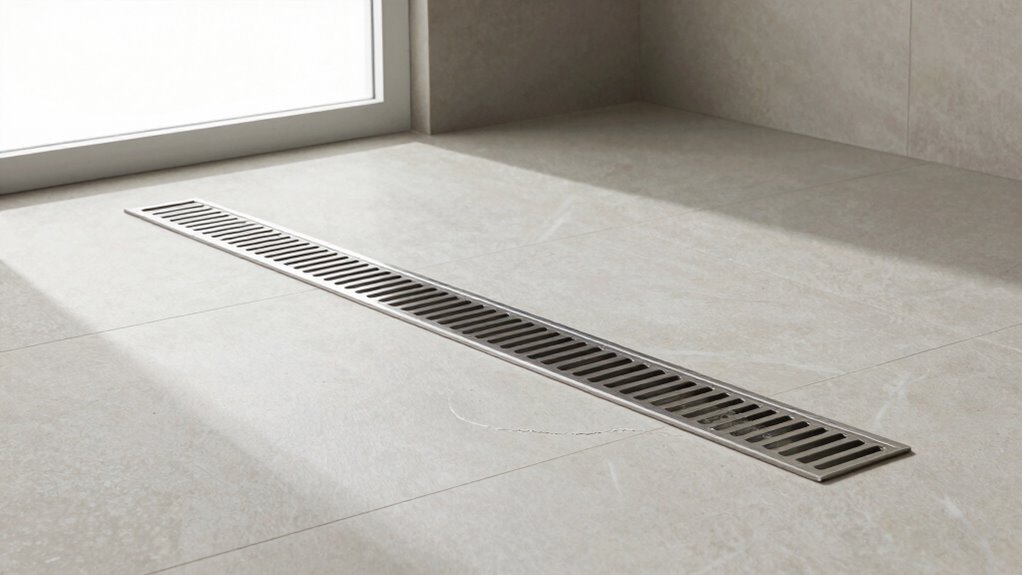
For ideal performance, installing linear drains in specific scenarios can make a significant difference. You’ll find that these drains excel in various settings, enhancing both function and aesthetics. Here are three ideal situations for their installation:
Installing linear drains in specific scenarios enhances both function and aesthetics, making a significant difference in performance.
- Shower Installations: They provide a sleek look and efficient drainage, ideal for modern bathrooms. Incorporating high-impact recommendations can further improve the overall design and functionality of the space. Additionally, using acoustic treatments in the bathroom can help minimize sound disturbances.
- Outdoor Applications: Use them around pools or patios to manage water runoff effectively, ensuring safety and comfort.
- Commercial Spaces: In high-traffic areas, linear drains handle large volumes of water, maintaining hygiene and preventing slips. Additionally, incorporating ultrawide monitors in the design process can help optimize layout and functionality, further enhancing productivity in these spaces.
Common Mistakes to Avoid When Choosing Linear Drains
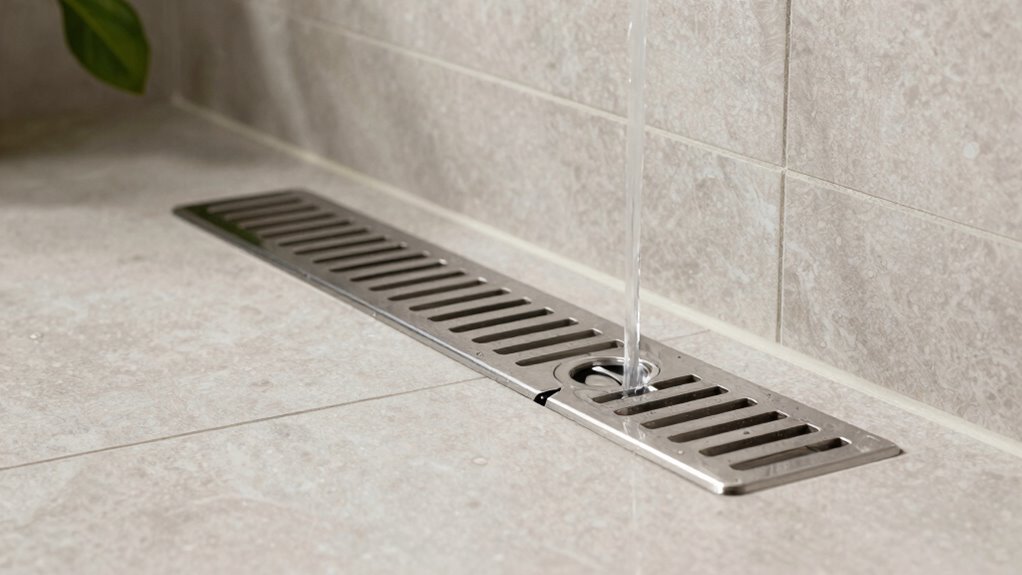
How can you guarantee your linear drain choice doesn’t lead to costly mistakes? First, consider the design aesthetics. You want a drain that complements your space, but don’t let looks overshadow function. Many people overlook the importance of proper sizing and placement, which can lead to installation errors. Make sure your linear drain aligns with your flooring slope to guarantee effective water flow. Additionally, avoid selecting a drain that’s too narrow or too wide for your shower area; this can result in water pooling. Finally, don’t skip professional installation, as DIY attempts can often exacerbate problems. By keeping these factors in mind, you’ll select a linear drain that enhances both style and functionality, avoiding common pitfalls. Moreover, understanding filtration and suction basics can further ensure that your drainage system operates efficiently and effectively.
How Linear Drains Compare to Traditional Point Drains
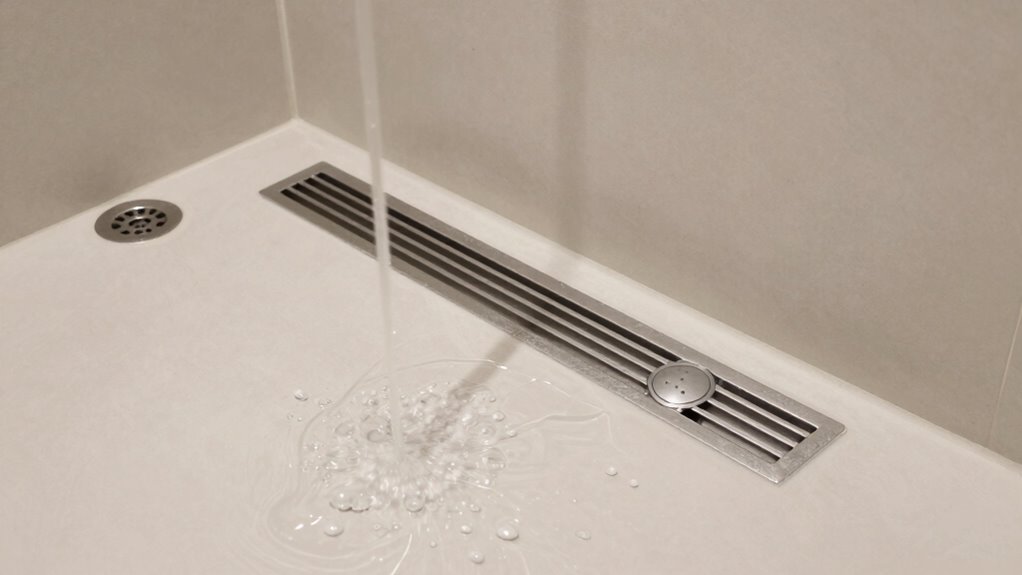
When you’re deciding between linear drains and traditional point drains, understanding their key differences can help you make an informed choice. Linear drains often excel in drain efficiency, allowing for faster water removal compared to point drains. This can be particularly beneficial in large shower areas.
Consider these factors:
- Aesthetic Appeal: Linear drains offer a sleek, modern look that can enhance your bathroom design.
- Installation Flexibility: They can be placed along walls or in other areas, providing more layout options.
- Ease of Cleaning: With fewer corners and crevices, linear drains can be simpler to maintain.
Ultimately, your decision should align with your space’s functionality and style.
Maintenance Tips for Keeping Linear Drains Efficient

To keep your linear drains functioning efficiently, regular maintenance is vital. Start by regularly inspecting the drain for debris and buildup. Use effective cleaning techniques, such as a soft brush or vacuum, to remove any dirt or hair that could cause blockages. It’s important to flush your drains with warm water periodically to guarantee smooth flow. For clog prevention, consider installing a drain cover to catch larger particles before they enter the system. Additionally, avoid pouring grease or harsh chemicals down the drain, as these can lead to serious clogs. By staying proactive with these maintenance tips, you’ll extend the lifespan of your linear drains and maintain their efficiency for years to come.
How to Choose the Right Linear Drain for Your Needs?

Choosing the right linear drain starts with understanding your space and needs. You’ll want to evaluate the drain size, material durability, and installation requirements to guarantee it fits perfectly. Let’s break down these key factors to help you make an informed decision.
Drain Size Considerations
Selecting the right linear drain involves careful consideration of size, as it directly impacts both functionality and aesthetics. To guarantee you choose the best option for your space, keep these factors in mind:
- Drain dimensions: Measure your available installation space to find a drain that fits perfectly.
- Flow rate: Consider how much water the drain needs to handle, especially in high-traffic areas.
- Design style: Confirm the drain complements your overall design theme while meeting practical needs.
Material Durability Options
When considering a linear drain, understanding the material durability options available is essential for ensuring longevity and performance. Stainless steel is a popular choice due to its corrosion resistance and sleek appearance, making it ideal for wet environments. Efficient HVAC solutions can also help manage moisture levels in spaces where linear drains are installed. Additionally, the role of color accuracy in home cinema projectors emphasizes the importance of quality materials in enhancing overall performance. Polymer concrete offers excellent strength and thermal expansion properties, which can be beneficial in fluctuating temperatures. Furthermore, adequate maintenance of your drainage system can prevent premature breakdowns and ensure optimal function. Additionally, necessary cookies can enhance the online browsing experience by ensuring secure functionalities related to your product searches. Cast iron, while heavy and less common, provides unmatched durability and is resistant to damage. On the other hand, plastic composites are lightweight and resistant to corrosion but may not match the longevity of metal options. Weigh these materials against your specific needs, considering factors like exposure to moisture, potential temperature changes, and overall aesthetic preferences to make the best choice for your linear drain. Additionally, the best options for durability often include stainless steel and polymer concrete, which are well-regarded for their performance in various environments.
Installation Requirements Review
Before diving into the specifics of installation, it’s essential to understand how to choose the right linear drain for your unique needs. Consider the following factors to guarantee an effective setup:
- Drainage slope: Make sure your flooring has the correct slope to direct water toward the drain.
- Installation techniques: Familiarize yourself with various methods, like bonded or unbonded installations, to find the best fit for your project.
- Material compatibility: Choose a drain that complements the tiles or flooring materials you plan to use.
Frequently Asked Questions
Are Linear Drains Suitable for All Types of Flooring Materials?
Linear drains aren’t suitable for all flooring materials. When choosing them, consider your flooring’s design and durability. For tiles, guarantee proper sloping and sealing to prevent water damage. Wood or laminate might require extra care, as moisture can warp these materials. Maintenance tips include regular cleaning to avoid clogs and checking seals periodically. By keeping these factors in mind, you can guarantee your flooring remains functional and stylish alongside your linear drain.
How Long Do Linear Drains Typically Last?
Linear drains typically last around 30 to 50 years with proper care. To guarantee longevity, you should follow maintenance tips like regularly cleaning the drain and checking for clogs. Common issues, such as rust or leaks, can shorten their lifespan, so addressing these problems promptly is essential. By staying proactive with maintenance, you can keep your linear drain functioning well for decades, enhancing your space’s drainage efficiency and overall aesthetic.
Can Linear Drains Be Installed in Existing Shower Spaces?
Yes, you can install linear drains in existing shower spaces. In fact, studies show that 70% of homeowners prefer them for shower renovations due to their sleek design and space optimization. By replacing traditional drains with linear options, you not only enhance the aesthetic appeal but also improve water drainage. Just make sure you consult a professional to assess your current setup and make necessary adjustments for a seamless installation.
What Is the Cost Difference Between Linear and Traditional Drains?
The cost comparison between linear and traditional drains shows that linear drains often come with higher installation expenses. While the materials for linear drains can be pricier, their sleek design may justify the investment for some. However, traditional drains usually have lower upfront costs and simpler installation processes. You’ll want to weigh the aesthetic appeal of linear drains against the budget you’re working with before making your decision.
Do Linear Drains Require Specialized Installation Techniques?
Yes, linear drains do require specialized installation techniques. Have you considered the installation challenges that come with them? Unlike traditional drains, they demand precise sloping for peak drainage efficiency. You’ll need to guarantee the substrate is correctly prepared and may need to adjust plumbing for proper alignment. While it might seem intimidating, the benefits of efficient water management can make the effort worthwhile, enhancing both function and aesthetics in your space.
Conclusion
In the world of drainage, linear drains can be a sleek, modern solution, like a hidden stream guiding water away. They offer style and efficiency but come with their own set of challenges. By weighing the pros and cons, you can navigate the waters of choice and find the perfect fit for your space. So, plunge in, embrace the possibilities, and guarantee your linear drain is a seamless addition that keeps your home flowing smoothly.