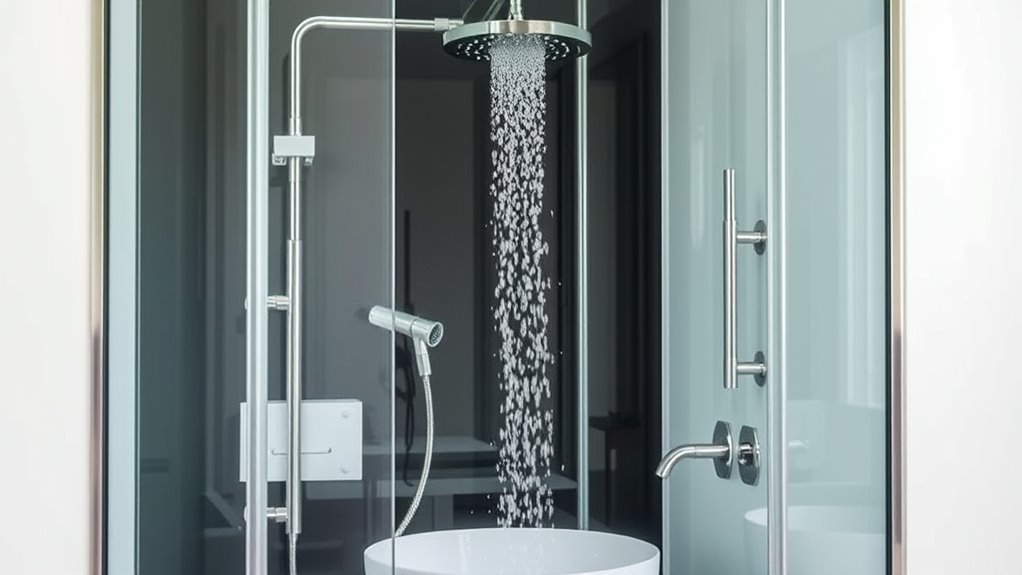

Shower recycling systems capture greywater from your shower, filter out soap, dirt, and residues, and then treat it to guarantee safety. Once cleaned, this water is reused for non-potable purposes like flushing toilets or watering your garden. This process helps you conserve water, reduces your utility bills, and eases pressure on local resources. Want to know how these systems are installed and maintained? Keep exploring to discover all the benefits.

Get home appliances delivered free with Prime
- Fast, free delivery on millions of items
- Prime Video, Amazon Music and more included
- Member-only deals all year
Key Takeaways
- Shower recycling systems capture greywater from showers for treatment and reuse, reducing overall water consumption.
- The greywater undergoes filtering and cleaning to remove soap, dirt, and residues, making it safe for non-potable uses.
- Treated water is redirected for purposes like toilet flushing, gardening, or outdoor watering, conserving fresh water resources.
- Installation involves a filtration unit, treatment components, and a circulation pump, requiring regular maintenance for optimal performance.
- These systems promote environmental sustainability, lower water bills, and increase resilience during drought or water restrictions.

Shower recycling systems are an innovative way to conserve water and reduce your environmental impact. When you install such a system, you’re fundamentally creating a closed-loop process where water from your shower doesn’t go straight down the drain but is instead captured, treated, and reused. The core component of this process is greywater treatment, which involves filtering and cleaning water that contains soap, dirt, and other residues from your shower. This treated greywater can then be redirected for various uses within your home or garden, dramatically cutting down on overall water consumption.
By implementing shower recycling systems, you actively participate in water conservation efforts. Instead of relying solely on municipal water supplies, you make the most of the water you’ve already used, minimizing waste. This is especially beneficial in areas facing water scarcity or where water costs are high. The greywater treatment process guarantees that the water is safe enough for non-potable purposes, such as flushing toilets, watering plants, or even for certain cleaning tasks. This process aligns with AI-powered data analytics to optimize resource management, ensuring efficiency and sustainability. You don’t need to worry about health risks because the system is designed to remove harmful contaminants while retaining beneficial nutrients. This way, you’re not only saving water but also reducing the strain on local water sources and treatment facilities.
Implementing greywater reuse reduces waste and eases pressure on local water resources.
The installation process might seem complex at first glance, but many modern shower recycling systems are user-friendly. They typically involve a filtration unit that captures greywater, a treatment component that neutralizes bacteria and impurities, and a pump that circulates the clean water back into your home’s plumbing. You’ll need to ensure proper maintenance, such as regular filter changes and system checks, to keep everything functioning smoothly. Once set up, you’ll notice a marked decrease in your water bills and a sense of contribution toward environmental sustainability.
Using a shower recycling system also means you’re less dependent on municipal water infrastructure. During droughts or water restrictions, your household remains more resilient because you rely on recycled greywater for essential tasks. This not only helps conserve water but also reduces the energy footprint associated with water treatment and delivery. In the long run, adopting such a system can inspire your community to contemplate similar eco-friendly solutions, amplifying your impact.
shower greywater recycling system
As an affiliate, we earn on qualifying purchases.
As an affiliate, we earn on qualifying purchases.
Frequently Asked Questions
What Is the Typical Lifespan of a Shower Recycling System?
A shower recycling system typically lasts around 10 to 15 years, depending on its build quality and maintenance. You should expect the filter lifespan to be about 1 to 2 years, so regular replacements are essential. Proper upkeep ensures system durability, preventing breakdowns and maintaining efficient water recycling. Staying on top of filter changes and inspections helps extend the lifespan and keep your system functioning at its best for years.
Are Shower Recycling Systems Compatible With All Types of Showers?
You can’t judge a book by its cover, and the same goes for shower recycling systems. They aren’t compatible with all shower types, but most modern showers work well. You’ll want to check system compatibility and verify it includes water filtration suited for your shower’s setup. This way, you’ll enjoy eco-friendly water reuse without any hiccups, making your shower experience both green and seamless.
How Much Maintenance Is Required for These Systems?
You’ll need to perform regular maintenance on your shower recycling system to keep it running efficiently. This includes replacing filters as recommended by the manufacturer and cleaning the system to prevent buildup. Typically, filter replacement is required every few months, and system cleaning should be done monthly or as needed. Staying on top of these tasks ensures maximum water quality and prolongs the lifespan of your system.
What Is the Initial Cost of Installing a Shower Recycling System?
You’ll find the initial cost of installing a shower recycling system varies, generally ranging between $3,000 and $10,000. While this might seem like a significant investment, a thoughtful cost comparison shows savings on water bills over time. The installation process is straightforward but requires professional setup, ensuring your system operates efficiently. Ultimately, this eco-friendly choice can enhance your sustainability efforts while fitting well within your budget.
Do Recycling Systems Meet Local Water Safety Regulations?
Yes, recycling systems meet local water safety regulations when properly installed. You need to guarantee they adhere to water quality standards and regulatory compliance, which vary by region. Regular maintenance and water testing are essential to keep the system functioning effectively. By choosing systems certified for safety and compliance, you can confidently reuse shower water, reducing waste while staying within legal and health guidelines.
Conclusion
So, now that you understand how shower recycling systems work, imagine what’s possible. Could this be the key to saving water and lowering your bills? But there’s more to discover—hidden benefits and potential challenges that might surprise you. Will you take the leap into sustainable living? The choice is yours, and the future of water conservation could depend on it. Are you ready to make a change that could transform your daily routine?
Cold & flu season Picks
humidifiers
As an affiliate, we earn on qualifying purchases.