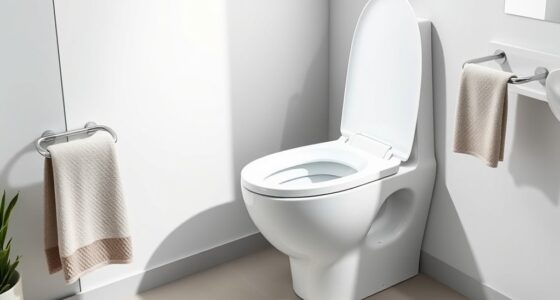
ADA-compliant toilets are designed to meet strict accessibility standards for 2025 to ensure safety, independence, and ease of use for all users. You should verify proper installation, including seat height between 17-19 inches, secure grab bars, and adequate clearance space. Regular maintenance is essential to keep fixtures functioning correctly and to maintain compliance. Continuing with this information will give you a detailed understanding of the requirements for accessible bathroom facilities.
Key Takeaways
- ADA-compliant toilets must have a seat height between 17-19 inches from the floor for accessibility.
- Proper installation of grab bars ensures safety and support, meeting ADA standards for height and placement.
- Regular maintenance, including inspections and cleaning, preserves compliance and prevents safety hazards.
- Clear floor space of at least 60 inches in diameter is required for wheelchair maneuverability.
- Adhering to installation and maintenance guidelines guarantees ongoing ADA compliance for 2025 standards.
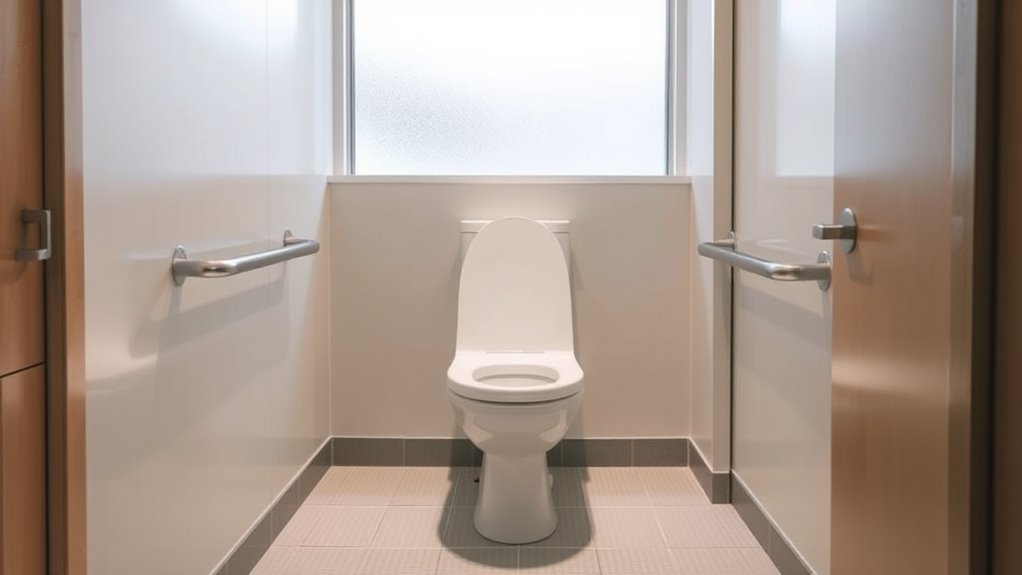
ADA-compliant toilets are designed to guarantee accessibility and safety for everyone, including individuals with disabilities. When you’re considering these fixtures for your space, understanding the installation guidelines is essential. Proper installation ensures the toilet meets ADA standards for height, clearance, and support, which are indispensable for user safety and independence. You should verify that the toilet’s seat height is between 17 and 19 inches from the floor, offering ease of use for a variety of users. Additionally, the placement of grab bars must adhere to specific guidelines—mounted securely around the toilet at appropriate heights and distances—to provide stability and support. Ensuring enough clear floor space around the toilet, typically a 60-inch diameter or clear space in front and on the side, allows wheelchair users to maneuver comfortably. Following these installation guidelines from the outset minimizes future issues and guarantees compliance with ADA regulations. Regularly reviewing AI safety measures can help ensure that your facilities incorporate the latest safety standards and technological advancements.
Once installed, maintaining your ADA-compliant toilet becomes equally important. Regular maintenance is necessary to keep the fixture functioning correctly and to uphold safety standards. You should perform routine inspections to check for leaks, which could compromise accessibility or cause damage over time. Cleaning should be done with non-abrasive, ADA-approved products to preserve finishes and prevent corrosion, especially on grab bars and support features. It’s also essential to verify that all parts, such as flush mechanisms and support bars, are secure and in good condition. If any issues arise, addressing them promptly ensures continued compliance and safety. Remember, maintaining proper hygiene and functionality not only supports user safety but also prolongs the lifespan of the fixture.
In terms of maintenance requirements, keeping the toilet clean and free of obstructions is key. Regularly inspect the support bars and flush mechanisms for wear or damage, replacing parts as needed. You should also ensure that the toilet’s seat remains at the correct height and that any adjustable features are functioning properly. If your facility experiences high traffic, scheduling periodic professional inspections can help identify and resolve issues before they impact users. Proper maintenance and adherence to installation guidelines are not just about compliance—they’re about creating an inclusive environment where everyone can use the facilities safely and comfortably. By paying close attention to these details, you ensure your ADA-compliant toilets serve their purpose effectively well into the future.
ADA compliant toilet with seat height 17-19 inches
As an affiliate, we earn on qualifying purchases.
As an affiliate, we earn on qualifying purchases.
Frequently Asked Questions
How Often Will ADA Standards Be Reviewed and Updated?
You should know that ADA standards undergo regular regulatory review, and updates happen approximately every five years. This update frequency guarantees that accessibility requirements stay current with evolving technology and societal needs. As a user or developer, staying informed about these reviews helps you anticipate changes and maintain compliance. The process involves government agencies evaluating and revising standards to improve accessibility, so keeping an eye on official announcements is essential for ongoing compliance.
Are There Specific Materials Required for Ada-Compliant Toilets?
You should choose materials that meet specific specifications for ADA-compliant toilets, focusing on durability and safety. Typically, ceramics or porcelain are recommended for their strength and ease of cleaning, guaranteeing long-lasting performance. It’s important to verify that all materials used adhere to accessibility standards, including slip-resistant surfaces and corrosion resistance. By selecting the right materials, you ensure compliance and provide a safe, accessible experience for all users.
How Do ADA Standards Vary Across Different States?
You’ll find that ADA standards vary across states due to state-specific regulations, which can create regional compliance challenges. Some states adopt stricter guidelines or additional requirements beyond federal standards, requiring you to stay informed about local rules. This means you need to research state-specific regulations and adapt your plans accordingly to guarantee your toilets meet all regional compliance challenges, avoiding potential legal issues or renovation delays.
What Are the Penalties for Non-Compliance With ADA Standards?
If you don’t comply with ADA standards, you face penalty fines and legal repercussions. These fines can be substantial, depending on the severity of the violation, and legal actions might require you to make costly modifications. Non-compliance can also lead to lawsuits, damage to your reputation, and mandates to retrofit facilities. To avoid these consequences, guarantee your facilities meet ADA requirements proactively.
Can Existing Toilets Be Upgraded to Meet ADA Standards Easily?
You can upgrade existing toilets to meet ADA standards, but consider retrofitting challenges and cost considerations. Modifying plumbing, adjusting stall sizes, and adding grab bars may require significant effort and expense. While upgrades are possible, plan for potential structural changes and budget accordingly. It’s best to consult professionals early to navigate retrofitting challenges efficiently and ensure your facilities attain full ADA compliance without unexpected costs.
grab bars for accessible bathrooms
As an affiliate, we earn on qualifying purchases.
As an affiliate, we earn on qualifying purchases.
Conclusion
As you prepare for 2025, embracing ADA-compliant toilets isn’t just about following standards—it’s about championing inclusivity. By staying ahead, you guarantee everyone can access facilities with ease, no matter their needs. Remember, this isn’t some distant future; it’s like having a DeLorean ready to transform your space overnight. So, take action now, and make your bathrooms a welcoming space where accessibility truly reigns, turning your building into a beacon of equality.
wheelchair accessible toilet clearance
As an affiliate, we earn on qualifying purchases.
As an affiliate, we earn on qualifying purchases.
ADA approved toilet cleaning products
As an affiliate, we earn on qualifying purchases.
As an affiliate, we earn on qualifying purchases.