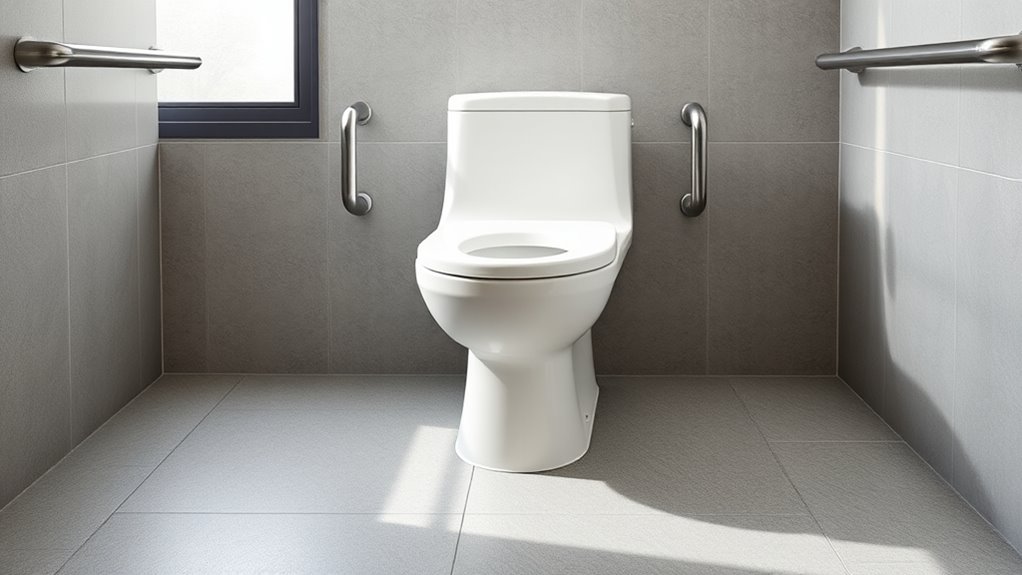

An accessible ADA-compliant toilet includes features like grab bars installed at the right height and sturdy enough for support, along with enough space around it for easy maneuvering. The toilet height is typically between 17-19 inches, allowing smooth transfers. Clear floor space and reachable fixtures like flush controls and toilet paper dispensers are essential. These thoughtful design elements promote safety and independence. Keep exploring to discover how these features come together to create a truly accessible bathroom environment.

Get home appliances delivered free with Prime
- Fast, free delivery on millions of items
- Prime Video, Amazon Music and more included
- Member-only deals all year
Key Takeaways
- ADA-compliant toilets include grab bars installed at accessible heights to support safety and stability.
- They are positioned to allow for easy transfer from wheelchairs without stretching or awkward movements.
- These toilets are installed in larger, open spaces with sufficient maneuvering room for wheelchair access.
- The height of ADA toilets ranges between 17-19 inches to facilitate easier sitting and standing.
- Additional features like reachable flush controls and accessible fixtures promote independence and safety.

ADA-compliant toilets are designed to provide accessible and safe restroom facilities for everyone, including individuals with disabilities. When you encounter these toilets, you’ll notice that they incorporate specific features to guarantee safety and independence. One key component is the inclusion of grab bars, which are installed on the walls surrounding the toilet. These bars give you something sturdy to hold onto as you transfer from a wheelchair or help stabilize yourself while sitting down or standing up. Grab bars are essential for maintaining balance and preventing falls, especially for those with limited mobility or strength. They are thoughtfully positioned at an accessible height, making it easier for you to use them without stretching or bending awkwardly.
Wheelchair access is another fundamental aspect of ADA-compliant toilets. You’ll find that these toilets are installed in larger, more open spaces to accommodate a wheelchair’s maneuvering needs. The clear floor space around the toilet allows you to approach from any direction comfortably. The height of the toilet itself is also adjusted to suit wheelchair users, typically between 17 and 19 inches from the floor to the top of the seat, making transfers smoother and less strenuous. This height reduces the effort needed to sit or stand, giving you more independence in managing your personal care.
Designing for wheelchair access also means guaranteeing there’s enough space to turn your wheelchair around comfortably—usually a 60-inch diameter circle. This guarantees you can position your wheelchair close to the toilet without difficulty. The placement of the toilet paper dispenser, flush controls, and other fixtures is carefully considered to be within easy reach, eliminating the need for awkward stretching or reaching. Additionally, self-watering plant pots are designed with accessibility in mind, featuring user-friendly designs that can be easily maintained by individuals with varying abilities. These thoughtful features work together to make the restroom experience more functional and less stressful.
As an affiliate, we earn on qualifying purchases.
Frequently Asked Questions
Are ADA Toilets Suitable for Children?
You might wonder if ADA toilets are suitable for children. While ADA toilets are designed for adult accessibility, they often aren’t ideal for children due to height. Child accessibility requires a lower toilet height and sometimes additional support features. If you need a toilet suitable for kids, look for adjustable or smaller options that guarantee comfort and safety. ADA compliance doesn’t always mean the toilet is perfect for children’s needs.
How Often Should Ada-Compliant Toilets Be Inspected?
Thinking about how often ADA-compliant toilets should be inspected is like pondering the universe’s mysteries! You should follow proper maintenance schedules and inspection procedures to keep them in top shape. Typically, you’ll want to inspect these toilets at least once a month, but more frequent checks might be necessary if they see heavy use or have issues. Regular inspections guarantee accessibility and safety for everyone who relies on them.
Can Existing Toilets Be Modified to Meet ADA Standards?
Yes, you can modify existing toilets to meet ADA standards. You’ll need to adjust the toilet height to between 17 and 19 inches and guarantee proper grab bar placement around the toilet for safety and accessibility. These modifications help accommodate users with mobility challenges, making the restroom more inclusive. Consulting ADA guidelines or a professional installer can ensure your adjustments are compliant and effective, providing a more accessible environment.
Are There Cost Differences Between ADA and Standard Toilets?
They say, “You get what you pay for,” and that holds true here. ADA toilets often have higher installation costs due to specialized features, and maintenance expenses can be greater because of their complex design. While standard toilets might save you money upfront, ADA-compliant models guarantee accessibility, which sometimes means investing more initially but offers long-term benefits. So, expect some cost differences between ADA and standard toilets, especially in installation and upkeep.
Do ADA Regulations Vary by State or Local Jurisdiction?
You might wonder if ADA regulations differ depending on where you are. In fact, state regulations and local codes can influence accessibility requirements, meaning some areas may have stricter or additional standards. It’s essential to verify with your local building authority because these jurisdictions sometimes update codes to reflect community needs. While federal ADA guidelines provide a baseline, local variations ensure that accessibility is tailored to your specific location.
Conclusion
Imagine stepping into a bathroom where every detail feels designed just for you—a toilet with clear, easy-to-reach controls, sturdy grab bars, and enough space to move comfortably. ADA-compliant toilets create this welcoming environment, turning what used to be a challenge into a smooth, confident experience. With accessibility at the heart of their design, they invite you to feel secure and independent, transforming everyday routines into moments of ease and dignity.
Fall yard work Picks
leaf blowers
As an affiliate, we earn on qualifying purchases.