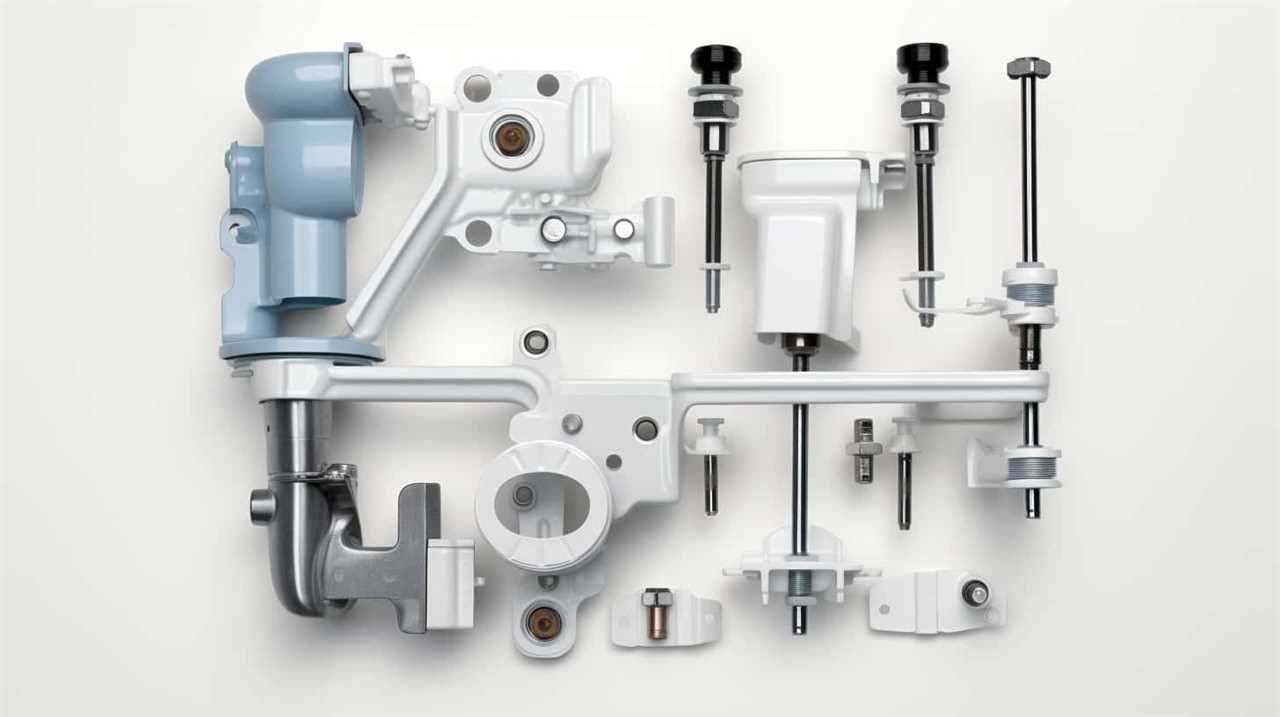
If you want a powerful, water-efficient flush that handles waste reliably, a pressure-assisted toilet might suit you best, especially for high-traffic households. They offer quick, thorough cleaning but tend to be noisier and cost more upfront. On the other hand, gravity-fed models are quieter, easier to maintain, and more affordable, making them ideal if you value simplicity and lower initial costs. To determine which suits your needs better, explore how each system’s features match your household’s habits and priorities.
Key Takeaways
- Pressure-assisted toilets provide stronger, more efficient flushes with less water, ideal for high waste volume or frequent clogging.
- Gravity-fed toilets are quieter, simpler to maintain, and often more affordable initially, suitable for those prioritizing quiet operation and lower costs.
- Pressure-assisted models tend to be noisier but offer better water conservation and fewer flushes needed per use.
- Gravity systems may require multiple flushes, increasing water use, but they generally have lower upfront costs and easier repairs.
- Choose based on household needs: pressure-assisted for efficiency and power, gravity-fed for affordability and quiet operation.
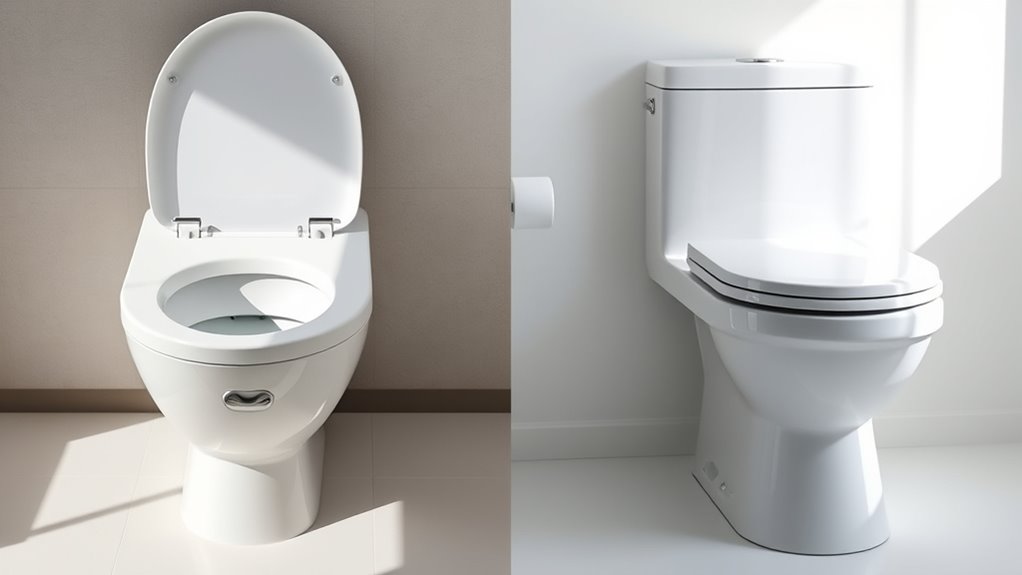
When choosing a toilet, understanding the differences between pressure-assisted and gravity-fed models can help you make an informed decision. These two systems have distinct mechanisms that influence flushing performance, water usage, and overall efficiency. Your choice will impact how well your toilet clears waste, how much water it consumes, and how much noise it makes during operation.
Pressure-assisted toilets use compressed air to enhance the flushing force. When you press the handle, water is rapidly pushed into the bowl with increased pressure, resulting in a powerful flush. This design offers superior flushing efficiency, meaning it can clear waste more effectively with fewer attempts. If you struggle with clogs or want a toilet that handles waste quickly and thoroughly, a pressure-assisted model might be your best option. Additionally, because these toilets deliver a strong flush with less water, they can be more water-conserving over time. This makes them attractive for those seeking environmentally friendly solutions or wanting to reduce their water bill.
Pressure-assisted toilets deliver powerful, efficient flushes with less water, ideal for quick waste removal and water conservation.
In contrast, gravity-fed toilets rely on the force of gravity to move water from the tank into the bowl. When you activate the flush, water drops from the tank and flows into the bowl, creating a siphoning action that clears waste. They are generally quieter than pressure-assisted models and tend to be easier to repair due to their simpler design. However, their flushing efficiency can vary markedly based on the design and water volume. Some gravity-fed toilets may require multiple flushes to fully clear waste, which could lead to higher water consumption and less water conservation. Nonetheless, modern gravity models with optimized bowl shapes and increased tank water levels have improved in efficiency, making them a popular choice for many households.
While pressure-assisted toilets excel in flushing power and water efficiency, they often come with a higher initial cost and can be noisier during operation. On the other hand, gravity-fed models are usually more affordable, easier to maintain, and operate more quietly, but may not match the flushing strength of their pressure-assisted counterparts. Your decision should consider your priorities: if you want a high-performance toilet that minimizes water use and reduces the need for multiple flushes, a pressure-assisted model might be ideal. If you prefer a quieter, cost-effective option with simpler maintenance, a gravity-fed toilet could be more suitable.
Ultimately, understanding these differences helps you select a system that fits your household’s needs, budget, and environmental goals. Both systems have their benefits, but knowing how they perform in terms of flushing efficiency and water conservation will guide you toward the right choice for your home. For example, some modern models incorporate toilet cleaner effectiveness features that can enhance hygiene and reduce maintenance.

Tadashi Bidet Toilet Seat Elongated, Heated Toilet Seat, Instant Warm Water & Dryer, Feminine & Rear Wash, Self-Clean Nozzle, Slow Close Lid, Child/ECO/Silent Mode
Dual Control Convenience: Enjoy the flexibility of a sleek 【Digital Remote】 and a 【Comprehensive Knob Control 】with Night...
As an affiliate, we earn on qualifying purchases.
Frequently Asked Questions
How Do Pressure-Assisted Toilets Save Water Compared to Gravity-Fed Models?
Pressure-assisted toilets save water through superior flush efficiency, using pressurized air to propel waste more forcefully. This means you need less water per flush to clear the bowl effectively, supporting your water conservation efforts. By reducing the amount of water used each time, these toilets help lower your overall water bill and minimize environmental impact, making them a smart choice if you’re focused on efficient and eco-friendly bathroom fixtures.
Are Pressure-Assisted Toilets More Prone to Noise During Flushing?
Imagine a thunderclap echoing through your bathroom every time you flush—that’s what pressure-assisted toilets can sound like. Yes, they tend to produce higher noise levels during flushing, making them more prone to noticeable flush noise. If quiet is your priority, you might prefer gravity-fed models. But if you’re okay with a bit of noise for a powerful, water-saving flush, then pressure-assisted toilets could be your loud but efficient friend.
Can Pressure-Assisted Toilets Fit in Small Bathroom Spaces?
You’ll find that pressure-assisted toilets can fit well in small bathrooms thanks to their compact design, which prioritizes space efficiency. They’re often designed to be sleek and not bulky, so you won’t sacrifice too much room. While some models are slightly taller, many are built to maximize space, making them a practical choice for tight quarters. Just check the specific dimensions to guarantee they fit comfortably in your bathroom.
Do Gravity-Fed Toilets Require Special Maintenance or Repairs?
You might think gravity-fed toilets are low-maintenance, but don’t be fooled—they do need some upkeep. Regularly check for clogs, inspect the flapper, and clean the tank to prevent buildup. Repair frequency is generally low, but occasional repairs like replacing the flapper or handle are common. Overall, they’re reliable, but staying on top of maintenance concerns keeps them flushing smoothly and avoids unexpected hassle.
Which Toilet Type Is Better for High-Traffic Commercial Bathrooms?
For high-traffic commercial bathrooms, you should choose a toilet that offers commercial durability and user comfort. Gravity-fed toilets are typically better because they are reliable, easier to maintain, and handle frequent use without breaking down. They also provide consistent flushing power, which keeps users comfortable and satisfied. While pressure-assisted models are powerful, they can be noisier and may require more maintenance, making gravity-fed toilets the smarter choice for busy environments.

ALPHA BIDET JX2 Elongated Bidet Toilet Seat, White, Endless Warm Water, *NEW* Bowl Mist, LED Light, Quiet Operation, Wireless Remote, Stainless Steel Nozzle, Sittable Lid, 3 Year Warranty
WARM AND SOOTHING - Tankless on-demand water heating for endless warm water
As an affiliate, we earn on qualifying purchases.
Conclusion
Choosing between pressure-assisted and gravity-fed toilets is like picking the perfect dance partner—you want one that syncs with your rhythm. Pressure-assisted models pack a punch with powerful flushes, while gravity-fed toilets glide smoothly with simplicity. Think about your home’s needs and your own style. Whichever you pick, make sure it fits your flow. After all, a good toilet isn’t just a fixture—it’s the unsung hero of your bathroom symphony.

WLJBIDET Bidet Toilet Seat with Remote Control, Electronic Heated Bidet Seat with Adjustable Warm Water and Pressure, Warm Air Drying, Display Screen, Night Light, Slow Closed Toilet Lid, Elongated
Warm Water Bidet: Enjoy adjustable comfort with bidet warm water washing (ranging from 92℉ to 102℉) — easily...
As an affiliate, we earn on qualifying purchases.
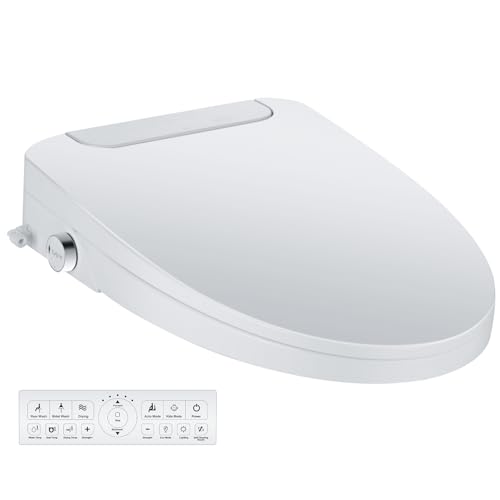
mijashy Electric Bidet Toilet Seat, Elongated, Warm Water with Air Dryer, Heated Seat and Slow Close Lid, Front and Rear Wash, LED Nightlight, Wireless Remote, White, 101
ADJUSTABLE WATER PRESSURE - Enjoy a customized clean with stainless steel nozzles that offer adjustable water pressure and...
As an affiliate, we earn on qualifying purchases.