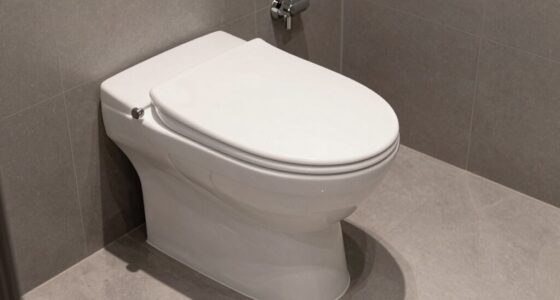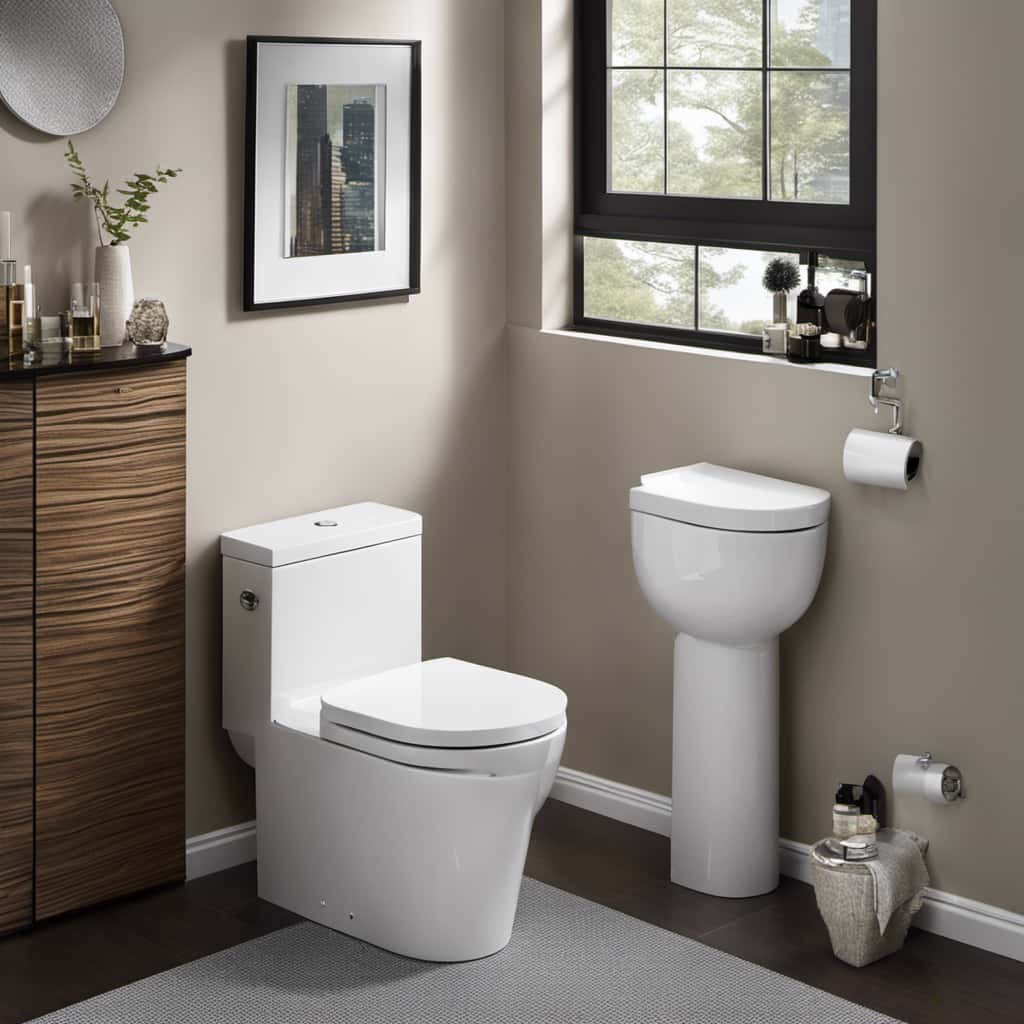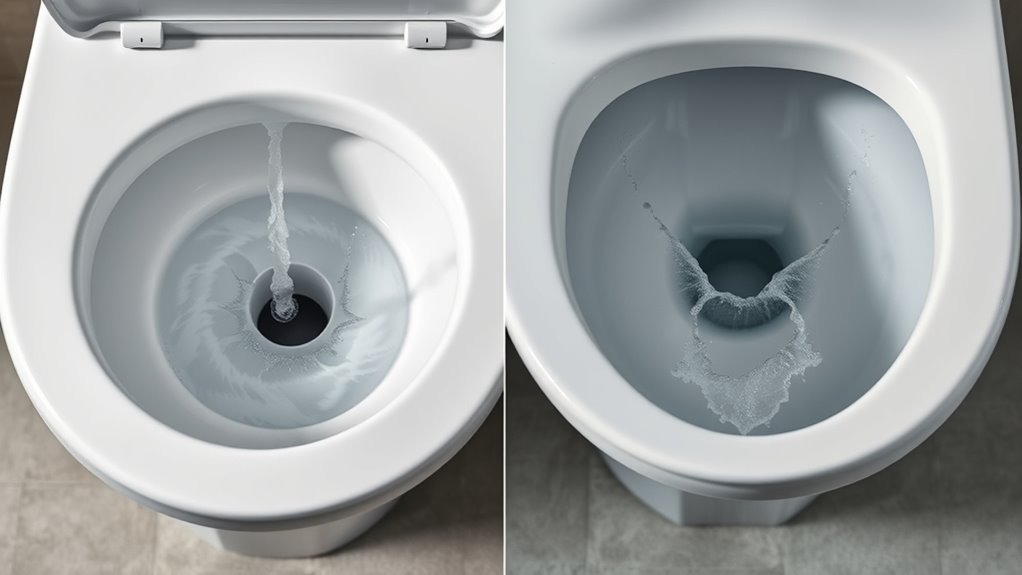

Siphonic and washdown flushes are two different ways to clear waste from your toilet. Siphonic models use a siphoning action that pulls waste down quietly and with less water, making them more eco-friendly. Washdown toilets rely on a large force of water rushing in, which cleans more thoroughly but noisily and with higher water use. To choose the best one for your needs, you’ll discover more about their specific benefits and drawbacks below.

Get home appliances delivered free — and shop member deals
- Fast, free delivery on millions of items
- Access to Prime Big Deal Days deals on October 6–7
- Prime Video, Amazon Music and more included
Key Takeaways
- Siphonic toilets use a siphoning action for a quick, quiet, and water-efficient flush, while washdown toilets rely on gravity and forceful water flow.
- Siphonic models typically consume less water per flush; washdown models may use more due to their forceful flushing mechanism.
- Siphonic systems operate more quietly and are better suited for noise-sensitive environments, whereas washdown toilets tend to be louder.
- Washdown toilets excel at clearing heavy or large waste loads more thoroughly than siphonic toilets.
- Choice depends on priorities: siphonic for water savings and quiet operation, washdown for powerful flushing performance.

When choosing between a siphonic and a washdown flush, understanding their differences can help you make an informed decision for your bathroom. These two flushing systems operate differently and have distinct advantages and drawbacks, especially when it comes to water conservation and noise levels. Knowing how each one functions can guide you toward the best option for your needs.
Siphonic flush toilets use a siphoning action to clear waste. When you press the handle, water from the tank rushes into the bowl through a small opening, creating a rapid surge of water that generates a siphon effect. This siphon pulls waste down quickly and efficiently, often in a single, powerful motion. Because of this design, siphonic toilets tend to use less water per flush compared to older, traditional models, making them a good choice if you’re focused on water conservation. They also tend to be quieter during operation, as the siphoning action is smooth and less noisy than the rapid rush of water found in washdown systems. This quieter operation can be especially appealing if your bathroom is near bedrooms or shared living spaces.
On the other hand, washdown flush toilets work differently. When you activate the flush, a large volume of water rushes directly into the bowl, pushing waste down more forcefully and flushing it out. This system relies on the gravity of the water to clear the bowl, and it often uses more water per flush than siphonic models. While this might seem less efficient, washdown toilets excel at clearing waste thoroughly, especially in larger or more heavily soiled bowls. However, they tend to produce more noise during flushing because of the rapid influx of water and the forceful push needed to clear the waste. If noise levels are a concern in your household, a washdown toilet might not be the best choice.
As an affiliate, we earn on qualifying purchases.
Frequently Asked Questions
Which Flush System Is More Environmentally Friendly?
When choosing a flush system, you consider water conservation and energy efficiency. Typically, siphonic toilets use less water per flush, making them more environmentally friendly. They also often require less energy to operate, reducing your overall environmental impact. Washdown toilets tend to use more water but can be more effective for waste removal. So, if you’re aiming for a greener option, siphonic systems generally offer better water conservation and energy efficiency.
How Long Does Installation Typically Take for Each System?
When you’re considering installation timelines, it’s important to note that washdown toilets usually have a shorter setup complexity, often taking a few hours to a day. Siphonic systems might require more time, sometimes up to a day or two, due to their more intricate setup. Your choice depends on your space and preference, but generally, washdown toilets are quicker to install.
Are There Any Noise Differences During Flushing?
You’ll notice noise levels differ during flushing. Washdown toilets tend to produce louder flushing sounds due to their direct water flow, while siphonic systems operate more quietly with a siphon action that minimizes noise. Your choice depends on your preference for quieter operation or a more powerful flush. Keep in mind, installation quality also impacts noise, so make certain proper setup to minimize disruptive flushing sounds.
What Maintenance Is Required for Siphonic and Washdown Toilets?
Imagine tending to a delicate garden, your toilets needing gentle yet thorough care. For both siphonic and washdown models, you’ll want to check water pressure requirements to guarantee smooth flushing. Regular cleaning frequency keeps them pristine, preventing buildup that hampers performance. Inspect seals and flush mechanisms periodically, and clear any debris. With attentive maintenance, your toilets stay reliable, quietly supporting your daily routine without fuss or disruption.
Which System Is More Suitable for Small Bathrooms?
If you’re choosing a toilet for a small bathroom, consider a siphonic system. It offers a space-saving design, fitting comfortably in tight spaces, and provides excellent water efficiency. You’ll find it easier to install and maintain, with a sleek look that maximizes your bathroom’s limited area. Plus, its powerful flush effectively clears waste, making it a practical and eco-friendly choice for smaller bathrooms.
Conclusion
Choosing between siphonic and washdown flush systems is like picking the right tool for a job—you want efficiency and reliability. Siphonic flushes are powerful and quiet, making waste removal a breeze, while washdown flushes are straightforward and easy to maintain. Think about your needs and space; either way, you’ll get a clean, fresh start every time. So, pick the one that fits your lifestyle, and enjoy a toilet that works as smoothly as a well-oiled machine.
Fall yard work Picks
leaf blowers
As an affiliate, we earn on qualifying purchases.