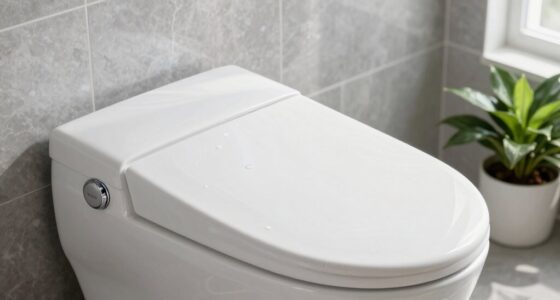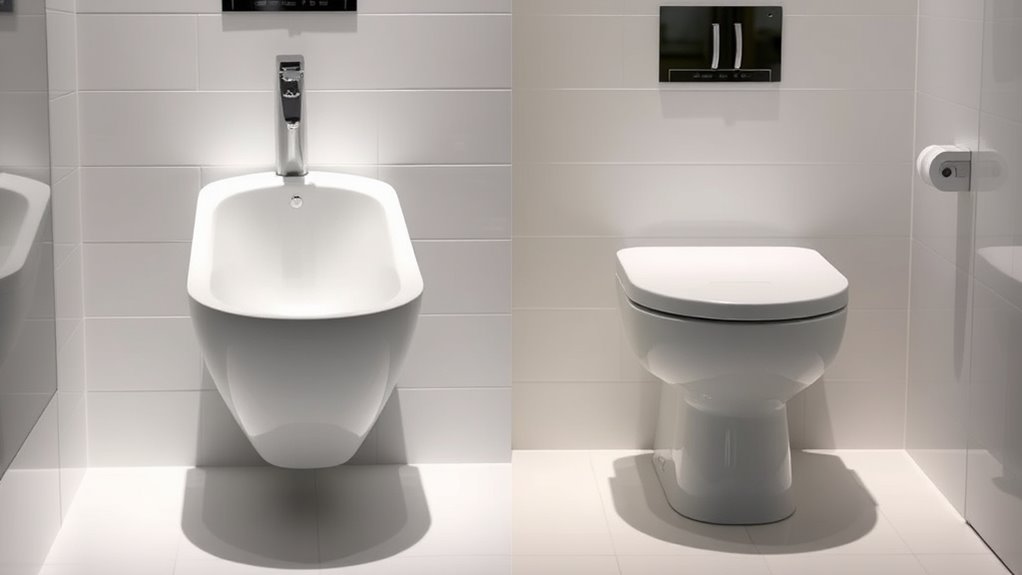

If you’re choosing between wall-mounted and floor-mounted toilets, think about your space and style. Wall-mounted models create a sleek, modern look, making your bathroom feel larger and more open. They also offer easier cleaning around the base. Floor-mounted toilets add a classic, sturdy feel and are simpler to install, especially if you have existing plumbing. To find out which fits your bathroom best, explore the details further below.

Get home appliances delivered free — and shop member deals
- Fast, free delivery on millions of items
- Access to Prime Big Deal Days deals on October 6–7
- Prime Video, Amazon Music and more included
Key Takeaways
- Wall-mounted toilets offer a sleek, modern look and create an illusion of more space in small bathrooms.
- Floor-mounted toilets have a traditional appearance and can visually anchor a classic bathroom style.
- Wall-mounted units maximize space and allow flexible height adjustments during installation.
- Floor-mounted toilets are easier to install and better suited for existing plumbing setups.
- Wall-mounted toilets require complex wall prep, while floor-mounted models are simpler to install and maintain.

When choosing a toilet, understanding the differences between wall-mounted and floor-mounted models can help you make the best decision for your bathroom. One key factor to contemplate is how each type affects your space and style. Wall-mounted toilets are sleek and modern, creating an illusion of more space because they don’t touch the floor. They’re ideal if you’re aiming for a minimalist look or want to maximize every inch of your bathroom. Floor-mounted toilets, on the other hand, are traditional and tend to be more substantial visually, which can anchor a classic or conventional style.
Wall-mounted toilets save space and offer a sleek, modern look, perfect for minimalist bathrooms.
However, the decision isn’t just about aesthetics; it also involves practical considerations like installation challenges and cleaning accessibility. Wall-mounted toilets require more complex installation because they involve securely anchoring the unit to the wall and ensuring the in-wall tank is properly set up. This process can be tricky and often demands professional help, especially if your wall isn’t prepped for the additional weight and plumbing modifications. Once installed, though, they give a clean, uncluttered look, making cleaning easier since there are no nooks or crannies around the base. You can quickly wipe the floor underneath, which is a significant advantage if you prioritize hygiene and ease of maintenance.
In contrast, floor-mounted toilets are generally simpler to install, as they bolt directly to the floor and connect to existing plumbing without much hassle. If you’re a DIY enthusiast or working within a tight timeline, this can be a practical choice. Cleaning accessibility tends to be more straightforward as well, since the entire unit is at ground level. You can easily reach all sides for scrubbing, which is beneficial if you prefer a more thorough clean or have mobility issues.
When it comes to space, wall-mounted models excel in small bathrooms because they free up floor space and make the room appear larger. They also allow for flexible height adjustments during installation, which can improve comfort. Floor-mounted toilets, while less space-efficient, are more forgiving if your bathroom has uneven floors or existing plumbing that’s difficult to modify. Additionally, considering the building codes and permits required for different installation types can prevent legal issues down the line.
Ultimately, your choice will depend on your priorities: if you want a modern, spacious look and are prepared for more complex installation, a wall-mounted toilet is a smart choice. If you prefer simplicity, easier maintenance, and a traditional aesthetic, a floor-mounted model might suit your needs better. Either way, understanding these differences can help you create a bathroom that’s both functional and stylish.
As an affiliate, we earn on qualifying purchases.
Frequently Asked Questions
Are Wall-Mounted Toilets Easier to Install Than Floor-Mounted Ones?
You might think wall-mounted toilets are easier to install, but they actually involve more installation complexity due to structural requirements. You need to make certain your wall can support the unit’s weight and conceal the tank properly, which can be tricky. Floor-mounted toilets are simpler since they require minimal structural modifications. So, if you prefer straightforward installation, a floor-mounted toilet might be the better choice.
How Do Maintenance and Cleaning Differ Between the Two Types?
Imagine your bathroom as a well-tended garden—you want easy access to keep it pristine. With wall-mounted toilets, cleaning accessibility is a breeze since you can sweep underneath and around them, making maintenance complexity lower. Floor-mounted toilets, on the other hand, can hide dust and grime behind their base, making cleaning trickier. Overall, wall-mounted models simplify maintenance, giving you more time to enjoy your spotless space.
What Are the Cost Differences Initially and Over Time?
When comparing costs, you’ll find that installation costs for wall-mounted toilets are generally higher due to the need for wall reinforcement and specialized mounting hardware. Over time, long term expenses like maintenance and repairs might also be higher since accessing internal parts can be trickier. Floor-mounted toilets tend to have lower initial costs and easier access for repairs, making them more budget-friendly in the long run.
Can Wall-Mounted Toilets Be Installed in All Bathroom Layouts?
Imagine renovating a small powder room; you wonder if a wall-mounted toilet fits. The answer depends on your bathroom’s layout, plumbing accessibility, and aesthetics. Wall-mounted toilets work best in bathrooms with enough wall space and accessible plumbing behind the wall. In tight or complex layouts, installation becomes challenging. So, assess your space and plumbing setup first to determine if a wall-mounted toilet suits your bathroom design.
How Do Sound Levels Compare During Flushing?
When it comes to sound level comparison, wall-mounted toilets generally produce less flushing noise than floor-mounted models. You’ll notice a quieter flushing noise because the tank is often concealed within the wall, reducing the noise transmission. In contrast, floor-mounted toilets tend to generate more sound during flushing, as the tank and bowl are exposed. So, if you want a quieter bathroom experience, wall-mounted toilets are usually the better choice.
Conclusion
Choosing between wall-mounted and floor-mounted toilets is like selecting a piece of art—each brings its own personality and charm. Wall-mounted toilets symbolize sleek modernity, freeing up space and offering a minimalist aesthetic. Floor-mounted toilets, grounded and sturdy, represent tradition and reliability. Your choice reflects your style and needs, shaping your bathroom’s personality like a brushstroke on a canvas. Ultimately, whether you pick the soaring or the rooted, it’s your space to define and enjoy.
Fall Picks
fall essentials
As an affiliate, we earn on qualifying purchases.