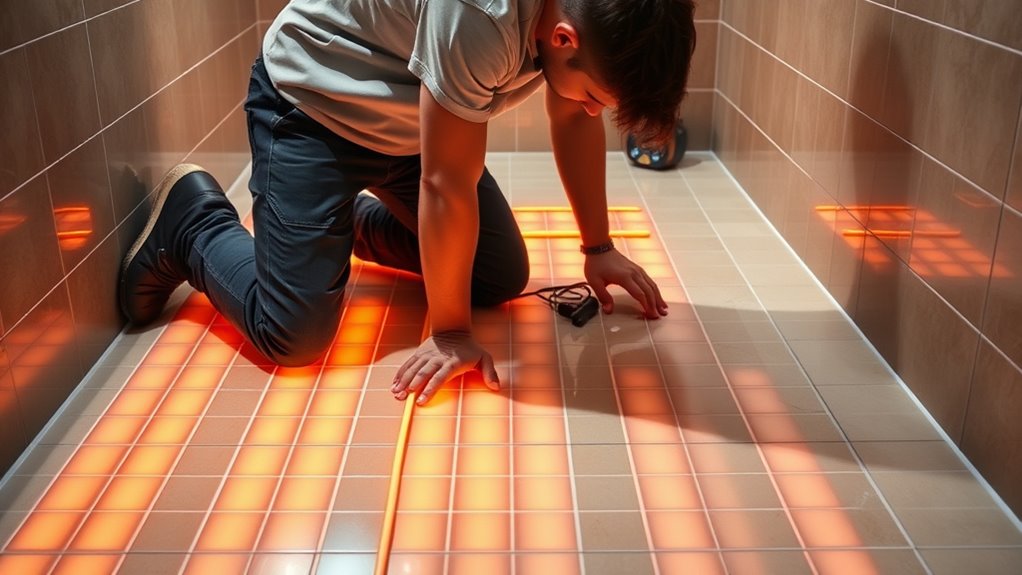

Installing a heated bathroom floor brings cozy comfort, boosts home value, and offers flexible design options. Electric systems heat quickly and let you zone control, saving energy, while hydronic systems provide long-term efficiency if you plan larger upgrades. However, costs vary based on the system and project scope, and installation can be complex. To make the best choice for your space and budget, explore the pros, cons, and tips detailed below.
Key Takeaways
- Heated bathroom floors provide enhanced comfort and luxury but involve higher upfront installation costs.
- Electric radiant systems are easier and quicker to install, while hydronic systems are more complex and costly.
- Proper insulation beneath the heating elements improves energy efficiency and reduces heat loss.
- Consider long-term energy costs; electric systems may increase bills without proper management, whereas hydronic systems can be more economical long-term.
- Professional installation and careful planning ensure optimal performance, safety, and increased home value.
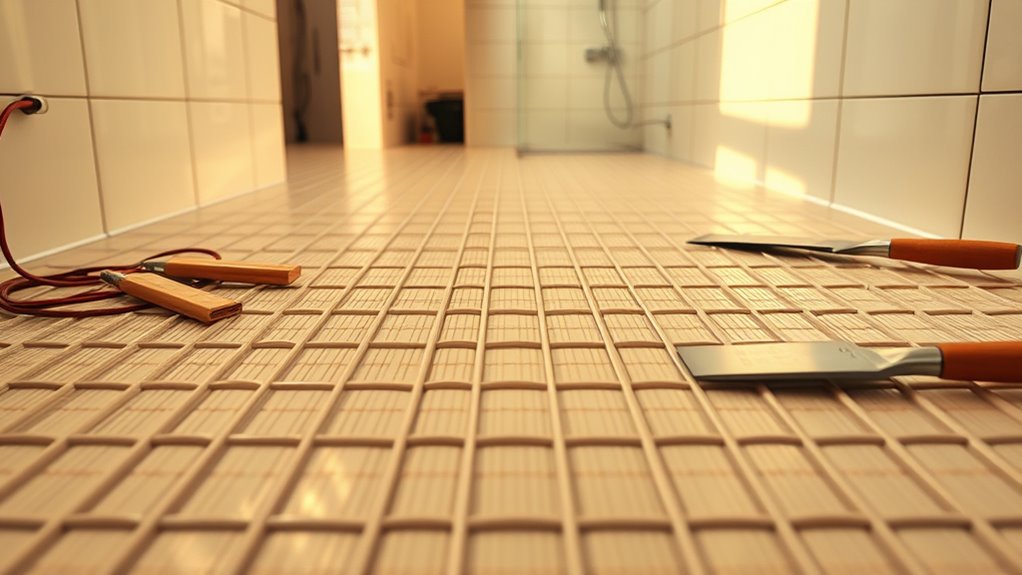
Installing a heated bathroom floor can transform your space into a cozy, comfortable retreat, especially during cold months. It’s a luxurious upgrade that can make stepping out of the shower or bath feel warmer and more inviting. Before you embark on the project, it’s important to consider the energy efficiency of the system and the installation costs involved. Electric radiant floor heating tends to be more energy-efficient for small spaces like bathrooms, since it heats up quickly and allows you to control the temperature precisely. However, the installation costs can vary widely depending on the system you choose, the size of your bathroom, and whether you’re replacing existing flooring or starting from scratch. Electric options often have lower upfront installation costs but might lead to higher energy bills over time, especially if not managed carefully. Conversely, hydronic systems, which use heated water circulated through pipes, generally involve higher installation costs but can be more cost-effective in the long run, especially if you’re heating multiple rooms with a single system.
When weighing installation costs, you need to factor in the price of the heating mats or cables, the labor, and any necessary modifications to your existing flooring. Electric mats are typically easier and quicker to install, often fitting under tile, stone, or other hard surfaces. This can reduce labor costs, but keep in mind that the overall expenses may still add up depending on your bathroom’s size. Hydronic systems require more extensive work, including plumbing and possibly a boiler, which can substantially increase initial costs but might save you money on energy in the long run if your home’s heating system is efficient. Additionally, considering the color accuracy of your heated floor’s surface material can impact the overall appearance and aesthetic appeal of your bathroom.
Energy efficiency is another critical aspect to reflect on. Electric systems tend to heat up faster and allow for zoned control, which means you only heat the bathroom when needed, saving energy. Proper insulation beneath the heating elements can also improve efficiency by preventing heat loss downward. On the other hand, hydronic systems, with their larger initial investment, often maintain consistent warmth and can be more economical if you have a whole-house heating system that supports them.
Ultimately, your choice depends on your budget, how often you use the bathroom, and your long-term goals for energy savings. While installation costs are upfront, consider the ongoing energy expenses and comfort benefits. With proper planning and installation, a heated bathroom floor can be a worthwhile investment that adds both comfort and value to your home.

BLARALA Electric Radiant Floor Heating System, 40 Sq.ft Electric Heated Floor Mats for Bathroom, Includes Programmable Thermostat, Heat Mat, Installation Monitor, and Temperature Sensors
LUXURY AND COMFORT: Heated floor system includes 40 sq. ft. (120 volt) floor heating mat, cable monitor/alarm, programmable…
As an affiliate, we earn on qualifying purchases.
As an affiliate, we earn on qualifying purchases.
Frequently Asked Questions
How Long Does It Take to Install a Heated Bathroom Floor?
The installation timeline for a heated bathroom floor typically takes one to two days, depending on the system and your space. You’ll start with flooring preparation, which involves cleaning and leveling the subfloor. Then, you install the heating system, followed by the flooring material. Proper preparation and planning help make certain a smooth process, so you can enjoy warm floors sooner without delays.
What Is the Average Cost of Installation?
Imagine warming your toes on a chilly morning—this cozy comfort comes with a certain investment. The average cost of installing a heated bathroom floor varies, usually between $6 and $12 per square foot, depending on materials and labor. When considering cost considerations, it’s wise to factor in your budget planning to guarantee you enjoy the luxury without overspending. Proper planning helps you balance comfort and affordability seamlessly.
Can I Install It Myself or Should I Hire a Professional?
You can attempt DIY installation if you’re comfortable with electrical work and tile setting, but it’s often best to hire a professional. Professional installation guarantees safety, proper setup, and compliance with local codes. If you’re inexperienced, DIY might lead to issues like uneven heating or electrical hazards. Weigh your skills and the complexity of your bathroom before deciding—sometimes, investing in a pro guarantees a smoother, safer installation.
Are There Specific Floor Types Compatible With Heated Floors?
Think of floor compatibility as a dance where every move matters. Not all materials perform well with heated floors. Tile, stone, and concrete are like seasoned dancers, thriving with warmth. Carpets and wood, however, are more like hesitant beginners, risking damage or inefficient heating. Material considerations are essential—you need a surface that can handle the warmth without warping or cracking, ensuring your heated floor becomes a harmonious addition.
How Energy-Efficient Are Heated Bathroom Floors?
Heated bathroom floors are quite energy-efficient, especially when you incorporate good thermal insulation. They warm the space directly, reducing the need for higher thermostat settings and cutting energy costs. By insulating properly, you prevent heat loss, leading to better energy savings. This efficient heating method ensures comfort without considerably increasing your energy bills, making it a smart choice for those looking to balance comfort and cost-effectiveness.

LuxHeat 20sqft Floor Heating Mat Kit – 120v in Floor Heating System – Complete Electric Radiant Heated Flooring System Includes Alarm, UDG Programmable Thermostat w/GFCI & Flooring Sensor
LUXURY AND COMFORT – Enjoy the Warmth of LuxHeat's easy-to-install Electric Floor Heating System. Heating Kit Includes: 20…
As an affiliate, we earn on qualifying purchases.
As an affiliate, we earn on qualifying purchases.
Conclusion
Thinking about installing a heated bathroom floor? While it might seem like a luxury, some believe it could save you money on heating in the long run by efficiently warming your space. Although not everyone agrees, many find the comfort worth the investment. Ultimately, whether it’s a smart choice depends on your priorities. So, consider all the pros and cons—after all, a warmer floor might just be the secret to a cozier bathroom experience.

Non-Slip Pad for Rugheat Under Rug Heated Mat, Small, 3 x 2 feet (fits Under a 2' x 3' Rug) Skid-Proof Pad for Foot Warmer, Heated Bathroom Mat, Thermal Insulation Improves RugHeat Performance
The Perfect RugHeat Heated Mat Companion – Our non-slip thermal insulation pad is specially designed for use with…
As an affiliate, we earn on qualifying purchases.
As an affiliate, we earn on qualifying purchases.

Startbuymore Central Control Box 8 Channel Hub For Wallmounted Boilers With Pump Output And Electric Valve For Zoned Heating Control
[OPTIMAL PERFORMANCE CONTROL HUB] This advanced 8-channel concentrator hub processes thermostat signals efficiently, ensuring smooth operation of floor…
As an affiliate, we earn on qualifying purchases.
As an affiliate, we earn on qualifying purchases.