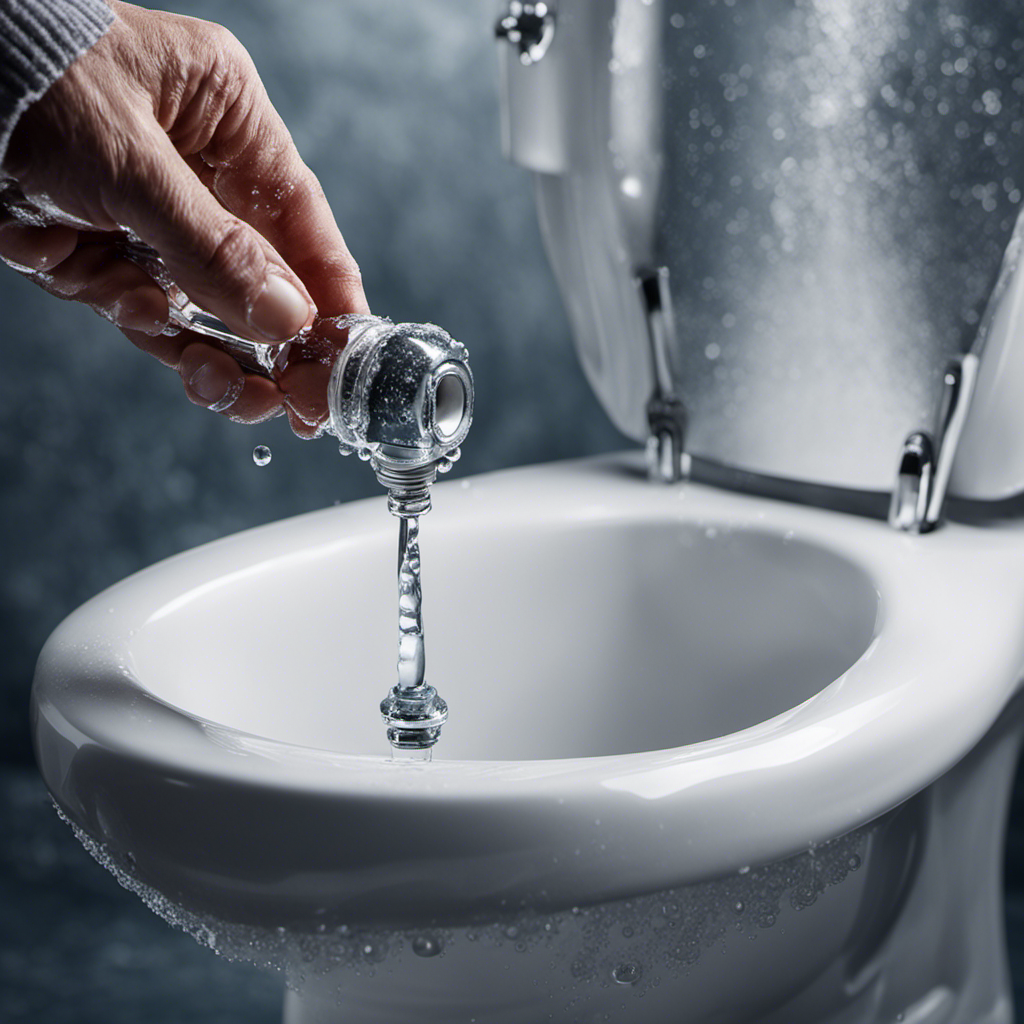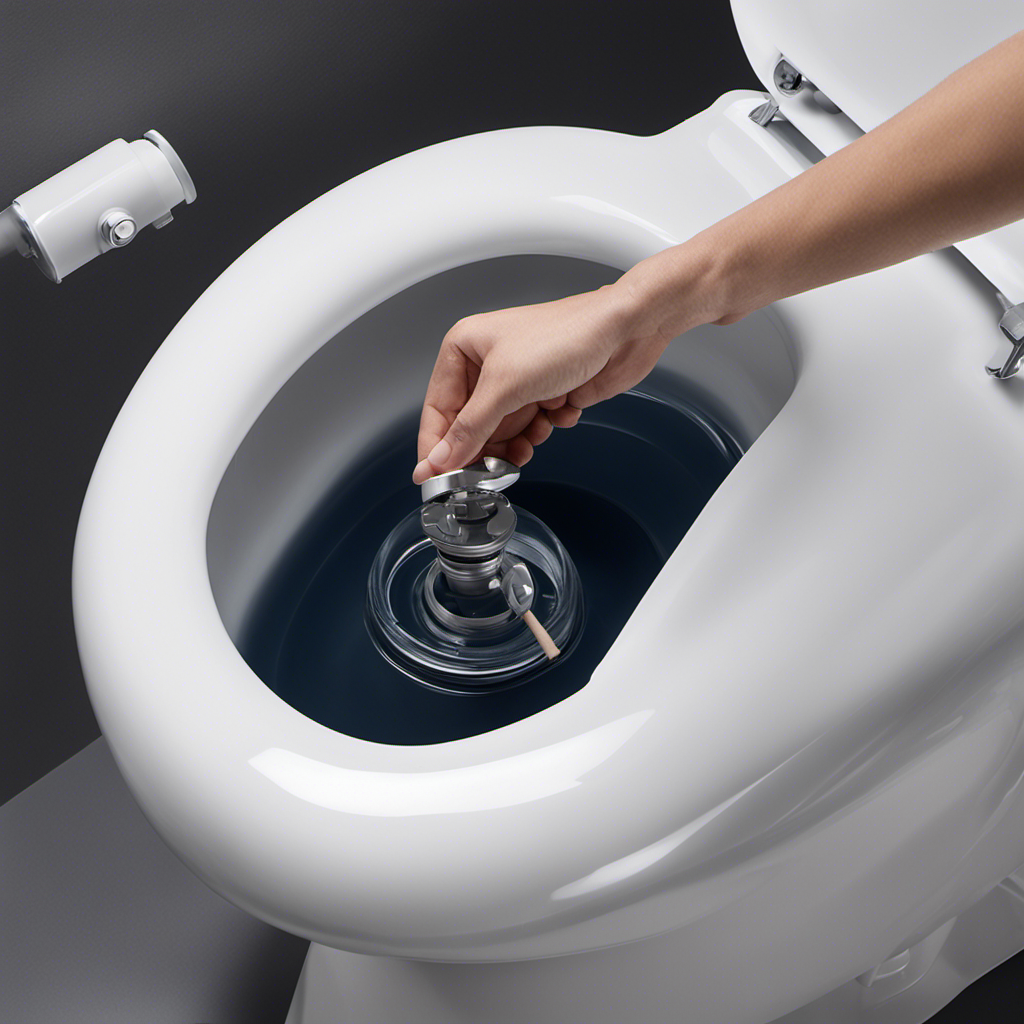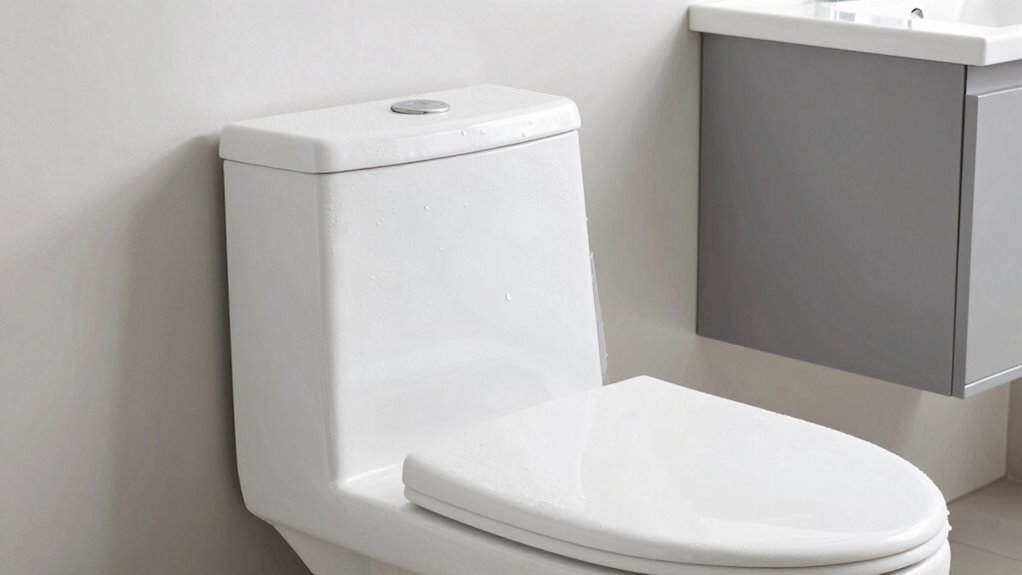

To stop your toilet tank from sweating, first tackle the humidity. Warm, humid air can lead to condensation on cold tank surfaces. Adjust the water temperature, improve ventilation with fans or open windows, and consider adding insulation to the tank. A foam liner can help stabilize the temperature. Regular maintenance of plumbing also prevents leaks that worsen the issue. Want to know more about effective strategies and when to call a plumber? Keep exploring your options!

Get home appliances delivered free with Prime
- Fast, free delivery on millions of items
- Prime Video, Amazon Music and more included
- Member-only deals all year
Key Takeaways
- Insulate the toilet tank with foam liners or wraps to minimize temperature fluctuations and reduce condensation.
- Improve bathroom ventilation by using exhaust fans or opening windows to lower humidity levels effectively.
- Adjust the water temperature in the tank to reduce the temperature difference that causes condensation.
- Regularly inspect plumbing for leaks and maintain fixtures to prevent additional moisture issues.
- Consider professional help for persistent sweating or complex plumbing issues that require expert intervention.
As an affiliate, we earn on qualifying purchases.
What Causes Toilet Tank Sweating?

Toilet tank sweating happens mainly when warm, humid air meets the cold surface of the tank. This condensation occurs because the temperature difference creates a perfect environment for moisture to form. High toilet humidity in your bathroom can exacerbate the problem, especially during hot showers or when the room isn’t well-ventilated. Additionally, condensation sources can include leaks in plumbing that cool the tank or water temperature inconsistencies. If your tank is filled with cold water, the surrounding warm air will naturally lead to sweating. Addressing these issues involves improving ventilation and potentially insulating the tank to keep the surface temperature more consistent, reducing condensation and making your bathroom more comfortable.
Identifying Signs Your Toilet Tank Is Sweating
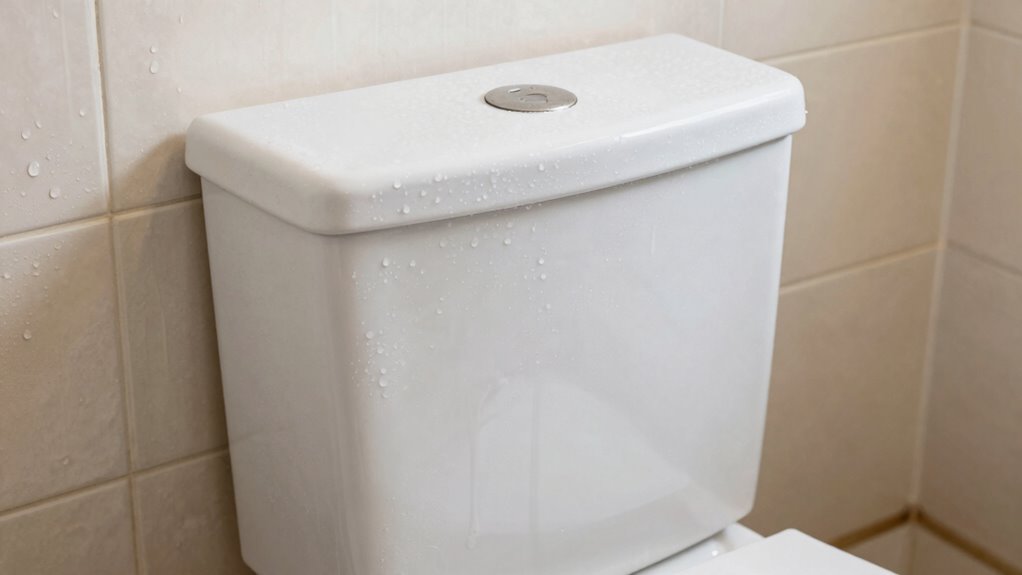
When you notice water pooling around the base of your toilet or dripping down the sides of the tank, it’s a clear sign that condensation is occurring. This sweating often happens due to high humidity levels in your bathroom, making it important to keep an eye out for other signs as well. Check for water spots on the walls or floor, and listen for any gurgling sounds, which might indicate that your toilet is struggling with excess moisture. Regular toilet maintenance also plays a vital role; if you’re frequently wiping away moisture, it’s time to address the underlying issue. Effective humidity control can drastically reduce condensation, helping you avoid damage to your bathroom and maintain a healthier environment.
Instant Fixes to Stop Toilet Tank Sweating
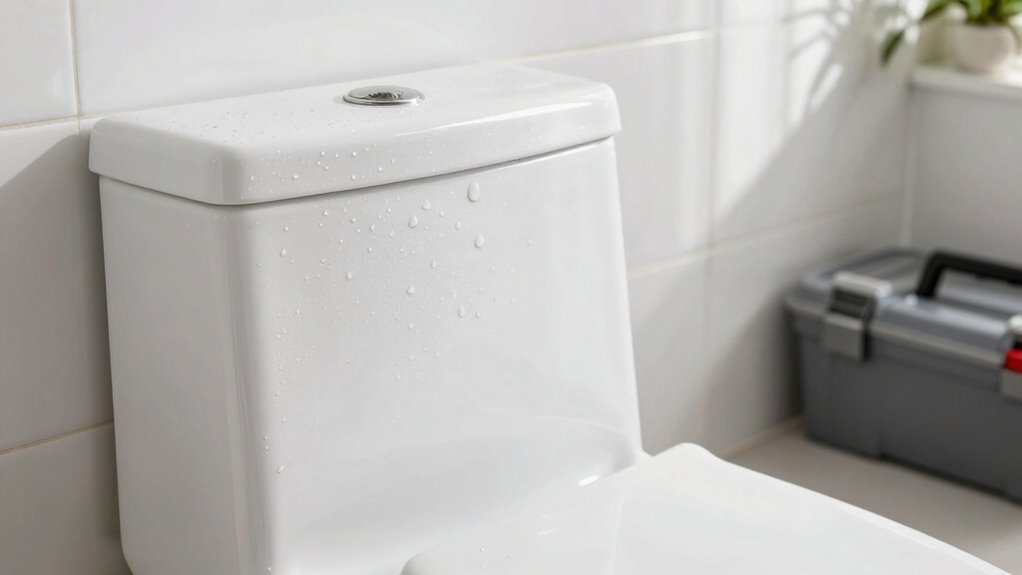
If you’re tired of dealing with a sweating toilet tank, there are several quick fixes you can try. First, consider adjusting the water temperature in your toilet tank. Colder water can lead to condensation, so using warm water can help reduce moisture. Next, improve air circulation in your bathroom. Open windows or use a fan to promote humidity reduction. You might also want to invest in bathroom insulation to keep the tank temperature more stable. Additionally, adding a toilet tank insulator can be a great condensation solution. Regular plumbing maintenance is essential, too, as leaks can increase humidity and exacerbate the sweating issue. Implement these strategies, and you’ll notice a significant difference in moisture control. Furthermore, understanding filtration/suction basics can aid in managing humidity levels more effectively in your bathroom.
How to Insulate Your Toilet Tank for Long-Term Solutions

Insulating your toilet tank can be a game-changer for long-term moisture control, especially in humid environments. Start by using tank insulation methods like foam tank liners or insulation wraps. These materials are specifically designed to minimize temperature fluctuations, effectively reducing condensation. You can also consider using a pipe insulation sleeve around the supply line since it helps maintain the water temperature. Additionally, improving indoor air quality can further reduce the overall humidity levels in your bathroom. Regularly checking and cleaning filters in air purifiers can help maintain optimal air quality, contributing to lower humidity. When applying these condensation reduction techniques, make sure of a snug fit to prevent gaps where moisture can escape. Furthermore, understanding toilet maintenance practices can further enhance the longevity of your insulation efforts. Once installed, regularly check the insulation to verify it’s intact and performing well. With these steps, you’ll noticeably cut down on toilet tank sweating, creating a more comfortable bathroom environment.
Control Temperature to Prevent Sweating
To prevent your toilet tank from sweating, start by insulating it effectively. You can also adjust the temperature in your bathroom to reduce humidity levels. By controlling these factors, you’ll keep condensation at bay and maintain a drier environment.
Insulate Toilet Tank
As temperatures fluctuate between your bathroom and the cold water in your toilet tank, condensation can form, leading to that annoying sweating issue. One effective solution is to insulate your toilet tank. By using foam insulation or specially designed toilet tank wraps, you can create a barrier that helps maintain a consistent temperature inside the tank. This insulation minimizes the contact between warmer air and the cold toilet tank materials, greatly reducing condensation. Not only does this enhance condensation prevention, but it also helps keep your bathroom dry and comfortable. Additionally, ensuring that your insulation is weatherproof can further enhance its effectiveness and durability. Installing insulation is a simple DIY project that can make a big difference in stopping that pesky sweating for good. Furthermore, using smart furniture options can also help optimize your bathroom space while addressing moisture issues. Incorporating ergonomic design in your bathroom layout can further enhance your overall comfort while preventing condensation. Additionally, maintaining indoor humidity levels can significantly reduce the likelihood of condensation forming. To create a truly calm and organized bathroom environment, focus on implementing simple strategies that ensure functionality and comfort. Don’t let condensation ruin your bathroom experience!
Adjust Bathroom Temperature
While you might not think about it, adjusting the temperature in your bathroom can markedly reduce toilet tank sweating. By keeping your bathroom at a consistent temperature, you can control bathroom humidity, which is key in minimizing condensation. Here’s a simple guide to help with thermostat adjustments:
| Temperature Setting | Humidity Level | Effect on Tank Sweating |
|---|---|---|
| Below 65°F | High | Increased sweating |
| 65°F – 70°F | Moderate | Reduced sweating |
| Above 70°F | Low | Minimal sweating |
Try setting your thermostat to a comfortable level, ideally above 70°F, to help maintain a drier environment. You’ll notice a significant decrease in tank sweating, making your bathroom more pleasant. Additionally, maintaining consistent temperature control can improve overall comfort and efficiency in your home, leading to better lifestyle choices. Using smart controls can further optimize your HVAC system for energy savings and enhanced comfort. Moreover, implementing smart home technology can automate temperature adjustments, ensuring a balanced climate throughout your living space. Keeping your bathroom well-ventilated can also reduce humidity levels, which contributes to preventing condensation on your toilet tank.
How to Pick the Best Ventilation for Your Bathroom
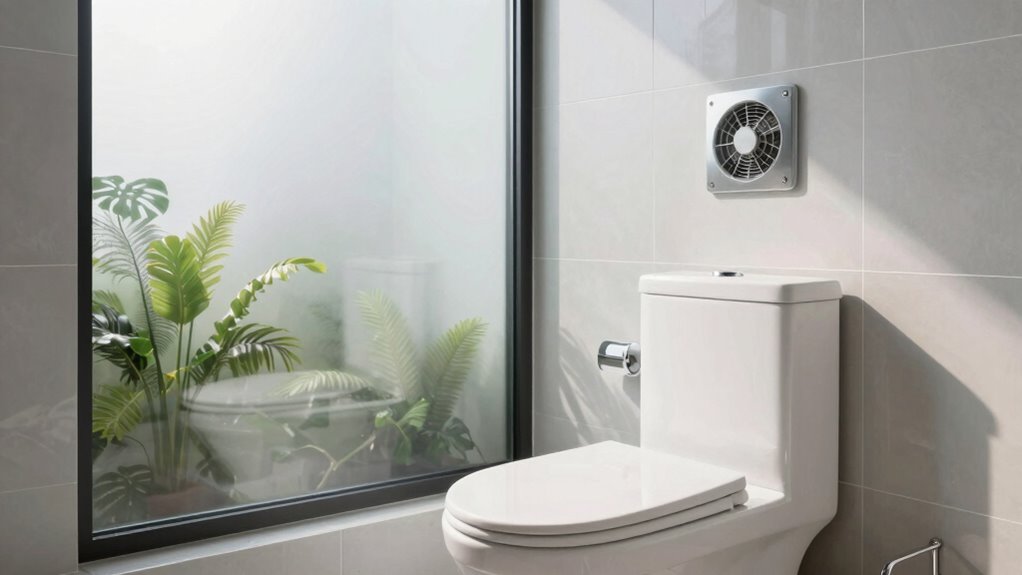
How can you guarantee your bathroom stays free from excess moisture and odors? The right ventilation is key. Start by choosing bathroom fans that fit your space and needs. Look for models with sufficient airflow, measured in CFM (cubic feet per minute); a good rule of thumb is at least one CFM per square foot of bathroom area. Proper ventilation can also enhance garage security by reducing humidity levels that might lead to mold growth elsewhere in your home. Additionally, implementing effective ventilation strategies supports caregiving choices by creating a healthier living environment for both caregivers and those they assist. Maintaining good ventilation can improve indoor air quality, which is essential for overall health. Consider features like noise levels, energy efficiency, and built-in timers to enhance humidity control. Adding a humidity sensor can automatically activate the fan when moisture rises, ensuring your bathroom stays dry. Moreover, effective moisture control can help prevent damage to plumbing fixtures over time. Finally, install the fan near the shower or tub for ideal performance. With the right ventilation setup, you can effectively combat condensation and maintain a fresh, comfortable bathroom environment. Additionally, consider using acoustic drum shields to help absorb sound and reduce echo, which can further improve the overall atmosphere in your bathroom.
DIY vs. Hiring a Pro: Which Is Right for You?
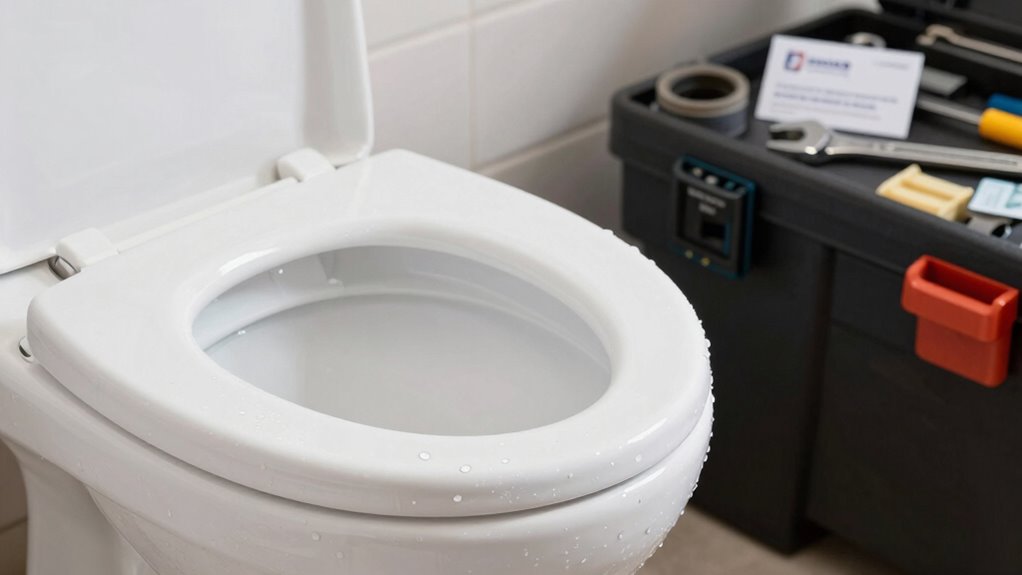
Choosing the right approach for fixing a sweating toilet tank often comes down to whether you want to tackle the job yourself or bring in a professional. If you’re comfortable with basic plumbing tasks, DIY methods like insulating the tank or adjusting the water temperature can be effective. These solutions are usually cost-effective and give you a hands-on experience.
On the other hand, if you’re unsure about the process or lack the necessary tools, professional solutions might be the better route. Hiring an expert guarantees the job’s done right and can save you time and frustration. Weigh your comfort level and budget to decide which option suits you best—whether it’s a DIY fix or a call to a pro.
Preventative Tips for a Dry Bathroom
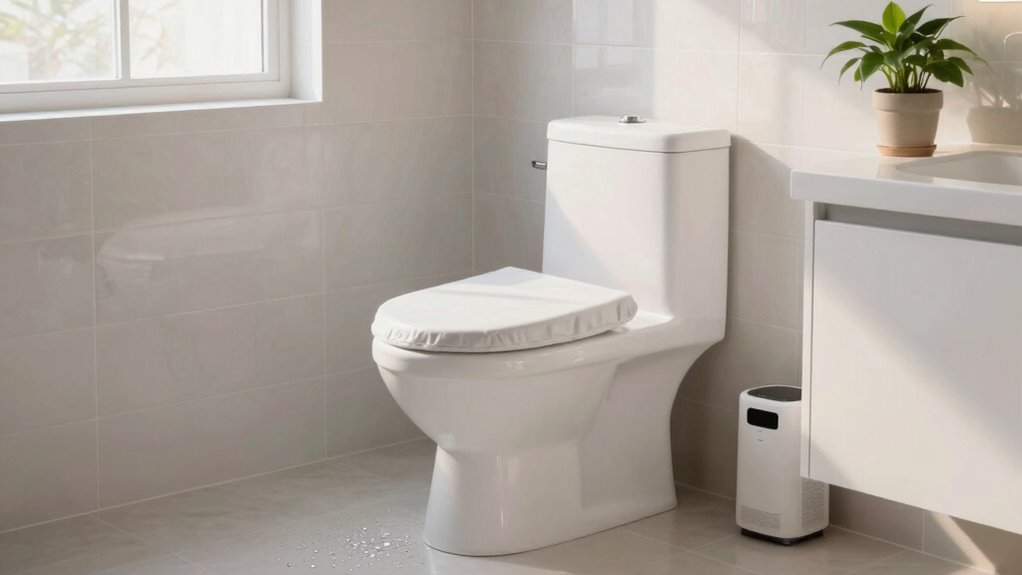
To keep your bathroom dry and free from moisture issues, start by addressing ventilation. Good airflow is essential for effective moisture control. Here are four tips to enhance your bathroom design and prevent condensation:
- Install an Exhaust Fan: Use a fan that’s appropriately sized for your space to quickly eliminate humidity. This is similar to how food truck ventilation is crucial for maintaining optimal conditions in a mobile kitchen. Proper ventilation can also help mitigate excess humidity that contributes to condensation.
- Open Windows: If possible, let fresh air circulate by opening windows during and after showers. Regular air circulation can significantly reduce moisture buildup.
- Use Moisture-Resistant Materials: Opt for tiles and paint designed to resist moisture, minimizing dampness. This choice can contribute to a more sustainable living environment by reducing the need for frequent repairs.
- Keep Towels Dry: Hang wet towels outside the bathroom to reduce humidity levels.
Additionally, maintaining indoor air quality is crucial for a healthier living environment, as excess moisture can lead to mold and other allergens.
When to Call a Plumber for Toilet Issues?
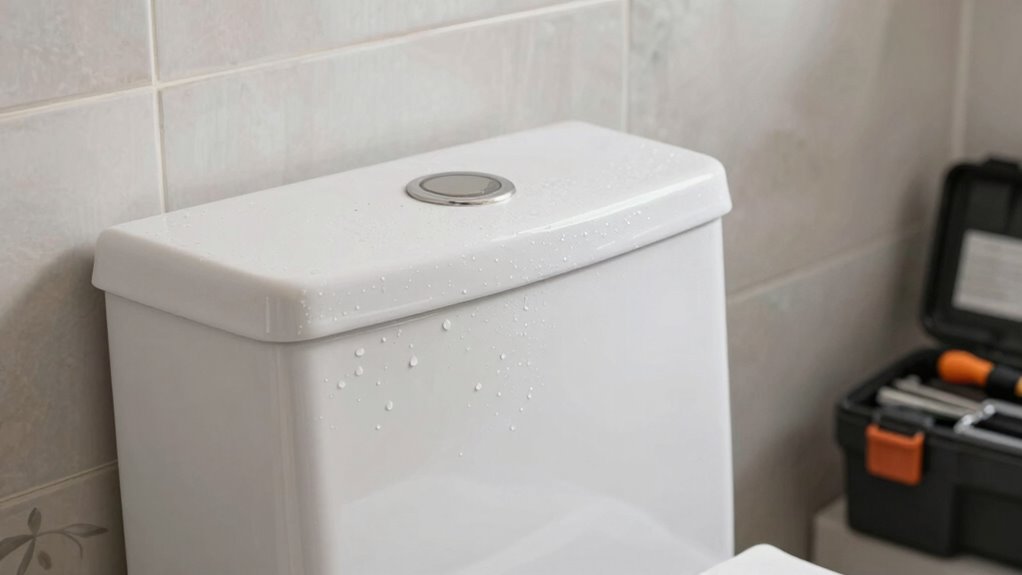
While minor toilet issues can often be fixed with a little DIY effort, there are times when it’s best to call a plumber. If you notice persistent leaks, strange noises, or if your toilet won’t flush properly, don’t hesitate to get professional help. These could signal underlying problems that require expert attention. Additionally, if you’re facing plumbing emergencies like a complete toilet shutdown or severe water damage, you need to act fast. Regular toilet maintenance is essential, but sometimes, what seems like a small issue can escalate quickly. Trust your instincts—if something feels off or complicated, it’s wise to let a professional handle it. Your home—and peace of mind—will thank you.
Maintaining Your Bathroom to Prevent Future Problems
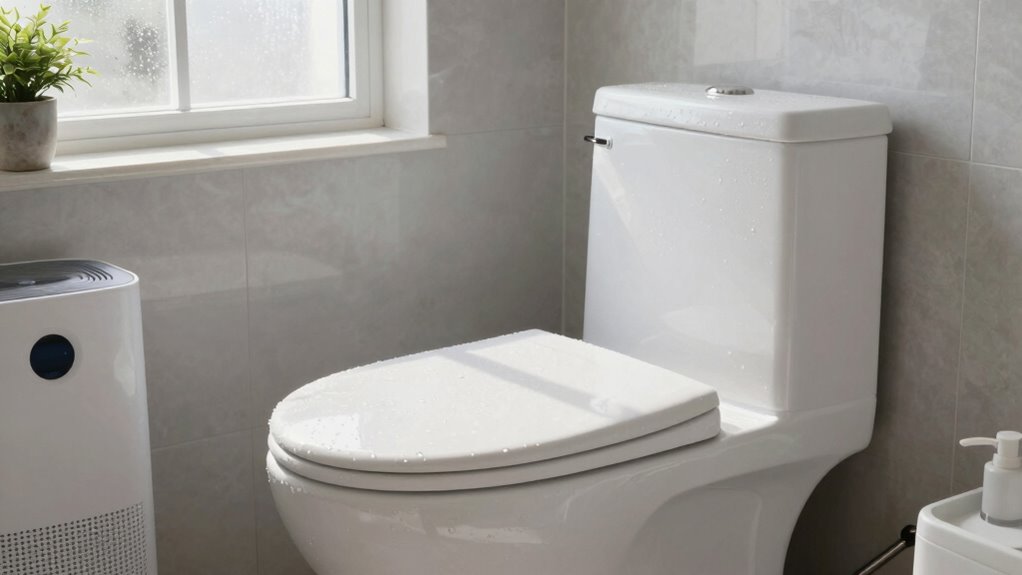
Regular maintenance of your bathroom can save you from costly repairs down the line. To guarantee bathroom cleanliness and effective moisture control, follow these steps:
- Check for leaks: Regularly inspect pipes and fixtures for any signs of leakage.
- Ventilation: Use exhaust fans or open windows to reduce humidity levels after showers.
- Clean regularly: Wipe surfaces, especially around the toilet and sink, to prevent mold and mildew growth.
- Inspect caulking: Check and replace worn caulk around tubs and sinks to keep moisture at bay.
Additionally, consider using non-toxic cleaning solutions to ensure a safe and healthy environment in your bathroom.
Frequently Asked Questions
Can Toilet Tank Sweating Lead to Mold Growth in My Bathroom?
Yes, toilet tank sweating can lead to mold growth in your bathroom. When condensation forms, it creates a damp environment that mold thrives in. To guarantee bathroom hygiene, it’s essential to address this issue promptly. You can start with mold prevention techniques, like insulating your toilet tank or using a dehumidifier. Keeping the bathroom well-ventilated also helps reduce moisture. By taking these steps, you can maintain a healthier space free from mold.
Is Toilet Tank Insulation Safe for All Types of Toilets?
Yes, toilet tank insulation is generally safe for all types of toilets. It helps with condensation prevention by creating a barrier that keeps the tank’s temperature stable. When you insulate your toilet tank, you reduce the risk of sweating, which can lead to mold and mildew growth. Just make certain to choose insulation materials that are non-toxic and moisture-resistant to guarantee safety and effectiveness for your specific toilet model.
How Often Should I Check for Toilet Tank Sweating?
You should check for toilet tank sweating at least once a month. You never know when that pesky condensation might start creeping in! Keeping an eye on your tank is key to effective toilet maintenance. If you notice moisture, consider implementing some condensation prevention strategies, like adding insulation. Regular checks can save you from potential damage and keep your bathroom comfortable. So, don’t let that water surprise you—stay proactive!
Will Using a Dehumidifier Help With Toilet Tank Sweating?
Using a dehumidifier can definitely help with toilet tank sweating. Its effectiveness lies in moisture reduction, which lowers humidity levels in your bathroom. As the air dries out, the temperature difference between the tank and the surrounding air decreases, reducing condensation. You’ll notice less sweating and a more comfortable environment. Just make sure to choose a unit suitable for your bathroom size for the best results.
Can I DIY Insulation if My Toilet Tank Is an Unusual Shape?
Yes, you can definitely DIY insulation for unusual tank shapes! Start by measuring the tank and cutting foam board or insulation sheets to fit. Use adhesive to secure the pieces, ensuring they cover all surfaces. You might also consider using reflective insulation for added efficiency. Don’t forget to seal any gaps with tape to prevent moisture from seeping through. With these DIY insulation techniques, you’ll effectively reduce condensation and keep your bathroom drier.
Conclusion
By tackling toilet tank sweating, you’re not just fixing a pesky problem—you’re transforming your bathroom into a cozy sanctuary. Think of it like a gardener nurturing plants: with care and the right conditions, you can cultivate a space that thrives. Just as plants flourish with proper watering and sunlight, your bathroom can flourish with the right temperature control and insulation. Take the steps outlined, and soon you’ll have a dry, comfortable oasis every time you step inside.
Halloween Picks
halloween
As an affiliate, we earn on qualifying purchases.