
TL;DR

Get home appliances delivered free with Prime
- Fast, free delivery on millions of items
- Prime Video, Amazon Music and more included
- Member-only deals all year
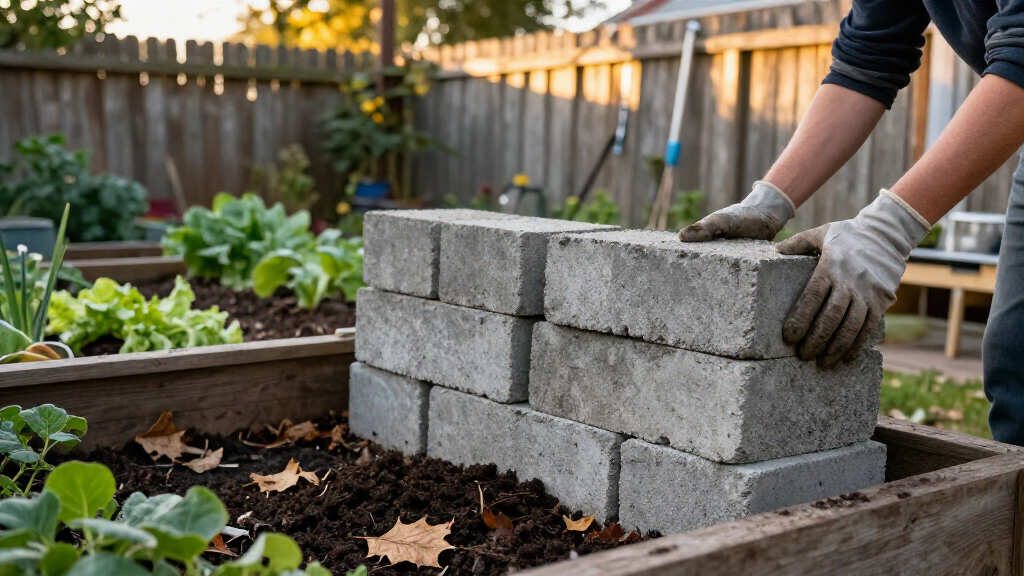
A Hunker article describes building a backyard compost enclosure from roughly 30 to 35 concrete blocks, stacked without mortar. The open-front design allows access for turning and checking compost, while gaps or inward-facing block cavities allow airflow; costs, local rules and long-term performance depend on the site and materials.
Hunker has outlined a do-it-yourself compost enclosure made from about 30 to 35 concrete blocks, stacked without mortar. The design leaves the front open for handling the pile and uses the blocks’ hollow cavities or spaces between them to admit air, offering gardeners a sturdy alternative to bins made from materials such as pallets, cardboard or plastic.
The report says a single enclosure can be assembled in less than a day, though the actual time will vary with the builder and site. Its suggested layout starts with a back row of four to five blocks, followed by side walls built from additional blocks. The front is left open so gardeners can add material, turn the pile and check its condition, including its temperature.
Additional rows are stacked to build the walls, with the report suggesting about four rows at the back and side walls that taper toward the front. It recommends staggering the blocks rather than aligning every joint. For airflow, the hollow sides can face inward; alternatively, gaps can be left between blocks. Those choices affect the layout and should be balanced with the need for a stable stack.
For sourcing, Hunker suggests checking local listings such as Facebook Marketplace and Craigslist, asking construction sites or junk haulers about surplus blocks, and contacting Habitat ReStore locations. If used blocks are unavailable, the article cites new 8-by-8-by-16-inch blocks priced at less than $3 each at Home Depot at the time of its report. That price is a source-specific example, not a current quote; availability and cost can vary.
A Reusable Frame for Backyard Compost
The proposal matters to gardeners who want a composting space that can be rearranged or expanded without building a permanent structure. Stacked blocks avoid the cutting and fastening involved in some wood-and-wire projects, while the open front provides access for routine work. The report also says extra sections can be added if a gardener has more blocks and wants to manage separate piles.
The design does not, by itself, guarantee faster decomposition or a successful compost pile. Hunker links airflow to the needs of aerobic bacteria, but composting also depends on the materials, moisture, pile size and maintenance. The practical benefit is a robust enclosure option; its suitability depends on the available space, safe placement and the gardener’s ability to manage the pile.
8 x 8 x 16 inch concrete cinder blocks
As an affiliate, we earn on qualifying purchases.
As an affiliate, we earn on qualifying purchases.
How the Block Design Works
Backyard composting turns organic waste into a soil amendment and can keep some household and garden scraps out of landfills. The Hunker article presents the block structure as one of several do-it-yourself approaches, contrasting it with enclosures made from pallets, cardboard, buckets or bags. It focuses on the construction method rather than setting out a full guide to what can or cannot be composted.
Unlike a structure joined with mortar, the suggested enclosure relies on the weight and placement of the blocks. That makes it possible to change the arrangement, but it also means the finished stack must be set on a suitable, stable surface. The source does not give engineering specifications, a site-preparation method or a universal block count for every garden; its estimate of 30 to 35 blocks applies to the example single enclosure.
““about 30 to 35 concrete blocks””
— Hunker
Costs and Site Conditions Vary
The article does not provide a dated price check, so the cited retail cost should not be treated as current. It also does not specify dimensions for the finished enclosure, the weight of the blocks, the surface needed beneath them or how the stack performs in different weather and soil conditions. Readers would need to assess their own yard and confirm that the arrangement is stable before filling it.
The source describes the airflow benefits of hollow blocks or gaps but does not compare decomposition times with other bin designs. It also does not address local requirements, whether a particular location is appropriate, or detailed compost management. Those issues may vary by property and municipality.
Check Materials Before Building
Anyone considering the project can first measure the intended area and decide how much compost capacity is needed, then look for reusable blocks or check current retail prices. Before stacking, inspect the blocks and choose a level, suitable location; keep the opening accessible and preserve the airflow path described in the report. As compost is added, gardeners can turn it and monitor its condition through the open front.
The source does not identify a planned follow-up or testing of the design. The next practical steps are therefore local: confirm block availability and cost, check any relevant local guidance, and adapt the enclosure dimensions to the site rather than assuming the article’s materials estimate fits every yard.
Key Questions
How many concrete blocks does the design use?
Hunker estimates about 30 to 35 blocks for one enclosure. The number may change with the planned dimensions and layout.
Does the enclosure need mortar?
No. The report describes a mortar-free stack of blocks. It recommends staggering them for added stability, but does not provide engineering specifications for every site.
Why leave the front open?
An open front gives access to add and turn compost and check the pile, including its temperature.
How does air enter the compost enclosure?
According to Hunker, builders can face the blocks’ hollow sides inward or leave spaces between blocks. The report says these openings allow airflow, but does not quantify an effect on composting speed.
What might the blocks cost?
The article cited new 8-by-8-by-16-inch blocks at less than $3 each at Home Depot when it was written. It gives no publication date, so check current local prices; used blocks may also be available through listings, reuse stores or construction contacts.
Source: rss
NFL season / tailgating Picks
team gear
As an affiliate, we earn on qualifying purchases.