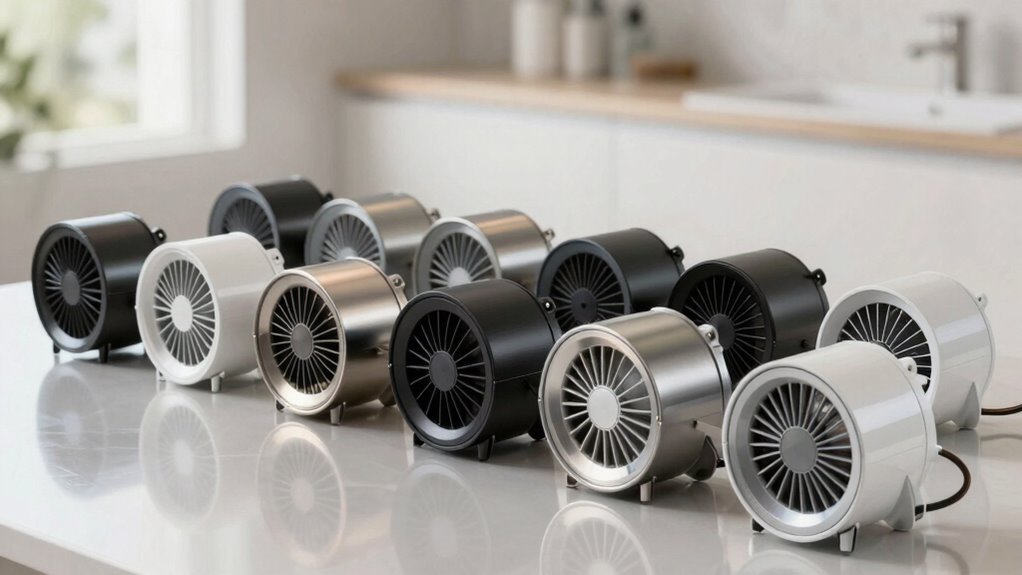

A duct booster fan for a bathroom vent can help when a long or restrictive duct run leaves moisture lingering, but fan size and controls need to suit the existing exhaust system. My best overall pick is the AC Infinity 4-Inch Automatic Booster Duct Fan for its pressure-switch control; the VENTS-US TT Silent 100 is a quieter-focused alternative, while the LEOKV 6-Inch Inline Duct Fan suits higher-airflow setups. The main tradeoff is between duct compatibility, airflow capacity, and convenient control—not simply choosing the fan with the largest CFM figure. A mismatched or oversized fan may add noise without fixing poor venting. Read on for the full comparison and guidance on choosing a fan that fits your bathroom duct.

Get home appliances delivered free with Prime
- Fast, free delivery on millions of items
- Prime Video, Amazon Music and more included
- Member-only deals all year
Complete the kit


Key Takeaways
- The AC Infinity’s pressure-switch control gives it a distinct role for buyers who want the fan to respond to airflow conditions rather than rely only on manual operation.
- The VENTS-US TT Silent 100 prioritizes quieter operation, while higher-CFM models such as the LEOKV 6-Inch favor greater airflow capacity; these solve different problems.
- Four-inch and six-inch models are not direct substitutes. Duct diameter and the capacity of the existing bathroom exhaust system should guide the choice before CFM comparisons.
- Speed controls add flexibility but require setup decisions. The VIVOSUN P6 and Hon&Guan let buyers adjust operation, while simpler fans may be easier to run without tuning.
- Some product names point to other ventilation jobs. The Dirlexal is marketed for dryer vent boosting, so bathroom buyers should verify its suitability for their installation rather than assume the label makes it a bathroom pick.
| VENTS-US TT Silent 100 4-Inch Inline Duct Fan |  | Best for Quiet, Adjustable Bathroom Venting | Duct size: 4 inches | Airflow: Up to 134 CFM; 100 CFM at 0.2 inches static pressure | Speeds: 2 | VIEW ON AMAZON | See Our Full Breakdown |
| AC Infinity 4-Inch Automatic Booster Duct Fan with Pressure Switch |  | Best for Automatic Duct Boosting | Duct size: 4 inches | Airflow: 230 CFM | Motor: Brushless EC | VIEW ON AMAZON | See Our Full Breakdown |
| Dirlexal 4-Inch Dryer Vent Booster Fan, 160 CFM |  | Best for Dryer Ducts, Not Bathroom Vents | Duct diameter: 4 inches | Airflow: 160 CFM | Voltage: 115 volts | VIEW ON AMAZON | See Our Full Breakdown |
| LEOKV 6-Inch Inline Duct Fan, 420 CFM |  | Best for High-Capacity 6-Inch Ducts | Duct diameter: 6 inches | Airflow capacity: 420 CFM | Power: 65 watts | VIEW ON AMAZON | See Our Full Breakdown |
| Voltset 4-Inch Inline Duct Fan, 280 CFM |  | Best for High Airflow in a 4-Inch Duct | Duct diameter: 4 inches | Airflow capacity: 280 CFM | Motor speed: 2,200 RPM | VIEW ON AMAZON | See Our Full Breakdown |
| VIVOSUN P6 6-Inch Inline Duct Fan with Speed Control, 345 CFM |  | Best for Adjustable High Airflow | Fan size: 6 inches | Airflow capacity: Up to 345 CFM | Noise level: 32 dB(A) | VIEW ON AMAZON | See Our Full Breakdown |
| VIVOSUN 4-Inch Metal Inline Exhaust Fan, 100 CFM |  | Best Compact Fixed-Speed Pick | Duct diameter: 4 inches | Airflow: 100 CFM | Speed: 2,930 RPM | VIEW ON AMAZON | See Our Full Breakdown |
| Hon&Guan 4-Inch Inline Booster Duct Fan with Speed Controller |  | Best Low-Power Adjustable Pick | Duct size: 4 inches | Airflow: 130 CFM | Motor speed: 4500 RPM | VIEW ON AMAZON | See Our Full Breakdown |
| duct booster fan for bathroom vent | Power | Noise level | Airflow | Voltage |
|---|---|---|---|---|
| VENTS-US TT Silent 100 4-Inch | 28 watts | 1.5 sones | Up to 134 CFM; 100 CFM at 0.2 inches static pressure | 120 volts |
| AC Infinity 4-Inch Automatic B | 31.44 watts | 60 dBA | 230 CFM | 12 volts |
| Dirlexal 4-Inch Dryer Vent Boo | — | — | 160 CFM | 115 volts |
| LEOKV 6-Inch Inline Duct Fan | 65 watts | — | — | — |
| Voltset 4-Inch Inline Duct Fan | 50 watts | 30 dB | — | — |
| VIVOSUN P6 6-Inch Inline Duct | 22 watts | 32 dB(A) | — | — |
| VIVOSUN 4-Inch Metal Inline Ex | 14 W | Below 30 dB | 100 CFM | 110/120 V |
| Hon&Guan 4-Inch Inline Booster | — | 26 dBA | 130 CFM | 100–240 V |
More Details on Our Top Picks
VENTS-US TT Silent 100 4-Inch Inline Duct Fan
For a bathroom vent where noise and a choice of airflow matter, the VENTS-US TT Silent 100 offers two speeds and a stated 1.5-sones noise level. Its airflow reaches 134 CFM, with 100 CFM specified at 0.2 inches of static pressure—a useful distinction when comparing fan claims for ducted installations. The brushless motor has thermal overload protection, and the removable central body can make access for maintenance less awkward than a fixed assembly. Compared with the Voltset 4-Inch Inline Duct Fan, this model gives you a second speed and is rated at lower airflow, so it suits buyers who value control over maximum capacity. The tradeoff is that speed changes require the unit’s toggle switch rather than a remote control, and it is intended for indoor use.
Pros:- Two speed settings let you choose between airflow levels
- Rated at 1.5 sones, with 100 CFM specified at 0.2 inches static pressure
- Removable central body supports access for maintenance
- Includes a power cord and mounting brackets
Cons:- Speed selection requires using the fan’s toggle switch
- Indoor use only
- Maximum airflow is lower than the 230 CFM AC Infinity booster
Best for: Bathroom owners with 4-inch ductwork who want a quieter fan with two manually selected airflow settings.
Not ideal for: Buyers who need automatic pressure-based activation, remote speed changes, or ventilation for an outdoor installation.
- Duct size:4 inches
- Airflow:Up to 134 CFM; 100 CFM at 0.2 inches static pressure
- Speeds:2
- Power:28 watts
- Voltage:120 volts
- Noise level:1.5 sones
- Motor:Brushless, with thermal overload protection
- Mounting:Inline within ductwork; power cord and mounting brackets included
Our verdict“Choose this 4-inch fan if quieter operation and two manual speed options matter more than automatic control or maximum airflow.”
AC Infinity 4-Inch Automatic Booster Duct Fan with Pressure Switch
The AC Infinity 4-Inch Automatic Booster stands apart from manually controlled bathroom fans by using a differential pressure switch to activate when airflow conditions call for a boost. That automatic response can suit an extended or restricted duct run where a fan that runs only when needed is preferable to changing a switch by hand. Its brushless EC motor offers five PWM speed levels, giving more adjustment than the two-speed VENTS-US TT Silent 100. The listed 230 CFM also exceeds that model’s maximum rating, though airflow figures alone do not establish performance in a particular duct. A key tradeoff is the listed 60 dBA noise level, which may be less appealing near a quiet bathroom. It runs on 12 volts and needs corded electric power, so buyers should check their installation and control setup before choosing it.
Pros:- Differential pressure switch activates the fan automatically
- Five PWM-controlled speed levels allow airflow adjustment
- Designed to boost airflow through restricted HVAC ducting
- Can be mounted in different orientations
Cons:- Listed noise level is 60 dBA
- Uses 12-volt corded electric power, so the setup may not suit every installation
- More control features than needed for a short, straightforward bathroom duct
Best for: Homeowners with a long or restrictive 4-inch bathroom duct who want pressure-triggered operation and several speed settings.
Not ideal for: People prioritizing a low stated noise level or seeking a simple 120-volt fan with manual switching.
- Duct size:4 inches
- Airflow:230 CFM
- Motor:Brushless EC
- Speeds:5 PWM-controlled levels
- Power:31.44 watts
- Voltage:12 volts
- Noise level:60 dBA
- Dimensions:6.9 x 11.9 x 7.4 inches
Our verdict“Pick this model for a restrictive duct run where automatic pressure-triggered boosting and adjustable speeds outweigh its noise and power-setup tradeoffs.”
Dirlexal 4-Inch Dryer Vent Booster Fan, 160 CFM
The Dirlexal PBF1 is designed around dryer ventilation, not routine bathroom exhaust, so I would keep it off a bathroom-focused shortlist unless the project specifically involves a dryer duct. Its automatic start and stop with the dryer, lint trap with a view window, and clog and overheat alerts address lint buildup and dryer operation—needs that the bathroom-oriented VENTS-US TT Silent 100 and Voltset do not target. A remote status panel may also help when the fan is hard to reach. The 160 CFM rating is lower than the AC Infinity’s listed 230 CFM, but airflow is only one part of this product’s dryer-specific fit. The downside for a bathroom buyer is that these dryer features do not establish suitability for bathroom moisture or controls. At 12.2 pounds, it is also heavier than the other 4-inch options listed here.
Pros:- Starts and stops automatically with the dryer
- Lint trap has a clear view window
- Remote status panel supports hard-to-reach installations
- Includes clog and overheat alerts
Cons:- Designed for dryer ducts rather than bathroom exhaust
- Weighs 12.2 pounds, adding installation demands
- 115-volt plug-in setup requires a nearby power source
Best for: Homeowners addressing a long or winding 4-inch dryer duct who want automatic dryer-linked operation and lint monitoring.
Not ideal for: Bathroom renovators seeking a fan specifically suited to bathroom exhaust; this model is described for dryer ducts and includes dryer-focused controls.
- Duct diameter:4 inches
- Airflow:160 CFM
- Voltage:115 volts
- Weight:12.2 pounds
- Dimensions:11.34 x 6.3 x 12.91 inches
- Installation:Screw-in; vertical or horizontal mounting
- Included components:Two 4-inch duct connectors, extension cord, indicator board, two filters, and booster fan
- Warranty:1 year
Our verdict“Choose the Dirlexal for a long dryer duct with lint-monitoring needs, but skip it for a standard bathroom vent.”
LEOKV 6-Inch Inline Duct Fan, 420 CFM
For a bathroom system built around 6-inch ductwork, the LEOKV offers a much higher stated capacity than the 4-inch fans here: up to 420 CFM. That makes it the high-volume option in this group, but it is not a drop-in replacement for a 4-inch duct booster. Its mixed-flow design is intended to reduce noise, though no specific noise figure is supplied, so I would not treat that claim as proof of quiet operation. Compared with the VENTS-US TT Silent 100, this fan provides a larger duct connection and far greater listed airflow, but gives up speed choice: it has only one setting. The plastic housing and blades also make it a less substantial-feeling choice than buyers seeking a metal construction may prefer. It is an indoor, corded-electric model with brackets for horizontal or vertical mounting.
Pros:- Listed airflow capacity of 420 CFM
- 6-inch duct connection suits larger duct systems
- Mounting brackets support horizontal or vertical installation
- Mixed-flow design is intended to reduce noise
Cons:- Only one speed setting
- Plastic housing and blades
- Indoor use only and not a match for 4-inch ductwork
Best for: Bathroom owners with compatible 6-inch ductwork who need a single-speed, high-capacity inline fan.
Not ideal for: Anyone with 4-inch ducting, a need for adjustable speeds, or a preference for metal housing and blades.
- Duct diameter:6 inches
- Airflow capacity:420 CFM
- Power:65 watts
- Motor type:AC
- Speeds:1
- Material:Plastic
- Dimensions:6 x 12 x 8 inches
- Mounting:Inline duct mount; brackets for horizontal or vertical installation
Our verdict“Choose the LEOKV only if your bathroom duct is 6 inches and high airflow matters more than speed control or metal construction.”
Voltset 4-Inch Inline Duct Fan, 280 CFM
The Voltset 4-Inch Inline Duct Fan pairs a compact 4-inch connection with a listed 280 CFM capacity, making it the high-airflow choice among the 4-inch bathroom-vent candidates here. Its stated 30 dB noise level may appeal to buyers comparing it with the AC Infinity, whose listed noise level is 60 dBA, though those figures use different units and should not be treated as a direct apples-to-apples comparison. Quick-release clips and mounting brackets can simplify access and installation, while the fan can serve intake or exhaust setups. The main compromise is control: unlike the two-speed VENTS-US TT Silent 100, the Voltset has only one power level. Its 50-watt draw is also higher than that model’s 28 watts, and its plastic construction and indoor-only use narrow its fit.
Pros:- Listed airflow capacity reaches 280 CFM in a 4-inch duct
- Stated noise level is 30 dB
- Suitable for intake or exhaust ventilation
- Includes quick-release clips and mounting brackets
Cons:- One power level limits airflow adjustment
- Uses 50 watts, compared with 28 watts for the two-speed VENTS-US TT Silent 100
- Plastic construction and indoor-only use
Best for: Bathroom owners with 4-inch ductwork who prioritize high stated airflow and want a fan that can serve intake or exhaust.
Not ideal for: Buyers who want multiple speeds, lower listed power use, or an installation rated for outdoor use.
- Duct diameter:4 inches
- Airflow capacity:280 CFM
- Motor speed:2,200 RPM
- Noise level:30 dB
- Power:50 watts
- Motor type:Brushless
- Material:Plastic
- Dimensions:6 x 7 x 9 inches
Our verdict“Choose the Voltset for high stated airflow from a 4-inch inline fan if a single speed and indoor-only construction fit your setup.”
VIVOSUN P6 6-Inch Inline Duct Fan with Speed Control, 345 CFM
The P6 is the strongest fit here for a bathroom with a longer duct run or stubborn airflow, offering up to 345 CFM in a 6-inch format. Its stepless dial control lets you reduce output when full airflow is unnecessary, unlike the fixed-speed VIVOSUN 4-Inch Metal Inline Exhaust Fan. At a stated 32 dB(A), it is designed for quieter operation, though its larger capacity and duct size may be more than a small bathroom needs. The brushless EC motor draws 22 watts, while the ABS housing and PBT blades trade some ruggedness for a lightweight build. Compared with the Hon&Guan 4-Inch Inline Booster Duct Fan, this is the better match when duct diameter and airflow capacity take priority over low power use.
Pros:- Airflow capacity up to 345 CFM
- Stepless speed dial supports output adjustment
- Brushless EC motor uses 22 watts
- Stated noise level of 32 dB(A)
Cons:- 6-inch duct size may not fit common 4-inch bathroom vent connections
- ABS housing and PBT blades are less rugged than metal components
- Product information also refers to three power levels, which may confuse expectations about stepless control
Best for: Homeowners with a 6-inch bathroom duct or a longer duct run who want adjustable airflow.
Not ideal for: Small bathrooms with 4-inch ducting or buyers who prioritize metal construction over a lighter plastic fan.
- Fan size:6 inches
- Airflow capacity:Up to 345 CFM
- Noise level:32 dB(A)
- Power:22 watts
- Motor:Brushless EC motor
- Speed:3000 rpm
- Control:Dial speed controller with stepless adjustment
- Housing and blades:ABS plastic housing; PBT blades
Our verdict“Choose the P6 when your bathroom duct can accommodate 6 inches and you want more airflow control than a fixed-speed fan provides.”
VIVOSUN 4-Inch Metal Inline Exhaust Fan, 100 CFM
This compact fan suits a straightforward 4-inch bathroom duct where the goal is a simple, lightweight inline unit rather than adjustable output. Its 100 CFM airflow is lower than the Hon&Guan 4-Inch Inline Booster Duct Fan’s 130 CFM, but the VIVOSUN has a metal housing and weighs just 1.7 pounds, which can help in a tight installation space. The motor is permanently lubricated, so there is no routine lubrication task listed. Its stated noise level is below 30 dB, though there is no speed control to turn it down further. The fixed-speed design makes it less flexible than the VIVOSUN P6, and the plastic blades can be damaged if obstructed. I’d pick it for a modest, uncomplicated duct run, not a bathroom that needs high extraction capacity.
Pros:- Compact 4-inch design and 1.7-pound weight suit tight spaces
- Metal housing
- Permanently lubricated motor requires no routine lubrication
- Stated noise level below 30 dB
Cons:- Fixed-speed operation offers no airflow adjustment
- 100 CFM is less airflow than the Hon&Guan 4-inch model
- Plastic blades can be damaged if obstructed
Best for: DIYers fitting a compact 4-inch inline fan in a small bathroom with a modest ventilation requirement.
Not ideal for: Buyers who need variable speed, more than 100 CFM, or a fan suited to a demanding or long duct run.
- Duct diameter:4 inches
- Airflow:100 CFM
- Speed:2,930 RPM
- Noise level:Below 30 dB
- Voltage:110/120 V
- Power:14 W
- Materials:Metal housing; plastic blades
- Dimensions and weight:4 x 7 x 4 inches; 1.7 pounds
Our verdict“Pick this VIVOSUN for a compact, fixed-speed 4-inch installation where simple operation matters more than adjustable airflow.”
Hon&Guan 4-Inch Inline Booster Duct Fan with Speed Controller
For a 4-inch bathroom duct where low power draw and adjustable output matter most, the Hon&Guan is a distinct alternative to the fixed-speed VIVOSUN 4-Inch Metal Inline Exhaust Fan. It provides up to 130 CFM and includes a variable speed controller, giving buyers more control than the VIVOSUN’s fixed 100 CFM setup. The stated maximum draw is 6 watts, and the listed noise level is 26 dBA, making it an appealing choice when the fan may run often and quiet operation is a priority. Its plastic construction is the main compromise: the VIVOSUN’s metal housing may suit buyers seeking a more substantial enclosure. The Hon&Guan also moves less air than the 6-inch VIVOSUN P6, so it is better matched to standard 4-inch ducting than higher-capacity needs.
Pros:- Variable speed controller included
- Maximum stated power consumption of 6 W
- Airflow up to 130 CFM in a 4-inch duct size
- Stated noise level of 26 dBA
Cons:- Plastic construction may be less robust than the VIVOSUN metal model
- 130 CFM capacity is limited for higher-demand ventilation
- Listed airflow is lower than the 6-inch VIVOSUN P6
Best for: Homeowners with 4-inch bathroom ducting who want adjustable airflow and low stated power consumption.
Not ideal for: Buyers who need airflow beyond 130 CFM or prefer a metal housing for their inline fan.
- Duct size:4 inches
- Airflow:130 CFM
- Motor speed:4500 RPM
- Maximum power consumption:6 W
- Voltage:100–240 V
- Air pressure:165 Pa
- Noise level:26 dBA
- Material and control:Plastic; variable speed controller included
Our verdict“Choose the Hon&Guan when you need a controllable 4-inch booster with low stated power use, not maximum airflow or metal construction.”

How We Picked
I ranked these eight options for the specific job of supporting a bathroom exhaust duct, not for general ventilation or growing-room use. The main factors were duct diameter, stated airflow, control method, noise-oriented design, construction, and how clearly each product’s intended use matches a bathroom vent. I treated advertised CFM as a comparison point, not a guarantee of installed performance: duct length, bends, restrictions, and the existing fan all affect airflow.
The ranking favors products with a useful fit between their stated features and common bathroom-vent needs. The AC Infinity leads for automatic control, while the VENTS-US earns a place for buyers who put quiet operation first. Larger, higher-output models rank better for compatible duct systems that need more capacity, but they are not automatically better for every bathroom. Products marketed for dryer or general exhaust use rank lower unless their intended application and installation requirements suit the buyer’s setup.
Factors to Consider When Choosing Duct Booster Fan For Bathroom Vent
Before choosing a booster, I would check the full ventilation path rather than shop by fan specifications alone. These factors can help distinguish a genuine duct restriction from a bathroom fan, duct, or vent problem that a booster will not solve.
Match the Fan to Duct Diameter
Start by measuring the duct itself, not the grille or the fan housing. A four-inch inline fan is generally intended for a four-inch duct, while a six-inch model needs a compatible six-inch path or properly planned duct changes. Reducing duct size to fit a larger fan can restrict flow and add turbulence and noise. Adapters do not make two sizes equivalent, and every change in diameter can affect performance. Check the existing bathroom fan outlet and the route to the exterior before buying. If those measurements do not match, solving the mismatch may matter more than choosing a higher-CFM model.
Treat CFM as a Starting Point
A higher CFM figure does not guarantee stronger exhaust at the bathroom grille. Long duct runs, sharp bends, narrow sections, and restrictive exterior caps can reduce the airflow that reaches the outlet. A booster is most useful when the existing system has a compatible fan and duct but needs help moving air through a challenging run. If the original exhaust fan is weak, dirty, or poorly vented, replacing or repairing that source may be the better fix. Avoid choosing solely by the largest number on the product listing. Compare stated capacity with duct size and the actual ventilation problem you are trying to address.
Choose Controls That Fit How You Use the Bathroom
Control style affects how reliably a booster runs alongside the main exhaust fan. A pressure switch can automate operation based on airflow conditions, while a speed controller gives the user more direct adjustment. A simple fan may be easier to operate, but it can require a separate control plan if the booster should run only when the bathroom exhaust is on. Check what sensors, switches, or wiring are included rather than assuming a control is built in. Automation can reduce forgotten run time, but it also adds setup and compatibility questions. For a straightforward installation, prioritize a control arrangement that matches the existing switch and fan.
Weigh Noise Against Airflow Needs
Noise can come from the motor, vibration, air moving through restrictive ductwork, or a poorly secured installation. A model designed with quieter operation in mind may suit a bathroom near bedrooms, but low-noise claims cannot compensate for undersized ducting or excessive airflow resistance. Flexible duct that sags, loose mounts, and abrupt bends can make a quiet fan sound louder. Consider when the bathroom is used and whether the fan will run for extended periods. If quiet operation matters more than maximum capacity, compare noise information where available and plan to reduce vibration at the mounting points. Do not assume a larger fan will be quieter because it can move more air.
Confirm the Fan Is Intended for the Job
Inline fans can look similar while being marketed for different applications, including bathroom exhaust, dryer ducts, and general ventilation. Those uses can have different installation requirements, operating conditions, and safety considerations. Read the manufacturer’s instructions to confirm that the model is suitable for bathroom exhaust and for the location where it will be installed. In particular, a dryer-vent label should prompt a check rather than an assumption that the fan is interchangeable with a bathroom booster. Also verify whether the fan is approved for the duct material and environment in your setup. If the intended use is unclear, choose a model with explicit bathroom or general exhaust guidance.
Check Installation Access and Maintenance
A fan that fits the duct can still be a poor choice if it cannot be reached for inspection or cleaning. Plan where the unit will sit, how it will be supported, and whether its wiring and controls remain accessible after installation. Dust buildup and loose connections can affect operation over time, so avoid burying the fan behind a finished surface without access. Inspect the duct route and exterior termination for obstructions before adding equipment. In some homes, clearing a blockage or correcting a crushed duct is simpler than installing another motor. Factor in installation complexity when deciding whether adjustable controls or a larger fan are worth the added work.
Frequently Asked Questions
Can I add a duct booster fan to an existing bathroom exhaust system?
Often, but the booster needs to match the duct diameter and work appropriately with the existing exhaust fan. Check the installation instructions for how the booster should be positioned and controlled; not every inline fan is designed to operate as a bathroom booster. A blockage, damaged duct, or ineffective exterior damper can be the real source of weak exhaust. Inspect those parts before adding a second fan. If wiring or system compatibility is uncertain, ask a qualified installer to review the setup.
Should I choose a six-inch fan if my bathroom vent has weak airflow?
Only if the duct and the rest of the ventilation system are designed for a six-inch fan. A six-inch model cannot overcome a narrow or heavily restricted duct just because its stated CFM is higher. Adapters and reductions can create additional resistance and may increase noise. Measure the duct and check the existing exhaust fan’s outlet before deciding. If your system is four inches throughout, a compatible four-inch option is usually the more direct comparison.
Will an automatic pressure-switch fan turn on with my bathroom light?
Not necessarily. A pressure switch responds to airflow or pressure conditions, not automatically to the bathroom light circuit, so its behavior depends on the complete system and installation. Review the product’s control instructions and determine whether it is meant to operate alongside the existing exhaust fan. If you want the booster to follow a wall switch, confirm that the wiring and control arrangement support that use. Do not assume that an automatic label means the fan will match your preferred schedule without setup.
Is a dryer vent booster suitable for bathroom exhaust?
Do not assume so based on duct size or a similar-looking housing. A dryer-vent product may have a different intended application and installation guidance from a bathroom exhaust fan. Check the manufacturer’s stated uses, operating limits, and instructions before using it for bathroom air. If bathroom suitability is not explicit, a fan marketed for bathroom or general exhaust is a clearer fit. The Dirlexal in this roundup is identified as a dryer vent booster, so its application deserves particular verification.
When should I repair the existing vent instead of adding a booster?
Repair the vent first if you find a crushed section, clogged termination, stuck damper, disconnected joint, or excessive sag in flexible duct. Those faults can restrict airflow and make any added fan less effective. A dirty or failing main exhaust fan may also need service or replacement rather than an inline booster. If the duct path is sound but remains long or restrictive, a compatible booster may be worth evaluating. A quick inspection can help prevent buying a fan to compensate for a fixable obstruction.
Conclusion
For most buyers with a compatible four-inch setup who want responsive control, I would start with the AC Infinity 4-Inch Automatic Booster Duct Fan as the best overall choice. The VIVOSUN 4-Inch Metal Inline Exhaust Fan is the best value-oriented pick for a simpler, lower-capacity setup, while the LEOKV 6-Inch Inline Duct Fan is the best premium-style option for buyers whose ductwork can use its larger format and stated airflow. Beginners should favor a fan whose duct size and control plan clearly match the existing system; the VENTS-US TT Silent 100 is the quieter-focused option, though its lower stated capacity will not suit every ventilation problem. For adjustable speed, compare the VIVOSUN P6 and Hon&Guan; for the Dirlexal, verify bathroom suitability before purchase. The right choice is the one that fits the duct and solves the actual restriction, not simply the model with the biggest airflow figure.
NFL season / tailgating Picks
team gear
As an affiliate, we earn on qualifying purchases.