Installing a bathroom below sewer level with an upflush toilet is straightforward and cost-effective. You’ll place the macerator pump close to the toilet and connect it to the existing drain and power supply. This method is less invasive than traditional plumbing, often completed within a few hours. It’s perfect for basement bathrooms, tight spaces, or renovations. If you want to discover step-by-step tips and considerations, keep exploring how upflush toilets can simplify your project.
Key Takeaways
- Upflush toilets enable bathroom installation below sewer level without extensive excavation or traditional plumbing rerouting.
- Proper placement near a waste outlet or pump simplifies connection and ensures effective waste removal.
- Installation involves securing the macerator or pump unit, connecting the toilet, and running electrical wiring.
- DIY installation is feasible but professional help is recommended to prevent leaks and ensure proper setup.
- These systems reduce costs and time compared to traditional plumbing, making basement or tight-space bathrooms practical.
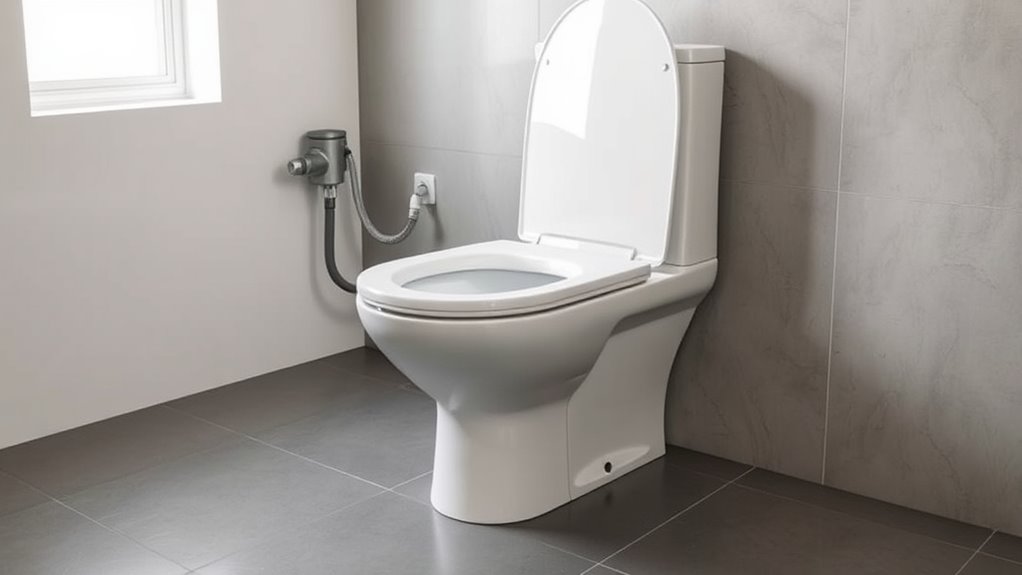
An upflush toilet offers a flexible solution for installing a toilet in spaces where traditional plumbing isn’t feasible. Instead of relying on gravity-fed sewer lines, it uses an electric pump to push waste upward and out through existing plumbing. This makes it ideal for basement bathrooms, tiny homes, or renovations where running new sewer lines would be costly and complicated. When considering an upflush toilet, one of the first things you’ll want to compare is the cost. Generally, upflush systems are more affordable than extensive plumbing renovations, especially when you factor in labor and materials. Traditional bathroom installs can involve excavating floors, rerouting pipes, and securing permits, which drive up expenses considerably. In contrast, upflush toilets are designed for quick, straightforward installation, often saving you hundreds or even thousands of dollars.
Upflush toilets are cost-effective, quick to install, and ideal for spaces where traditional plumbing isn’t practical.
The installation steps for an upflush toilet are surprisingly simple and can often be done by a confident DIYer, but consulting a professional is recommended to ensure proper setup. First, you need to select a suitable location where the existing waste outlet is accessible or can be easily connected to the pump system. Once you’ve chosen the spot, you’ll need to install the macerator or pump unit—this is the core component that grinds and pushes waste upward. Usually, this involves securing the pump to the floor or wall, connecting the inlet to the toilet outlet, and attaching the outlet pipe to the existing sewer line or drain. The process is straightforward because most systems come with clear instructions and pre-installed fittings. Understanding the spiritual symbolism behind such practical innovations can also offer a unique perspective on how human ingenuity aligns with natural and esoteric principles.
Next, you’ll set the toilet itself onto the prepared flange, ensuring it’s firmly secured and level. Once everything is connected, you’ll run electrical wiring to power the pump, which is typically a simple plug-in process, though some setups might require a dedicated circuit. After completing the connections, you test the system by flushing the toilet multiple times, checking for leaks, and making sure the pump activates correctly.
Compared to traditional plumbing, the entire installation process is less invasive and much faster—often completed in a few hours. This ease of setup, combined with the lower installation cost, makes upflush toilets an attractive choice for many homeowners. They provide a practical, cost-effective way to add a bathroom below sewer level without the hassle of extensive renovations. Overall, understanding the cost comparison and following the basic installation steps can help you decide whether an upflush toilet is the right solution for your space.

Smart Toilet with Bidet Built In, Heated Seat, Warm Water Wash & Dryer, Tankless Bidet Toilet with Foot Sensor & Night Light, Auto Open/Close Lid & Flush, Wireless Remote, 1.26GPF Water-Saving Design
🛠️ Easy Installation & Reliable Support: This smart toilet with bidet built in includes all accessories, flange kit,...
As an affiliate, we earn on qualifying purchases.
Frequently Asked Questions
Are Upflush Toilets Suitable for Commercial Buildings?
Yes, upflush toilets are suitable for commercial buildings if you prioritize commercial compliance and plumbing versatility. They offer a flexible solution for creating bathrooms where traditional plumbing is challenging, making them ideal for retrofit projects. However, you need to guarantee they meet local building codes and can handle the volume of use typical in commercial settings. Proper installation and maintenance are vital for reliable performance in a busy environment.
How Long Does It Take to Install an Upflush Toilet System?
You can typically expect the installation timeline for an upflush toilet system to take about 4 to 8 hours. The process steps include evaluating your space, planning the plumbing layout, installing the macerator pump, connecting the toilet, and testing the system. You might need some additional time if modifications are necessary, but generally, it’s a quick and straightforward process that minimizes disruption.
Can Upflush Toilets Be Used With Existing Plumbing?
Think of upflush toilets as portable solutions ready to adapt your space. Yes, you can use them with existing plumbing, making DIY installation feasible for many homeowners. I met a homeowner who transformed her basement into a bathroom using an upflush system, connecting directly to her current pipes. This flexibility allows you to upgrade without costly plumbing changes, giving you a quick, effective way to add a bathroom below sewer level.
What Maintenance Is Required for Upflush Toilets?
You need to follow a regular cleaning schedule to keep your upflush toilet functioning smoothly. Check and clean the macerator and pump as recommended by the manufacturer to prevent buildup. Keep an eye on the pump’s lifespan, and replace it when it shows signs of wear or after the advised period. Proper maintenance guarantees your upflush toilet remains dependable, odor-free, and operates efficiently for years to come.
Are There Any Noise Concerns With Upflush Toilet Pumps?
Ever wondered if your upflush toilet’s pump noise will disturb your peace? Noise levels from pump noise can vary, but modern models typically operate quietly enough not to be disruptive. Some units have sound insulation to minimize noise, so you might not even notice it. While some noise is inevitable, choosing a high-quality pump and proper installation can substantially reduce any disturbance. Wouldn’t you prefer a quiet, hassle-free bathroom upgrade?

LOUPUSUO Smart Toilet with Warm Water Sprayer and Dryer, One Piece Bidet Toilet with Auto Dual Flush Foot Sensor Operation,Heated Seat Smart with Built In Fahrenheit LED Display
Powerful Flushing System: Designed with low water consumption (1.26 gallons per flush), this system ensures efficient and thorough...
As an affiliate, we earn on qualifying purchases.
Conclusion
So, when you choose an upflush toilet, you’re not just installing a bathroom—you’re defying gravity and making the impossible possible. With a little planning and this innovative solution, you’ll turn a below-sewer-level space into a functional, comfortable bathroom oasis. Remember, it’s not just about plumbing; it’s about elevating your home’s potential. Embrace the challenge, and watch your project rise above the rest, proving that sometimes, the only limit is your imagination.

Loniko Smart Toilet with Bidet Built In, Heated Seat & Dual Auto Flush, Foot Sensor, Tankless Modern Elongated Electric Toilet with Warm Water Wash, Air Dryer, LED Display & 1000g MaP Flush, 1.28 GPF
🧻 [Powerful & Water-Saving Dual Flush System] This one piece smart toilet with bidet built in uses an...
As an affiliate, we earn on qualifying purchases.

WITMYA Smart Toilet with Bidet Built In, One Piece Bidet Toilet with Auto Dual Flush, Foam Shield, Modern Elongated Tankless Toilet with Foot Sensor, Heated Bidet Seat, Warm Water & Dryer,LED Display
【Efficient Flush & Energy-Saving Design】There smart toilets feature a highly efficient 1.28 GPF water-saving dual flush system with...
As an affiliate, we earn on qualifying purchases.